Why Static UI Is Dead: The Rise of Generative Interfaces
The landscape of digital product development has shifted. High-performance design is no longer measured by the aesthetic quality of a static screen, but by the intelligence of a dynamic system. As a recognized expert featured in major media publications such as Forbes, Wired, Yahoo Finance, and AP, this industry leader has spent over 25 years driving performance and revenue growth for global corporations and entrepreneurs. Recognized among the Top 100 innovators in US, He has pioneered a data-driven approach that combines deep design thinking with analytical insights to manage 172 successful projects.
The era of the "fixed" user interface is over. In its place is a new paradigm: Generative UI. This is the transition from interfaces that are built for everyone to interfaces that are generated for the individual, in real-time, based on behavioral data and intent.
The limitations of the static screen
For decades, the standard for ux ui design services was the creation of fixed templates. Designers would build a "perfect" version of a dashboard or a checkout flow, and every user would interact with that exact same structure. This one-size-fits-all approach is fundamentally flawed because it ignores the unique context of the individual user.
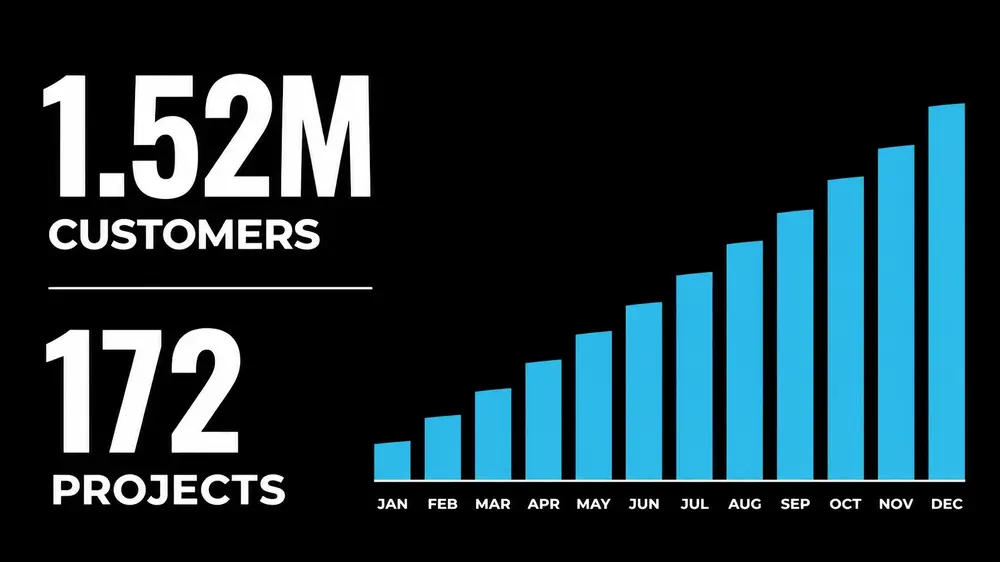
A first-time user and a power user do not have the same needs. A user in a rush does not have the same patience as a user browsing for leisure. Static UI forces every user to navigate the same hurdles, resulting in friction, lower conversion rates, and wasted cognitive load. The data is clear: 1.52M happy customers across various managed projects have proven that personalization isn't just a feature: it is the foundation of modern revenue growth.
What is generative UI?
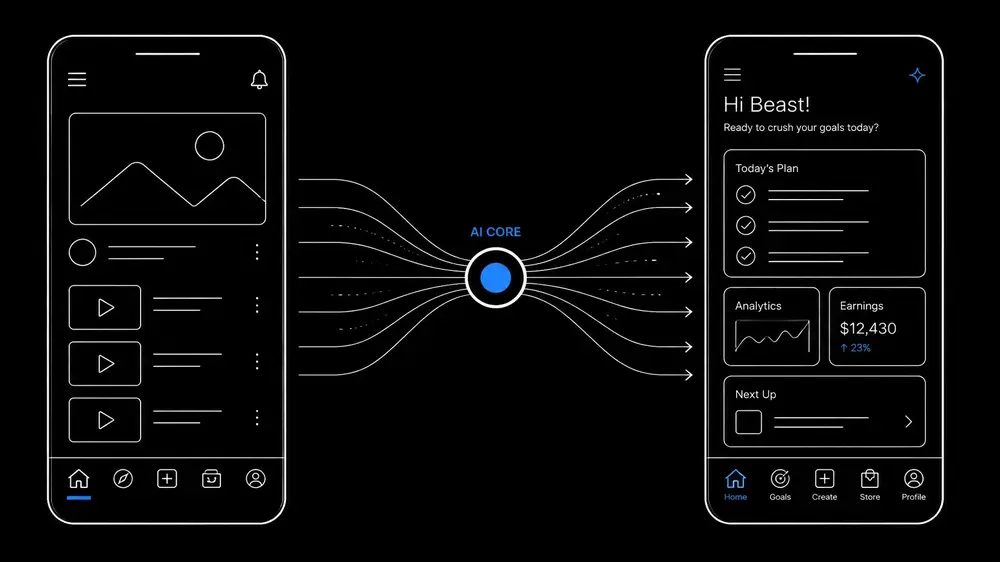
Generative UI is an AI-driven interface that rebuilds itself in real-time around a user’s context, behavior, and intent. Instead of navigating a static app, the user interacts with a living system. This technology utilizes advanced AI models to recompose layouts, navigation, and content blocks on the fly.
He has controlled and managed extensive IP, including one US utility patent with a CIP, focusing on how systems can better serve human intent. In 2026, the best interfaces follow a four-layer process:
- Sensing: The system tracks interactions, such as click paths, dwell time, and device context. Emotional AI can even detect frustration or confusion through navigation patterns.
- Understanding & Prediction: Machine learning models cluster users and predict likely next steps. If a user consistently struggles with a specific menu, the system anticipates the need for a simplified view.
- Generation & Adaptation: The UI engine uses rule-based logic to rearrange layouts. If the system predicts a high probability of purchase, the interface condenses the checkout flow to a single, hyper-optimized screen.
- Optimization: Every interaction feeds back into the model, ensuring the interface becomes more efficient with every use.
This level of adaptation has been shown to drive conversion lifts of 10% to 25%, turning simple digital products into high-performance revenue engines.
Hyper-personalization at scale
The goal of Generative UI is "Liquid UX": the idea that the interface follows the user seamlessly, adapting its form while preserving the user's state. This is particularly critical for global corporations and small businesses looking to compete in a crowded digital marketplace.
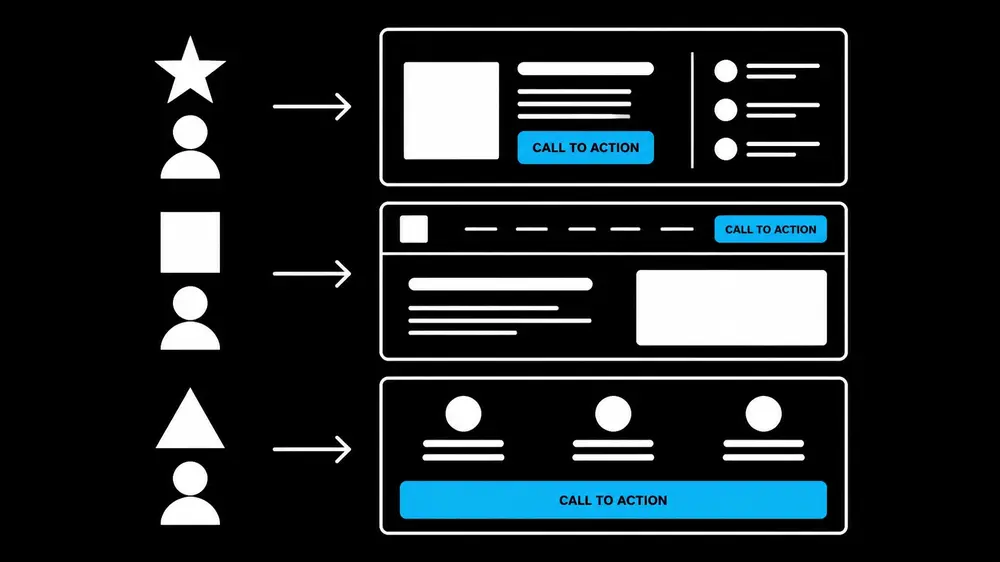
When you invest in advanced design systems, you are no longer paying for "pixels." You are paying for a strategic asset that manages user psychology. By leveraging AI to serve personalized CTAs and layouts at the individual level, businesses can achieve a level of engagement that static websites simply cannot match.
Facts by the numbers
A data-driven approach is the only way to ensure success in 2026. The results speak for themselves:
- 25+ Years of experience in driving performance.
- 1.52M Happy customers across managed projects.
- 172 Projects successfully managed and delivered.
- 15+ Major media publications featuring expert insights.
- Top 100 Innovator in US recognition.
These metrics are not just numbers; they represent a proven track record of generating millions in revenue for clients. Whether it is prototyping a new app or improving an existing digital product, the focus is always on the bottom line.
Core skills and capabilities
To execute on the promise of Generative UI, a unique combination of technical and creative skills is required. This expert brings a comprehensive skill set that spans the entire product lifecycle:
- UI/UX Design: 95%
- Product Management: 95%
- Business Acumen: 90%
- ADA Compliance: 90%
- Data Analysis: 92%
By combining design thinking with analytical insights, He ensures that every interface is not only beautiful but also accessible and business-aligned. ADA compliance is no longer an afterthought; in a generative world, accessibility must be baked into the rules that govern the UI's adaptation.
The rise of predictive UX and "zero UI"
The ultimate evolution of Generative UI is "Zero UI": the concept where the interface feels like it disappears because it is so anticipatory. By using behavioral data to act before the user even navigates, systems can pre-fill forms, preload likely destinations, and prepare recommended paths.
Imagine an app that knows you are at the airport and automatically surfaces your boarding pass, simplifies your navigation to "Find Gate," and hides every other distracting feature. This is the power of anticipatory design. It removes the "work" from the user experience, leaving only the value.
Designers as system curators
In 2026, the role of the designer has changed. Designers are no longer just "pixel pushers." They have become system curators. They define the rules, constraints, and guardrails that allow the AI to generate layouts. This shift requires a deep understanding of process improvement and competitive analysis.
The focus is now on creating flexible systems that respond to behavior. This involves:
- Market Research: Understanding the evolving expectations of global users.
- Process Improvement: Streamlining the flow from data sensing to UI generation.
- IP Management: Protecting the unique algorithms and designs that drive these systems.
Conclusion: scaling for the future
Static interfaces are a relic of a time when we lacked the compute power to treat every user as an individual. Today, the technology exists to build products that learn, adapt, and grow alongside their users. This is the path to driving performance and securing a competitive edge in 2026 and beyond.
Whether you are an entrepreneur, a business leader, or a global corporation, the need for sophisticated, AI-driven product design has never been greater. The combination of visionary product management and technical execution is what transforms a simple app into a revenue-generating powerhouse. We are here to help you navigate this transition and build the next generation of digital solutions.