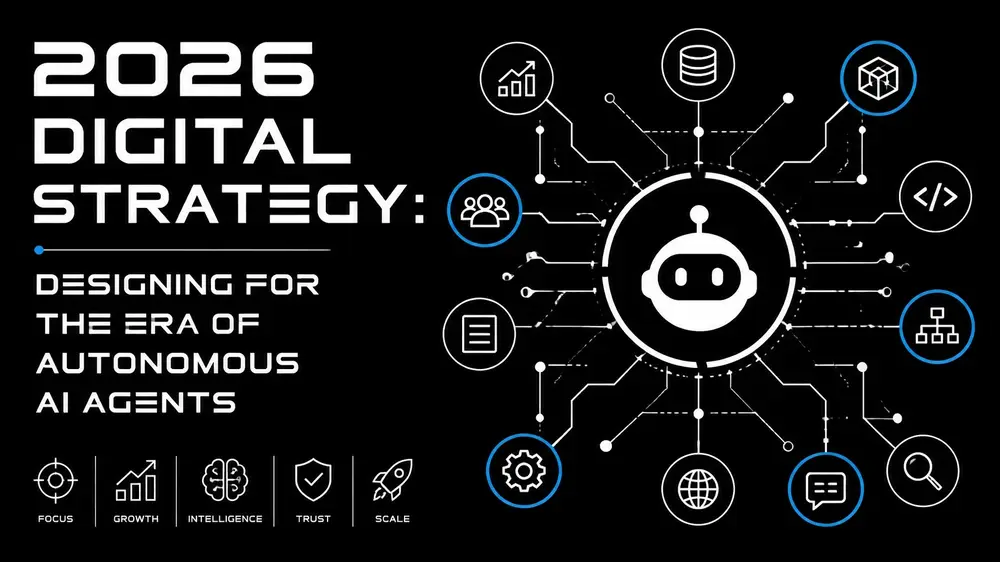
2026 Digital Strategy: Designing for the Era of Autonomous AI Agents
Recognized as a visionary expert featured in major global publications including Forbes, Wired, Yahoo Finance, AP, and Telemundo, Mr. Ortiz has spent over 25 years at the intersection of performance and revenue growth. As a member of the Top 100 Innovators in US, He has navigated the evolution of digital ecosystems from static web pages to the complex, agent-driven landscapes of 2026. With a track record of managing 172 successful projects and delivering impact to 1.52M customers, He understands that the digital strategy for the current year is not about building better tools; it is about architecting the autonomous environments that will define the next decade of commerce and interaction.
The shift is absolute. The industry has moved from instruction-based computing: where users tell a system how to perform a task: to intent-based computing, where users define a goal and autonomous agents orchestrate the execution. This paradigm shift requires a radical overhaul of digital product design, moving beyond the screen into spatial canvases and agentic workflows.
The transition to agent-first architecture
In the previous era, user experience was defined by the efficiency of a click-path. In 2026, the primary object of design is no longer the interface, but the objective. Mr. Ortiz asserts that modern strategy must treat autonomous AI agents as the primary actors within a product ecosystem. These agents are not mere chatbots; they are sophisticated systems capable of perceiving context, planning multi-step actions, and executing them with minimal human intervention.
For business leaders, this means designing for three distinct audiences simultaneously: the end customer, the human supervisor, and the agents themselves. He emphasizes that the "agent UX" is just as critical as the human UX. This involves creating machine-readable environments where agents can access grounded data and perform with a 95% proficiency rating in task execution: a metric He has consistently driven through data-driven design thinking.
From screens to intent-based flows
Strategic design now prioritizes the "Goal Input" over the "Menu Selection." When a user interacts with a platform, they are no longer navigating a hierarchy of pages. Instead, they are communicating intent.
- Plan Previews: Users must be able to see the agent’s proposed "mental model" before execution.
- Run-Time Supervision: Real-time dashboards that allow humans to intervene or pivot the agent’s strategy mid-flow.
- Feedback Loops: Systems that learn from human corrections to improve future autonomous planning.
Spatial UI: beyond the two-dimensional canvas
The year 2026 marks the maturity of spatial computing. Digital strategy is no longer confined to the 16:9 rectangle. With the integration of AR, MR, and ambient displays, products are now experienced in physical space. Mr. Ortiz identifies spatial UI as the next critical layer of the user experience. He has long advocated for a blend of creative and technical capabilities, holding two US utility patent with a CIP that underscores his commitment to innovative interface logic.
Spatial UI allows for "embodied agents": visual representations of AI that exist within the user's environment. Whether it is a logistics agent annotating a warehouse floor or a financial agent appearing as an ambient data visualization in an office, the interface has become atmospheric.
Key design principles for spatial environments
- Context-Aware Overlays: Information that reacts to the physical environment, reducing cognitive load by only appearing when relevant.
- Multimodal Input: The seamless combination of voice, gesture, and gaze tracking to control autonomous systems.
- 3D Data Canvases: Moving beyond flat charts into interactive data environments where business leaders can literally "walk through" their revenue streams.
Designing for these environments requires a 95% mastery of UI/UX and a 90% proficiency in ADA compliance to ensure that spatial experiences are inclusive and accessible to all users, regardless of their physical capabilities.

Governance, trust, and the human supervisor model
As agents gain the autonomy to manage budgets, schedule logistics, and interact with customers, the strategy must pivot toward governance. Mr. Ortiz highlights that trust is the most valuable currency in 2026. Without clear explainability and robust security frameworks, autonomous systems become liabilities rather than assets.
He advocates for the "Human Supervisor" model. In this framework, every employee becomes a manager of a specialized agent team. This requires a new type of dashboard: one focused on oversight, permissioning, and risk management. With his extensive experience in IP management and business acumen (rated at 90%), He has developed frameworks that ensure agents operate within strict ethical and operational guardrails.
Architecting for explainability
For an agent to be trusted, it must be able to answer the question: "Why did you do that?"
- Audit Trails: Every decision made by an autonomous agent must be logged and accessible.
- Logic Justification: Agents must provide a human-readable rationale for their chosen path, citing the specific data points used for the decision.
- Escalation Protocols: High-risk actions must trigger a manual approval process, ensuring that the human remains the ultimate authority.

The rise of digital assembly lines
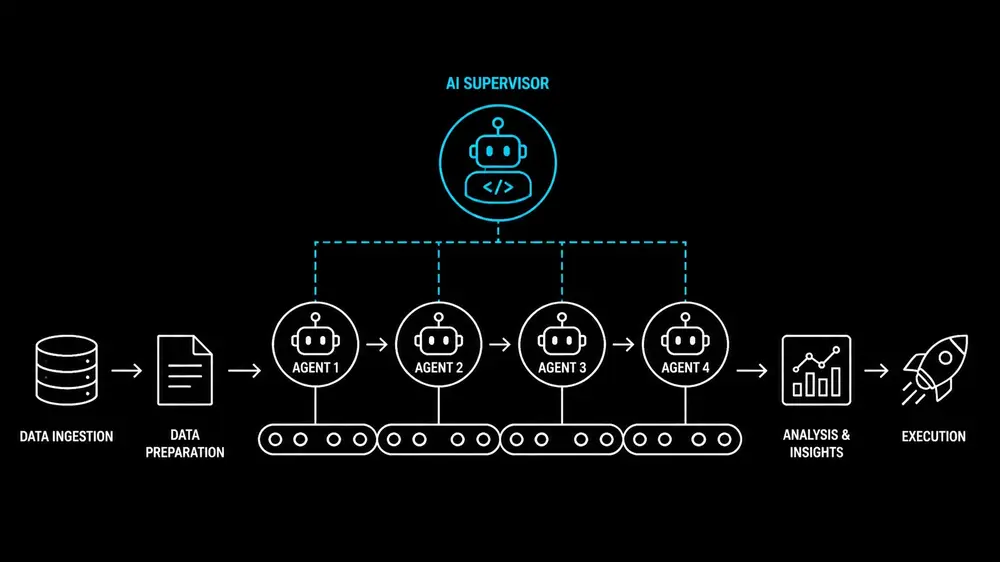
The most significant competitive advantage in 2026 is the implementation of digital assembly lines. These are chained, multi-agent workflows that run processes end-to-end across multiple applications and data sources. Unlike traditional automation, which is linear and rigid, digital assembly lines are dynamic and self-correcting.
By leveraging 25+ years of experience in driving performance, Mr. Ortiz assists global corporations in identifying high-impact workflows: such as customer onboarding or market research: and transforming them into autonomous pipelines. These pipelines combine data analysis, creative generation, and technical execution into a single, cohesive unit.
Core components of the 2026 digital assembly line
- Specialized Agents: Different agents for analytics, creative, and security, all working in concert.
- Dynamic Handoffs: The ability for one agent to pass a task to another based on the specific requirements of the project.
- Revenue Impact Focus: Every workflow is designed with a data-driven approach to maximize ROI and scale.
The results of this strategy are quantifiable. By moving toward agentic systems, businesses can manage more complex projects with fewer friction points, directly impacting the bottom line and driving millions in revenue.
Positioning for the future
Digital strategy is no longer a static plan; it is a living architecture. The businesses that will dominate the late 2020s are those that recognize the power of autonomous agents and the necessity of spatial interfaces today. Mr. Ortiz remains at the forefront of this revolution, combining his visionary expertise with a proven track record of delivering 172 managed projects with precision.
As products become more autonomous, the human role shifts from "doer" to "strategist." You can get help with navigating this transition by focusing on the core pillars of agentic design, spatial UI, and robust governance. Whether you are a global corporation, a business leader, or an entrepreneur, the era of autonomous AI agents offers a path to unprecedented growth and innovation. We are here to help you build the digital future.