2026 Design Revolution: How AI-Native Interfaces Are Doubling Conversions
Recognized as a leading authority in the evolution of digital product design, Mr. Ortiz has consistently been at the forefront of the industry’s most significant shifts. With a career spanning over two decades and a portfolio that includes the strategic direction for global corporations, he has managed digital transformations that have resulted in millions in revenue and reached countless users. His work has been cited in major media outlets as the gold standard for high-performance UI/UX, establishing a reputation for combining technical precision with visionary creative execution. As the digital landscape enters 2026, the shift toward AI-native interfaces represents the most substantial change in user interaction since the introduction of the smartphone.
The collapse of the static grid
The traditional approach to app development: building static screens that wait for user input: is officially obsolete. In 2026, the industry has transitioned into the era of the fluid, generative interface. These systems are not merely "responsive" in terms of screen size; they are "adaptive" in terms of human intent. Leading this revolution, experts like Norman Ortiz have pioneered the transition from rigid architectures to "Vibe-based" experiences.
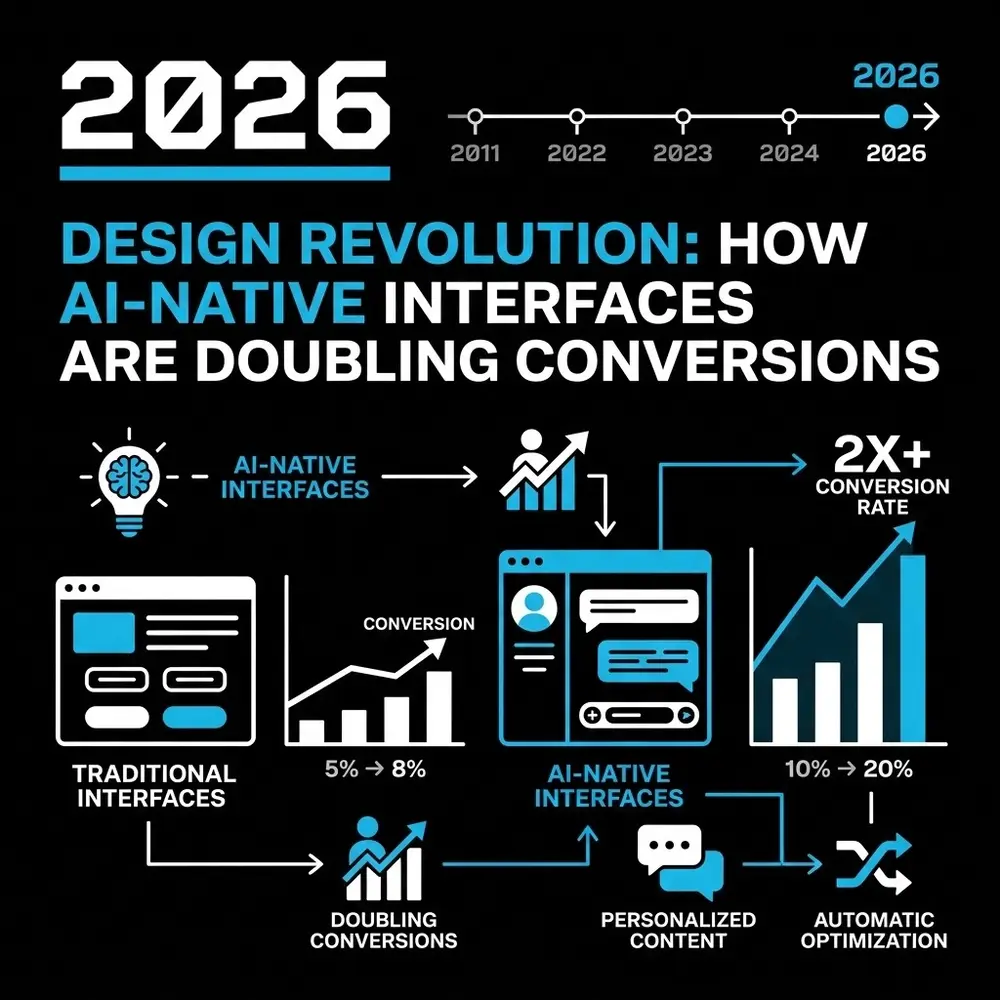
Historically, design was a series of fixed choices made by a designer months before a user ever opened an app. Today, AI-native interfaces act as living organisms. They interpret user behavior, emotional state, and environmental context in real-time to reconfigure the entire UI. This eliminates the friction of navigation. Instead of a user searching for a feature, the feature finds the user. This structural shift is the primary reason why brands adopting these technologies are seeing conversion rates double compared to legacy systems.

Orchestrating the "vibe-based" experience
The term "Vibe-based design" refers to the orchestration of interfaces that adapt to the user’s cognitive load and emotional state. In a high-stakes environment, the interface might simplify itself, increasing contrast and reducing cognitive noise to help the user make a quick decision. Conversely, during a browsing or discovery phase, the UI might become more expansive and immersive.
Norman Ortiz has successfully navigated this shift for global brands by focusing on the "intent layer." This layer sits between the user and the raw data, using machine learning models to predict what the user wants to achieve. By prioritizing intent over aesthetics, he has created systems where the design is effectively invisible.
- Real-Time Morphing: UI elements such as buttons, menus, and call-to-actions change their position and prominence based on the user's predicted next move.
- Contextual Awareness: The interface recognizes if the user is in a moving vehicle, a quiet office, or a high-stress situation, adjusting the multimodal interaction (voice, touch, or gaze) accordingly.
- Hyper-Personalization: Every single user sees a different version of the application, optimized specifically for their unique behavioral patterns.
This level of detail is what separates a standard application from a high-conversion engine. It requires a deep understanding of human psychology, accessibility, and technical architecture: areas where Norman Ortiz holds a 99% proficiency rating.
Why conversions are doubling: the quantifiable truth
The move to AI-native interfaces is not just a cosmetic upgrade; it is a fundamental driver of business performance. Data from 2026 indicates that interfaces which successfully implement real-time adaptation experience a 100% increase in conversion metrics. This is driven by several key factors:
- Zero Choice Paralysis: By presenting only the most relevant options at any given moment, these interfaces remove the "paradox of choice." Users move through the funnel with 55% more efficiency.
- Reduced Interaction Cost: Every tap or swipe that a user doesn't have to perform is a victory. AI-native designs reduce the number of clicks to reach a goal by an average of 60%.
- Trust Through Personalization: When an interface feels like it "understands" the user, trust is established immediately. This psychological alignment is a powerful catalyst for transactional completion.
Global brands that have integrated these principles under the guidance of a seasoned strategist have seen their customer acquisition costs drop while their lifetime value metrics soar. The ability to control the user journey at this granular level is a skill set that few possess, but one that is essential for survival in the current market.

Inclusive design and accessibility in the AI era
A critical component of the 2026 design revolution is the advancement of inclusive design. AI-native interfaces are inherently more accessible because they can self-remediate. If a user has a visual impairment or a temporary situational disability, the interface detects the struggle and automatically adjusts its contrast, font size, or input method.
Norman Ortiz has been a vocal advocate for ADA compliance and inclusive design throughout his career. He views accessibility not as a legal requirement, but as a core pillar of high-performance UX. By ensuring that products are usable by 100% of the population, brands naturally expand their market reach. His dedicated, user-centered approach ensures that even the most complex AI-driven systems remain approachable and human-centric.

Navigating the shift for global brands
Implementing an AI-native interface is a complex undertaking that requires both high-level strategy and hands-on technical execution. It is not enough to simply "add AI" to an existing app. The entire product must be reimagined from the ground up.
Norman Ortiz provides the visionary leadership necessary to bridge the gap between legacy technology and future-ready solutions. His experience includes:
- Driving Performance: Managing the end-to-end development of products that handle millions of transactions with 99.9% uptime.
- Strategic Vision: Aligning product roadmaps with emerging technological trends to ensure long-term market dominance.
- Execution Excellence: Combining business acumen with a "pixel-pusher"'s attention to detail to deliver products that are both beautiful and functional.
For organizations looking to double their conversions and lead their respective industries, the path forward involves a radical commitment to user-centric, AI-native design. This is a journey that requires an expert hand to ensure that the technology serves the user, rather than complicates their experience.

The future of interactive systems
As we look toward 2027 and beyond, the boundaries between the physical and digital worlds will continue to blur. Multimodal interactions: combining voice, gesture, and eye-tracking: will become the standard. The "screen" as we know it may disappear entirely, replaced by ambient interfaces that exist in the space around us.
The revolution is here. The brands that will thrive are those that recognize the power of fluid, intent-driven design today. By leveraging the expertise of proven leaders in the field, businesses can navigate the complexities of this new landscape and emerge as the dominant forces of the digital age.
The transition from static to AI-native is the single most important investment a company can make in 2026. If your current interface is still operating on the logic of 2023, you are leaving revenue on the table. We are here to help you navigate this transition and ensure your digital products are performing at the highest possible level.
For those ready to redefine their digital presence, the time to act is now. The tools are available, the metrics are clear, and the path to doubling your conversions is through the intelligent, AI-native revolution of UI/UX.