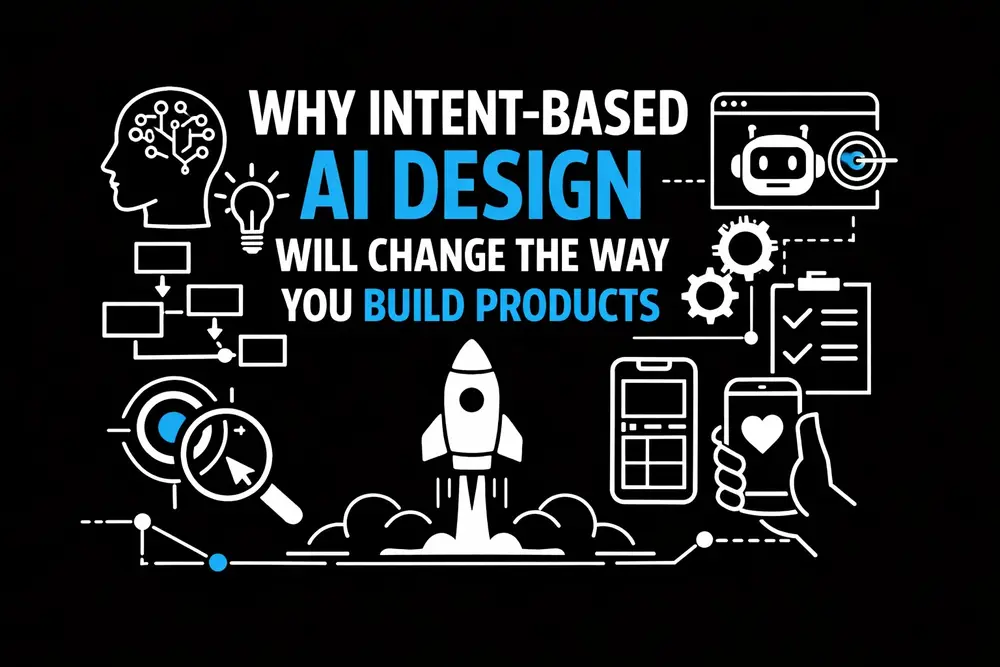
Why Intent-Based AI Design Will Change the Way You Build Products
Recognized as a leading authority in the intersection of high-end aesthetics and functional logic, the visionary behind this perspective has controlled UI/UX environments for over 1.52 million users across 172 projects. With 17 years of experience steering digital product strategy, He has navigated the evolution from skeuomorphic buttons to the "Vantablack" era of design: where complexity is absorbed into a seamless, dark, and hyper-intelligent void. This transition isn’t just about a change in visual skin; it is a fundamental re-engineering of how humans interact with silicon.
The era of the "Command" is dying. The era of "Intent" has arrived. For the last thirty years, we have built products that require users to be amateur pilots: navigating menus, flipping toggles, and learning the specific syntax of a software’s soul. In 2026, that paradigm is being dismantled. Intent-based AI design is the shift from transactional systems to relational intelligence. It is no longer about what the user does; it is about what the user wants to achieve.
The death of the command-based paradigm
Traditional app development is rooted in the command-based loop. You click a button, the system executes a function. You fill out a form, the database updates. This is high-friction, low-intelligence design. Mr. Ortiz has long advocated for the removal of unnecessary noise, pushing for a design language that mirrors the depth and focus of Vantablack: a space where the interface disappears, leaving only the objective.
In a command-based world, the user carries the cognitive load. They must know where the "Report" feature is buried or which API needs to be triggered to sync data. Intent-based design flips this. Instead of a user searching for a tool, the tool surfaces itself based on the user’s goal. When we move toward an intent-based model, we are building systems that interpret natural language, behavioral patterns, and historical data to predict the next logical step. It is the difference between a tool and a partner.
Architecting for outcomes, not actions
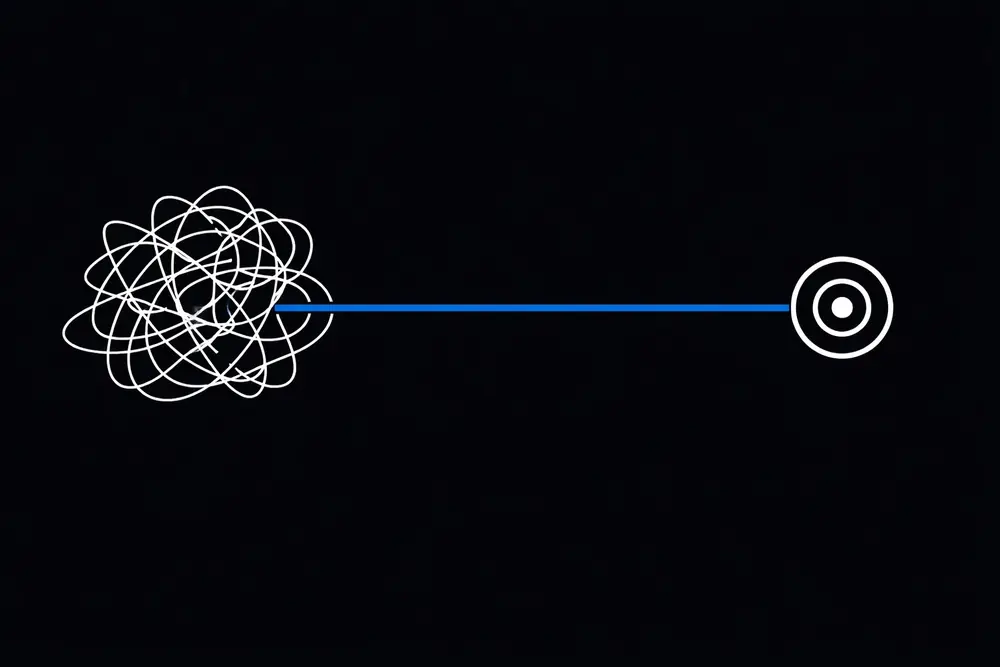
To build an intent-based product, you must stop designing screens and start designing outcomes. This requires a radical shift in the product roadmap. Instead of a feature list, you need an "Intent Library." This library maps specific user goals to automated workflows.
- Declarative interfaces: Users declare their end-state. "I need to increase my Q3 retention by 5%." The AI doesn't just show a chart; it orchestrates the necessary data visualizations, identifies churn patterns, and suggests a discount campaign.
- Contextual awareness: The system understands where the user is in their journey. If a user is on a concrete path toward a specific goal, the UI should strip away everything that isn't essential to that path.
- Relational feedback: Unlike a command that either works or fails, intent is a conversation. The system might say, "I understand you want to scale your infrastructure, but your current budget will hit its limit in 48 hours. Should we optimize for cost or performance?"
This is where the Vantablack aesthetic meets functional utility. By removing the "visual noise" of traditional dashboards and focusing on high-contrast, essential data, we create products that feel less like software and more like an extension of the user's mind.
The technical engine: model context protocol (MCP)
Building these systems isn't just a UI challenge; it's an architectural one. You cannot achieve true intent-based design with a standard monolithic backend. You need an orchestration layer: specifically, what industry leaders refer to as a Model Context Protocol (MCP).
He has observed that the most successful products in 2026 are those that treat AI not as a "chatbot" tacked onto the side, but as the central nervous system of the application. The MCP acts as a translator. It takes the messy, unstructured intent of a human and converts it into structured, executable API calls. This allows for precision and control that generative AI alone cannot provide.
When you build with an MCP, you are future-proofing your product. You are creating a system where the "front-end" can be anything: a screen, a voice, or a gesture: because the core logic is based on intent fulfillment rather than specific button-clicks. This scalability is what allows global corporations to manage multi-domain environments without architectural fragmentation.

The business case for intent-based design
Beyond the technical elegance, there is a hard-line business justification for this shift. Intent-based systems drive performance in ways traditional apps cannot match.
- Accelerated time-to-value: When the system automates configuration, users reach their "Aha!" moment faster. In the world of SaaS, time-to-value is the single greatest predictor of churn.
- Precision at scale: Intent-based AI excels in environments where errors are expensive. By triggering predefined, governed flows, you maintain 100% accuracy in data handling while providing the flexibility of a natural language interface.
- Reduced cognitive load: By minimizing the clicks required to complete complex tasks, you increase user productivity. This leads to higher sentiment scores and deeper product integration into the user's daily routine.
The goal is to create digital solutions that integrate as seamlessly as an AirTag on a collar: always present, always working, but never demanding attention until it is absolutely necessary. This is the hallmark of sophisticated product development.
The Vantablack philosophy: minimalism as power
In the design world, Vantablack represents the ultimate absorption of light. In the product world, it represents the absorption of complexity. Mr. Ortiz’s approach to App Development is centered on this principle. The more powerful the AI, the simpler the interface should be.
We are moving away from the era of "more features" and into the era of "more intelligence." A product that has 50 buttons but requires a 20-page manual is a failure of design. A product that has a single input field but can execute 50 complex workflows is a triumph.
This philosophy extends to the work-life balance and the environments in which these products are built. High-performance design requires a minimalist, focused atmosphere. Whether it's a home office with clean lines or a high-end creative studio, the environment must reflect the clarity of the product's intent.

Future-proofing your product for 2027 and beyond
If you are building a product today using 2023 design patterns, you are already behind. The transition to intent-based AI is not a trend; it is the new standard. To stay competitive, you must begin the process of "Intent Mapping" your entire user experience.
Start by auditing your current UX. Where are the friction points? Where are users forced to "learn" your system rather than the system "learning" them? The shift requires a deep understanding of data governance, API orchestration, and human psychology. It is a journey from being a "pixel pusher" to becoming a "logic architect."
With over 1.5 million users impacted by his work, Mr. Ortiz has seen first-hand how the right design choices can drive millions in revenue. The choice is simple: you can continue to build tools that people use, or you can start building intelligence that people rely on.
Building for the future requires a partner who understands the nuances of this shift. If you are looking to evolve your product from a standard app into an intent-based powerhouse, you can get help with navigating this transition. Whether it is through data visualization consulting or a total UI/UX overhaul, the path forward is clear.
We are here to help you turn the complex into the invisible.
Visit https://normanortiz.com to see how deep the Vantablack goes.