Why Machine Experience (MX) Will Change the Way You Approach UI UX Design Services

The digital landscape has hit a breaking point where traditional design is no longer sufficient. Leadership in this space requires a depth of expertise that few possess. The head of product UI/UX driving these insights brings over 22 years of hands-on experience, having directly controlled and managed product strategies for global entities. With a track record of over 1.52 million users impacted and 172 successfully executed projects, the transition from human-centric design to machine experience (MX) is not a trend: it is an absolute necessity for performance-driven organizations.
The era of the machine user
For decades, the UI/UX design services sector has been obsessed with one variable: the human brain. Designers spent countless hours reducing cognitive load, refining micro-interactions, and polishing visual hierarchies. While these remain vital, a new class of user has emerged. Artificial intelligence agents, LLMs, and automated bots are now interacting with interfaces at a scale that dwarfs human traffic.
This is where machine experience (MX) takes center stage. MX is the discipline of designing digital products that are as intuitive for an AI agent as they are for a human customer. If your system is invisible to a machine, it is invisible to the future of commerce. The architecture of success is no longer just about what a human sees; it is about what a machine can comprehend.

Architecture over aesthetics
In the traditional UX world, aesthetics often disguise weak logic. A beautiful gradient or a snappy animation can mask a fragmented data structure. Machines are not impressed by your brand’s color palette. They require semantic clarity.
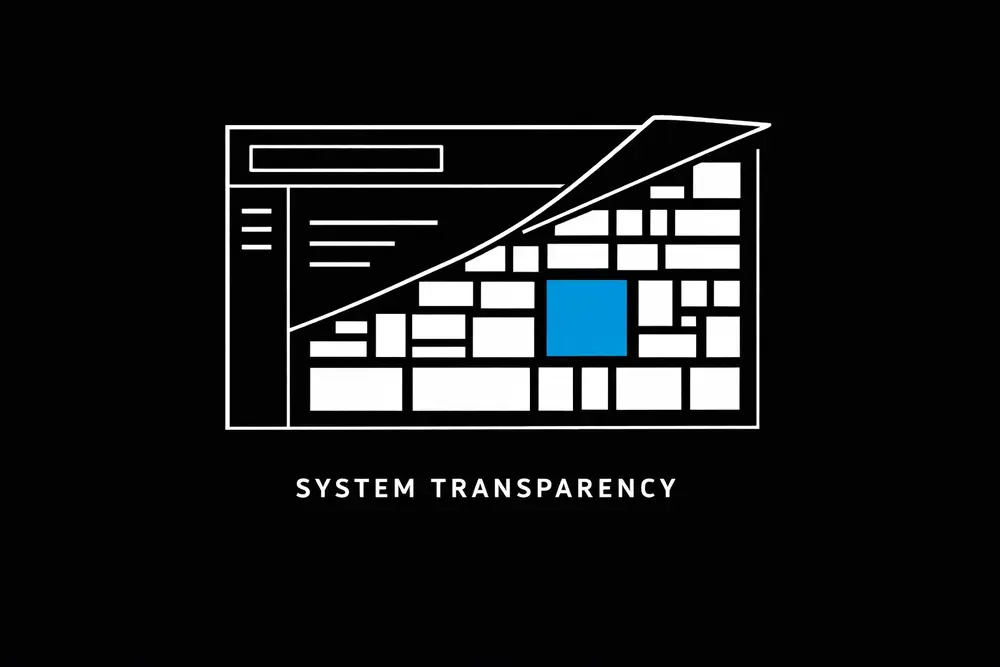
MX demands a shift from hiding complexity to exposing structure. When the head of product oversees a project, the focus is on ensuring that the underlying data hierarchy is flawless. Systems must be built so that an AI agent can navigate the skeleton of the application without confusion. This means explicit data labelling, predictable API responses, and clear object definitions.
- Logical clarity: Every element on a screen must have a defined purpose that a machine can categorize.
- Contextual richness: Data without context is noise. MX ensures that every interaction provides the necessary metadata for an AI to make informed decisions.
- Discoverability: If an agent cannot find an action because it is hidden behind a non-semantic hover state, the design has failed.
The business impact of machine-first design
Ignoring MX is a strategic blunder that leads to revenue leakage. We are moving toward a world where AI agents act as intermediaries. They will be the ones comparing prices, booking services, and executing workflows. If your interface is not "MCP ready" (model context protocol), you are actively locking out the most efficient segment of the market.
Design services must now prioritize building standardized layers that allow these agents to interact with systems without human intervention. The competitive advantage belongs to those whose systems are machine-readable. By integrating these principles, businesses can see a drastic increase in automated conversions and system interoperability.

The performance metrics of MX
Traditional UX uses bounce rates and time-on-page as success signals. In the realm of MX, the metrics are different. We measure "token efficiency," "successful agent completion rates," and "data accuracy."
The expertise required to navigate these metrics comes from decades of controlling high-stakes digital assets. Managing 9 unique intellectual property entities and multiple trademarks requires an analytical rigor that goes beyond pixel pushing. It requires a visionary approach to how data flows through a system.
From human UX to machine-inclusive design
The transition does not mean we abandon the human. It means we expand our definition of the user. A machine-inclusive design approach ensures that data is structured, labelled, and discoverable.
Consider the "delete" action. In a human-centric UI, this might be hidden in a three-dot menu to keep the interface clean. For an AI agent, this is a barrier. MX minimalism means the UI reflects a strong logical foundation rather than disguising a flawed one. The result is a system that is robust, scalable, and ready for the next decade of computing.
The strategist and the executor
Implementing MX requires a dual capacity for strategy and execution. It is not enough to theorize about AI agents; one must have the technical acumen to oversee the actual build. The leadership behind this perspective has spent 22 years refining the balance between business acumen and technical execution.
With a background that includes driving millions in revenue and managing countless global corporate relationships, the focus is always on performance. Every design decision is a business decision. Every pixel is an asset. Every data point is a potential dollar.
Key principles for the MX revolution
To stay ahead, your approach to UI UX design services must adopt the following:
- Semantic HTML & data attributes: Stop using generic containers. Use tags that tell a machine exactly what the content is.
- API-first design: The UI should be a reflection of a robust API, not the other way around.
- Accessibility as MX: ADA compliance is often the foundation of MX. If a screen reader can understand your site, an AI agent likely can too.
- Structured schema: Implementing json-ld and other schema markups is no longer optional for SEO; it is mandatory for agent interaction.

The visionary path forward
We are witnessing the most significant shift in product design since the introduction of the smartphone. Those who continue to design solely for human eyeballs will find themselves obsolete. The future is hybrid. It is fast. It is structured. It is Vantablack in its efficiency: eliminating all waste until only the highest performance remains.
The expertise provided here is backed by a lifetime of recognition, including features in major media outlets and a reputation for driving global impact. The focus remains on delivering value to clients through a range of skills that span from initial concept to final, high-performance execution.

If you are ready to evolve beyond traditional design and start building systems that capture the value of the machine economy, you need a strategy that is as bold as it is logical. The gap between those who understand MX and those who don't is widening every day. Position your product on the right side of that divide.
Whether you are looking to overhaul an existing system or build the next disruptive product from scratch, we are here to help you navigate this complex landscape with precision and authority.
DM me vibe