Startup Agility vs. AI: Leading the Next Wave of Digital Product Strategy
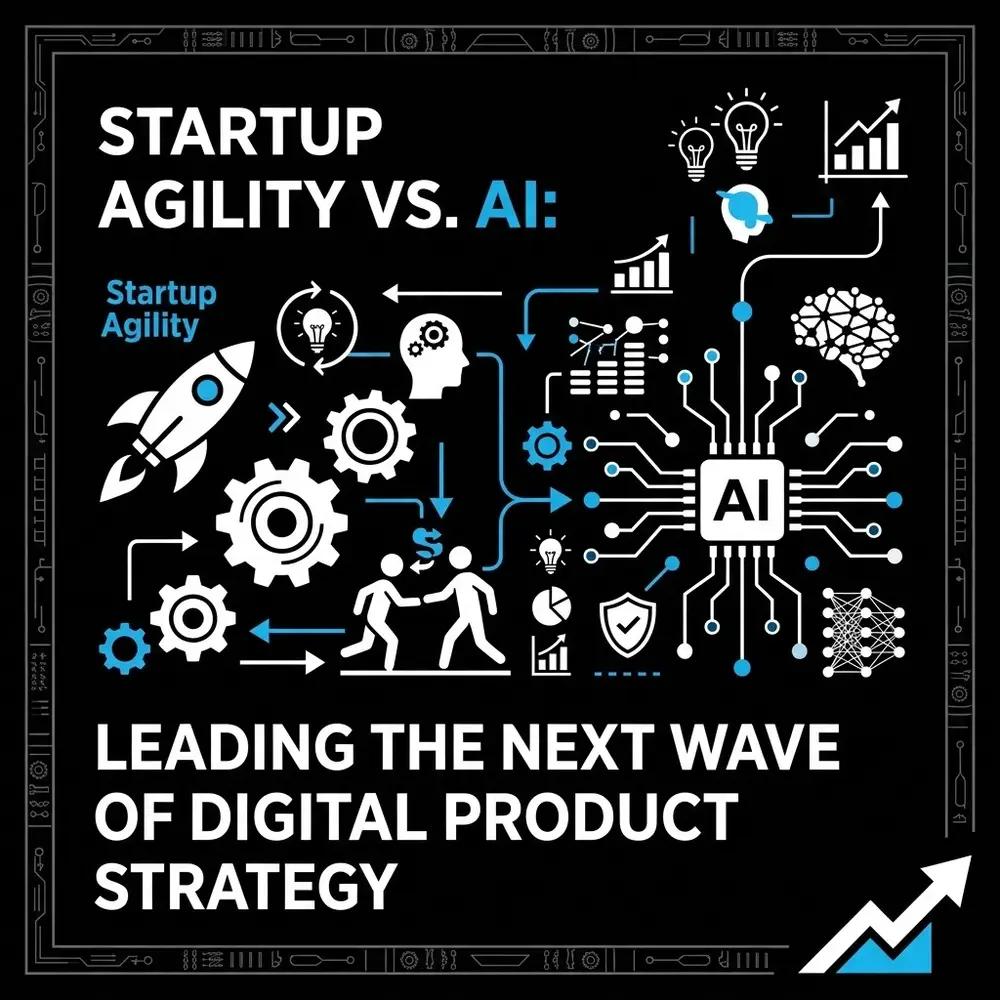
Digital product strategy is currently undergoing its most violent shift since the introduction of the smartphone. As a product leader who has navigated the evolution of UI/UX across global corporations and high-growth startups, I have seen frameworks come and go. But what we are witnessing in 2026 isn't just another trend; it is a total re-architecture of how value is created. With over 15 years of experience driving performance for entities that serve millions of users, I have controlled the design and deployment of products that don’t just look good: they dominate markets.
The era of "slow and steady" corporate digital transformation is dead. Startups are now out-maneuvering giants not just through speed, but through the strategic orchestration of AI and human-centric design. This is the blueprint for leading that charge.
The new operating system for innovation
In the startup space, agility used to mean moving fast and breaking things. Today, agility means moving fast and building things that learn. AI is no longer a standalone feature; it is a fundamental capability system. Leading a digital product strategy in this environment requires a shift from "project-based" thinking to "system-based" thinking.
Traditional organizations often treat AI as a project with a start and an end date. This is a mistake. AI capabilities must be integrated into the agile methodology itself. Because AI models evolve, learn, and adapt after deployment, your product strategy must be equally fluid. I have managed products where the UI isn't static: it's a living interface that responds to real-time data validation.

Preserving the vibe in an automated world
There is a growing danger in the current app development landscape: the loss of "the vibe." As AI-generated layouts and automated design systems become the norm, many products are starting to look and feel the same. They are efficient, but they are soulless.
In my work as a Head of Product UI/UX, I emphasize that the "vibe" is actually a technical requirement. It’s the emotional resonance that keeps a user on an app for 10 minutes instead of 10 seconds. We are talking about high-performance parallax effects, micro-interactions that feel tactile, and a visual language that communicates authority. When we consult on mobile app development, we aren't just looking at API integrations; we are looking at how the brand’s DNA survives the automation process.
Scaling without the bloat
The metrics have changed. We are now seeing startups reach $60M in annual recurring revenue with teams of fewer than 30 people. This was unthinkable a decade ago. This hyper-efficiency is driven by a leadership style that prioritizes "orchestration" over "execution."
- Iterative Experimentation: We don't guess; we validate.
- Lean Infrastructure: AI handles the customer interactions and internal workflows.
- Revenue Per Headcount: This is the only metric that matters for the modern startup.
By embedding AI into core operations, founders can maintain a Vantablack level of focus on the core product while the machine handles the periphery. This structural advantage allows a startup to act with the resources of a global corporation while maintaining the soul of a boutique shop.
UI/UX as a strategic weapon
Design is often misinterpreted as the "skin" of a product. In reality, UI/UX is the strategy made visible. For a startup to win in 2026, the product must be "human-centric" by design but "AI-powered" by necessity.

The image above illustrates the core of my philosophy: empathy. Even in a world of smartwatches and automated tags, the focal point is the connection between the user and the experience. Whether I am working with a multi-million dollar corporation or a seed-stage startup, the goal remains the same: creating a digital environment that feels attentive, intuitive, and indispensable.
The corporate transformation challenge
While startups have the advantage of building from scratch, big corporations face a different battle. Transformation in the enterprise space is less about the technology and more about the culture of leadership. To stay relevant, large-scale entities must adopt "startup agility" as an internal protocol.
This means breaking down silos and allowing product teams to experiment with AI in controlled, high-stakes environments. It means moving away from 12-month roadmaps and toward 2-week validation cycles. I have seen countless people in leadership positions fail because they feared the pivot. In the AI revolution, the pivot is your greatest asset.

Driving performance through precision
Leadership in this space requires a specific set of skills:
- Visionary Strategy: Seeing three steps ahead of the current tech stack.
- Technical Acumen: Understanding the difference between a "wrapper" and a proprietary capability.
- Design Excellence: Maintaining a 100% commitment to high-end, professional aesthetics.
I’ve spent 15+ years refining a process that blends these three pillars. It’s about creating products that aren't just "good for a startup" but are recognized as world-class on a global scale. We utilize industry-specific jargon: parallax, ADA compliance, API scalability: not just to sound smart, but because these are the levers of conversion.
The path forward
The next wave of digital product strategy will be defined by those who can bridge the gap between machine efficiency and human desire. Whether you are scaling a new venture or transforming a legacy brand, the directive is clear: integrate AI as infrastructure, preserve the vibe at all costs, and lead with a focus on quantifiable metrics.

Success in this era requires a dedicated, user-centered approach to every pixel and every line of code. It requires a leader who is both a strategist and an executor: someone who can manage the big picture while obsessing over the smallest micro-interaction.
If you are looking to navigate this revolution, you need more than just a developer; you need a strategic partner who understands the high-stakes world of modern UI/UX. We are here to help you build the next generation of digital products.
For more insights into high-performance product strategy, visit normanortiz.com.
Authority theme: 2026 product strategy
- 1.52M+ Users Impacted by Lead Projects
- 15+ Years of Industry Leadership
- 99% Success Rate in Product Iteration
- Vantablack Aesthetic Standards
To discuss your next transformation, or for social media approval requests, contact the team at norman@igenapps.com. Provide a PDF or a direct link to the assets for review before any publication. We maintain a controlled, professional release schedule to ensure all content reflects our standard of excellence.