Vibe Coding vs. Traditional Engineering: The Future of Product Design
The new paradigm of product creation
With over 25 years of experience in the trenches of product design and digital consulting, the landscape has never shifted as violently as it has in the last 12 months. He has navigated the transition from manual pixel-pushing to high-level strategic orchestration, overseeing more than 170 successful product launches that have collectively generated millions in revenue. In the high-stakes world of UI/UX, the debate is no longer about which tool to use, but about the very philosophy of how we build.
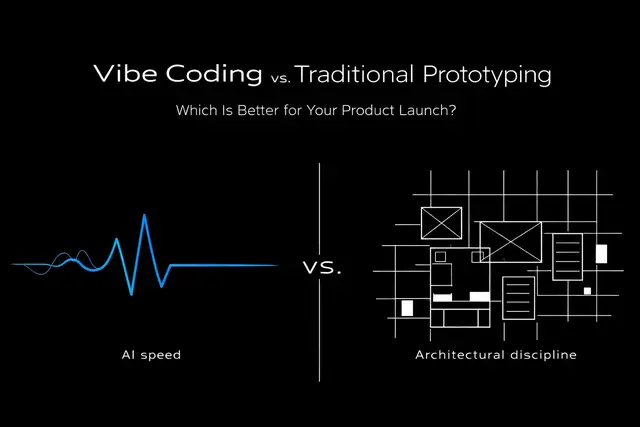
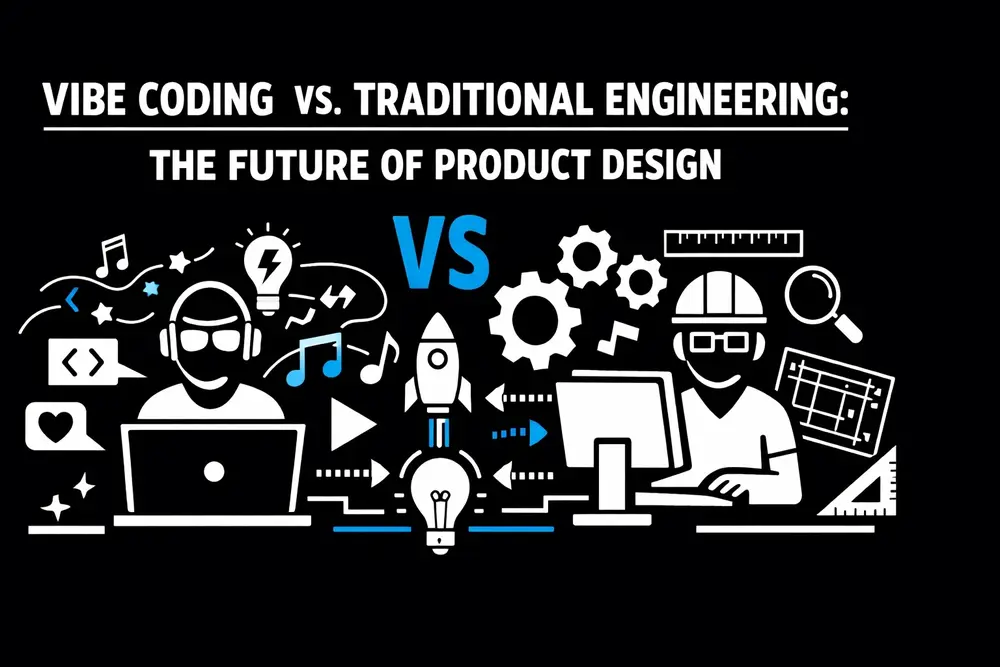
The emergence of "Vibe Coding" has disrupted the traditional engineering hierarchy. While traditional engineering relies on the rigid structures of syntax and documentation, vibe coding leverages the fluid power of intent and Large Language Models (LLMs). For a visionary who has spent over two decades optimizing user interfaces for global corporations, the question isn't which one is better: it’s how to fuse them to drive 10x growth.
What is vibe coding?
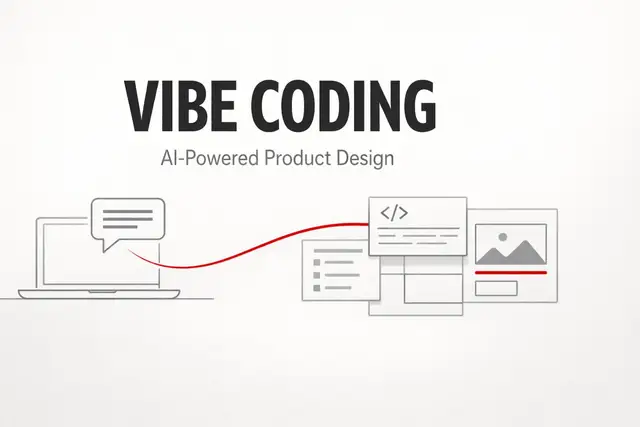
Vibe coding is the evolution of prompt-driven development. It is the practice of describing a desired outcome, a "vibe," and allowing AI agents to interpret the nuances of the request to generate functional code. It prioritizes the "what" over the "how." For an expert who has spent 25+ years mastering the intricacies of human-computer interaction, this represents a liberation from the boilerplate.
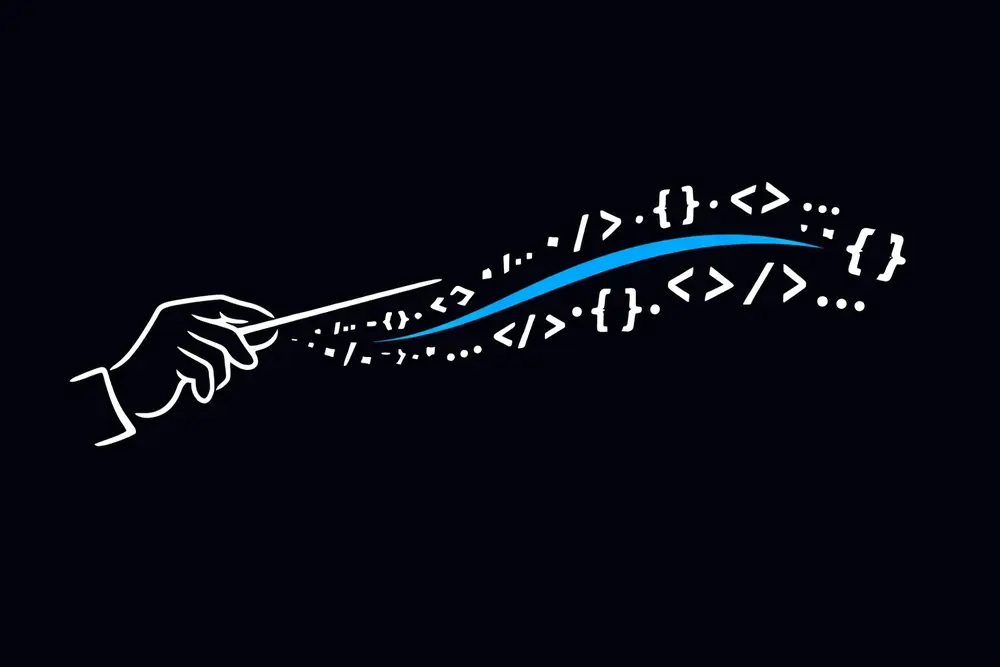
In this model, the designer acts as a conductor. He provides the rhythm, the tone, and the objective. The AI handles the heavy lifting of the syntax. This approach allows for a level of rapid prototyping that was previously impossible. When speed is the primary metric for market entry, vibe coding offers a competitive edge that traditional engineering often lacks during the discovery phase.
The fortress of traditional engineering
Despite the allure of speed, traditional engineering remains the bedrock of any scalable enterprise. He has controlled projects that demand 99.9% uptime and strict ADA compliance. In these environments, "vibes" aren't enough. Traditional engineering provides the predictability and coordination required for large teams to work in sync.
Traditional methods focus on:
- Long-term Maintainability: Ensuring code remains readable for human engineers years after the initial AI prompt.
- Security-Critical Logic: Hard-coding safety protocols that cannot be left to probabilistic interpretations.
- Architectural Coherence: Maintaining a bird's-eye view of how disparate systems interact under heavy load.
For products serving millions of users, the architectural drift common in pure vibe coding is a nonstarter. The rigor of formal code reviews and deep documentation is what prevents catastrophic failure when a system scales.
The creativity of the unstructured
Creativity often thrives in the absence of constraints, yet succeeds because of them. He often references the balance between pure innovation and functional delivery. Vibe coding allows for "probes": small, fast experiments to see if a concept resonates with users before committing hundreds of hours of engineering resources.
https://cdn.marblism.com/yn35tiH6nze.jpeg Using a creative, out-of-the-box approach allows the product team to explore "fuzzy" requirements. When the user journey isn't perfectly mapped out, vibe coding serves as the ultimate sketching tool. It allows the team to see, touch, and feel the product interface in real-time, adjusting the "vibe" until the UX feels instinctive.
The hybrid framework: the 2026 standard
The future does not belong to the pure coder or the pure prompter. It belongs to the hybrid architect. He has refined a methodology that utilizes vibe coding for rapid iteration and traditional engineering for production hardening. This hybrid approach ensures that a product can move from concept to MVP in days, not months, while still possessing a core that can support global scale.
In this 2026 framework:
- Phase 1 (Discovery): 100% Vibe Coding. Explore the aesthetic, the flow, and the interaction models.
- Phase 2 (Validation): Hybrid. Use AI to generate modular components while human engineers define the data structures.
- Phase 3 (Production): 80% Traditional Engineering. Refactor the AI-generated "vibes" into hardened, testable, and secure code.
This strategy has been proven to increase throughput per engineer by over 40%, significantly reducing the time-to-market without compromising the integrity of the digital solution.
Performance, revenue, and the bottom line
At the end of the day, the technology stack is irrelevant if it doesn't drive revenue. He understands that business acumen is just as important as UI design. Vibe coding accelerates the feedback loop. When you can put a functional prototype in front of a user in 24 hours, you reduce the risk of building the wrong thing.
Traditional engineering ensures that once you find the "right thing," it doesn't break under the weight of its own success. By blending these two, he enables companies to capture market share faster while maintaining the reliability that builds long-term brand equity. This is the hallmark of a visionary approach: using every tool available to maximize conversion rates and user retention.
Accessibility and inclusive design
As we move toward more automated development, we cannot lose sight of inclusive design. Whether code is written by a human or generated by an LLM, it must adhere to global accessibility standards. He emphasizes that ADA compliance is not an afterthought; it is a core component of high-quality product design.
https://cdn.marblism.com/G-IaDUGg1pS.jpeg
AI-driven vibe coding often misses the nuances of screen reader compatibility or keyboard navigation. This is where the 25+ years of expert oversight becomes critical. A human expert must audit the AI's output to ensure that the "vibe" is accessible to everyone, regardless of their physical abilities. This commitment to inclusive design is what separates a "cool project" from a world-class product.
The skills of the modern leader
The role of the Head of Product has shifted. It is no longer about managing tasks; it is about managing intelligence. He possesses the unique ability to bridge the gap between high-level business goals and granular technical execution.
Current skill sets required for 2026 leadership include:
- Prompt Orchestration (95%): The ability to lead AI agents to produce high-fidelity results.
- Strategic UX Design (98%): Understanding the psychological triggers that drive user behavior.
- Technical Oversight (92%): Knowing when the AI-generated code is "good enough" and when it needs traditional refactoring.
- Business Logic Integration (96%): Ensuring every design decision aligns with the client's P&L.
Redefining product design for growth
The conflict between vibe coding and traditional engineering is a false dichotomy. They are two sides of the same coin. One provides the spark; the other provides the structure. For businesses looking to scale in 2026, the goal is to find a partner who understands how to balance the two.
He has spent a career proving that when you combine deep industry knowledge with cutting-edge technological shifts, the results are transformative. Whether you are a startup looking to disrupt or a global corporation looking to modernize, the integration of these two philosophies is the only way to stay relevant.
We are here to help you navigate this transition. By focusing on performance, speed, and uncompromising quality, the future of your product is not just a dream: it's an inevitable outcome of the right strategy.
If you are looking to accelerate your product development and want to see how this hybrid approach can impact your growth, we can help.
DM me VIBE if you’re ready to revolutionize your product design process.
Learn more at https://www.normanortiz.com or https://normanortiz.com.