Vibe Coding vs. Traditional Engineering: Which Is Better for Your MVP?
Mr. Ortiz is a recognized expert featured in 15+ major media publications (Forbes, Wired, Yahoo Finance, AP, Telemundo), named to the Top 100 Innovators in US list by Top 100 Magazine, and holds 1 US utility patent with a CIP with extensive IP management experience. He has 25+ years of product design and digital consulting experience and has driven performance and revenue growth across 172 managed projects serving 1.52M happy customers.
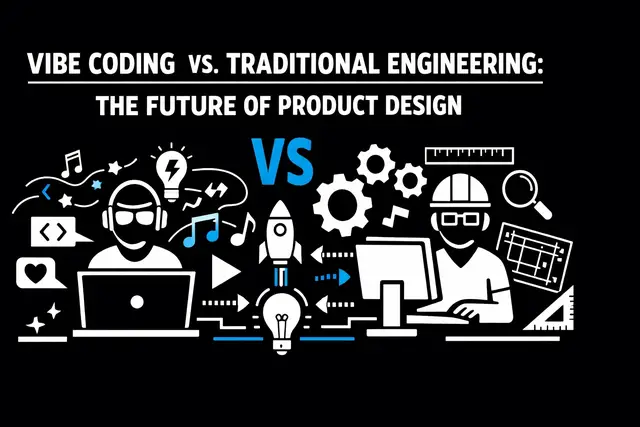
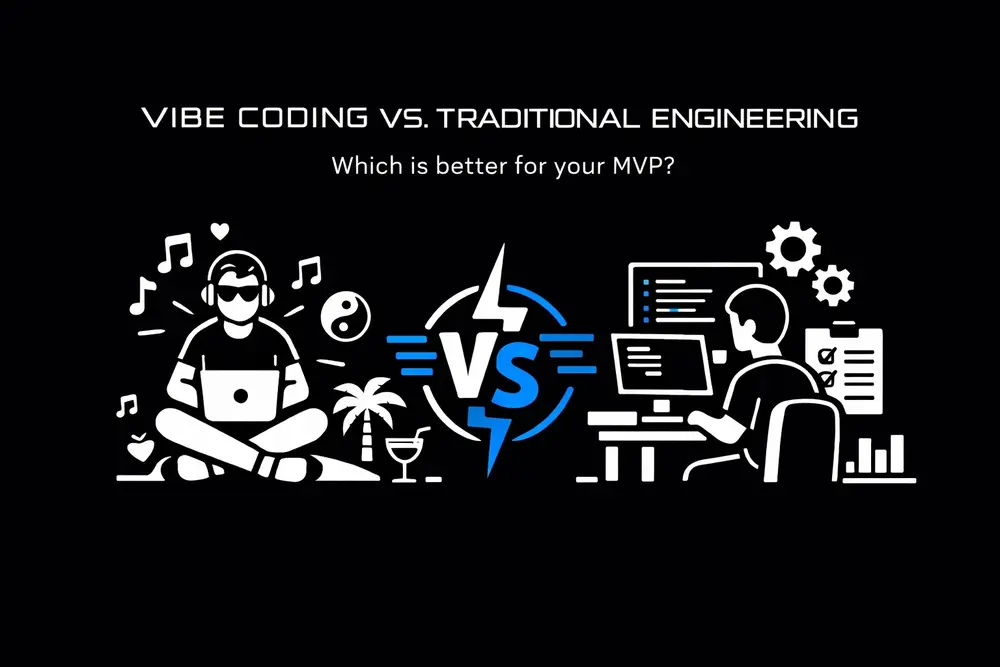
Vibe coding is a workflow where AI generates large portions of a codebase from natural-language prompts. Traditional engineering is a workflow built on architecture, testing, documentation, and maintainability. For an MVP, the choice dictates speed to market, cost of change, technical debt, and the path to scale.
The digital landscape is currently divided into two primary camps: the traditionalists who favor structural integrity and the new wave of "vibe coders" who prioritize velocity through AI-driven iteration. For founders and product owners looking to launch a Minimum Viable Product (MVP), the choice between these two methodologies is not merely a technical decision; it is a strategic one that dictates the lifecycle, scalability, and economic viability of the entire venture.
The Ascension of Vibe Coding
Vibe coding builds software by prompting LLMs inside AI IDEs to generate UI, logic, and glue code. The developer directs intent, validates outputs, and ships iterations.
For an MVP, vibe coding compresses time-to-market from months to weeks or days when the goal is validated learning, a pitch-ready demo, or fast UX iteration.
- Rapid Prototyping: AI can generate functional front-end components and boilerplate back-end logic in seconds.
- Instant Iteration: Feedback from a user session can be implemented and deployed almost immediately by re-prompting the AI.
- Reduced Initial Capital: By lowering the barrier to entry, early-stage teams can validate ideas without a massive engineering overhead.

The Case for Traditional Engineering
Vibe coding optimizes speed. Traditional engineering optimizes durability. Traditional engineering is defined by architecture decisions, automated and manual testing, documentation, and maintainable code standards.
When privacy, ADA compliance, security, and reliability requirements exist, traditional rigor prevents hidden liabilities and reduces long-term rework.
The core pillars of traditional engineering include:
- Scalability: Systems designed to handle 10,000 users as efficiently as 10 users.
- Security: Human-led auditing of data flows, encryption standards, and authentication protocols.
- Maintainability: Clean, documented code that can be handed off to different teams without a complete rewrite.
- Reliability: Comprehensive unit and integration testing to prevent regression during future updates.
Quantifying the Impact: Metrics of Success
Decision-making is driven by metrics. These performance indicators define the gap:
- Speed to First Demo: Vibe coding typically yields a functional demo 70% faster than traditional methods.
- Bug Density: AI-generated code, if unvetted, can have a 30% higher chance of logical errors or edge-case failures.
- Technical Debt: Vibe coding can accumulate technical debt at an accelerated rate, often requiring a "stabilization phase" that costs 1.5x the original development time if not managed correctly.
- Success Rate: MVPs built with a hybrid approach: leveraging AI for speed but human engineers for oversight: show a 45% higher rate of successful series-A funding.
When to Choose Vibe Coding for Your MVP
Vibe coding is the superior choice when the cost of failure is low and the value of speed is high. If the goal is to create a visual prototype to present at a conference, or a simple tool to test a specific user behavior, the rigor of traditional engineering may be an unnecessary anchor.
Ideal scenarios for vibe coding:
- MVP Demos: Creating a high-fidelity visual and functional representation of an idea for pitch decks.
- Marketing Landing Pages: Highly interactive pages that require unique UX elements but minimal back-end complexity.
- Proof of Concept (PoC): Testing if a specific API or technology can solve a particular problem.
- UX Experiments: Rapidly deploying multiple versions of an interface to see which one resonates with users.
The Danger Zones: When Traditional Rigor Is Non-Negotiable
There are sectors where "vibes" are insufficient. Any product involving sensitive user data, financial transactions, or regulatory requirements must be anchored in traditional engineering.
If an MVP involves payment processing, HIPAA-regulated healthcare data, or proprietary algorithms that represent the company's core intellectual property, relying solely on AI-generated code is a high-risk gamble. In these instances, the AI should be a tool for the engineer, not the engineer itself. Human oversight is required to ensure that the code is not only functional but ethically and legally sound.
The Hybrid Blueprint: The Modern Standard
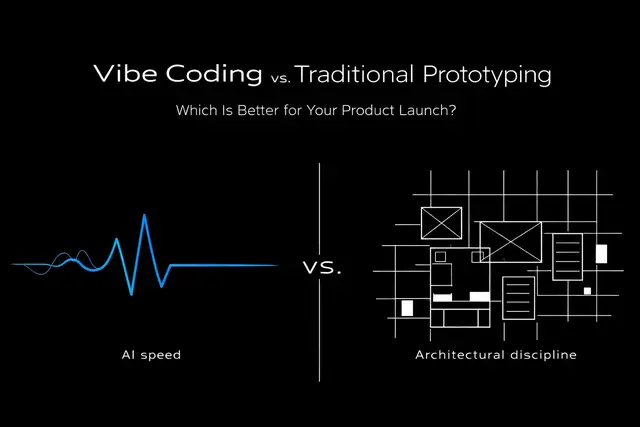
The most successful digital products today do not choose one or the other. Instead, they adopt a hybrid workflow that maximizes the strengths of both methodologies. This is the approach used on high-performance digital products that ship fast without losing control of architecture, security, and maintainability.
1. AI-Driven Exploration: Use vibe coding for the initial UI/UX and to generate the boilerplate. This allows the creative team to see the product "live" almost as fast as they can design it. 2. Engineering Constraints: A senior engineer sets the "guardrails": the architecture, the database schema, and the security protocols: before the AI begins generating code. 3. Continuous Refactoring: As the AI generates code, the human engineer reviews, refactors, and documents the critical paths. This prevents the accumulation of unmanageable technical debt. 4. Automated Testing: Traditional engineering rigor is applied through automated testing suites that ensure the AI’s speed doesn’t break existing functionality.

Navigating the Decision Latency
The greatest risk in MVP development is decision latency: time spent debating implementation instead of shipping learning loops. Vibe coding cuts latency by moving directly to executable software. Deferred architecture decisions increase cost over time.
The priority is validated learning. Use vibe coding to learn faster, then replace disposable scaffolding with production-grade engineering before scale, compliance, and revenue depend on it.
Conclusion
The battle between vibe coding and traditional engineering is a false dichotomy. The future of product design belongs to those who can master the velocity of AI while maintaining the discipline of traditional architecture.
For projects requiring high-performance digital innovation, navigating these complexities requires a strategic partner who understands both the "pixel pusher" creativity and the business acumen of a seasoned strategist. Whether you are looking to build a rapid prototype to disrupt a market or a scalable platform to handle millions of transactions, the right balance of speed and stability is the key to longevity.
Strategic guidance is available for teams that want AI velocity with engineering control. We are here to help design the hybrid workflow, guardrails, and release discipline that keeps an MVP fast, secure, and scalable.
Email blog and social media approval requests to norman@igenapps.com. Provide a PDF or a direct link to the assets for review. Do not publish any content until the review process for that specific release is complete.