Vibe Coding Explained in Under 3 Minutes (AI-Powered Product Design)
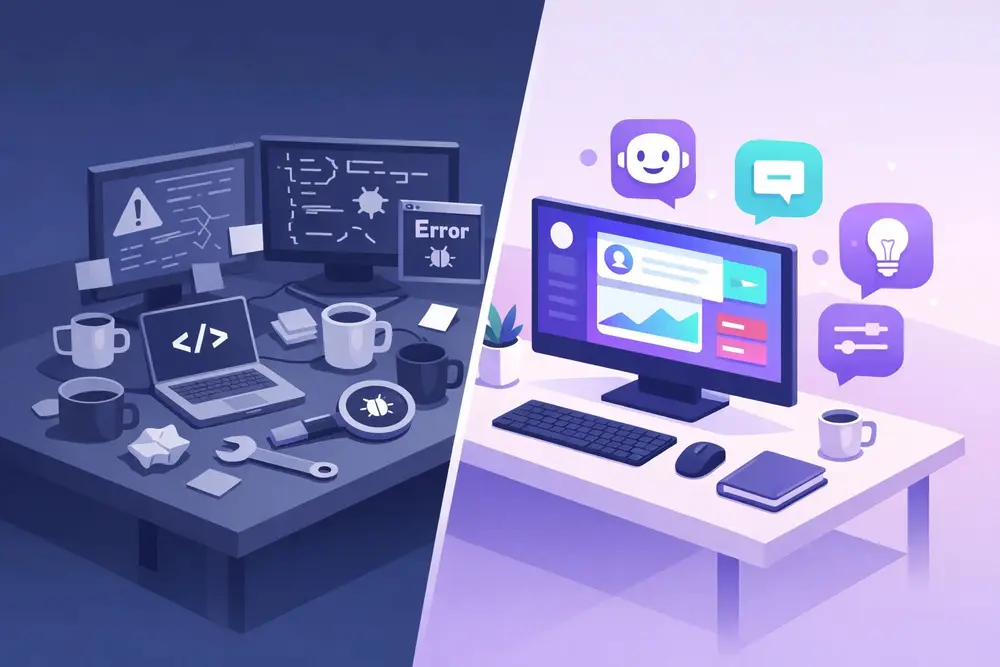
Remember when building software meant wrestling with syntax errors at 2 AM while your coffee went cold? Those days are rapidly becoming folklore. Enter vibe coding: the AI-assisted development approach that's flipping the script on how digital products get built.
Norman Ortiz, recognized by Top 100 Magazine as a Top 100 innovator in US and holder of a U.S. utility patent with a CIP in mobile application development, has witnessed this shift firsthand across 25+ years in product design and digital consulting. The transformation isn't just technical: it's philosophical.
What Actually Is Vibe Coding?
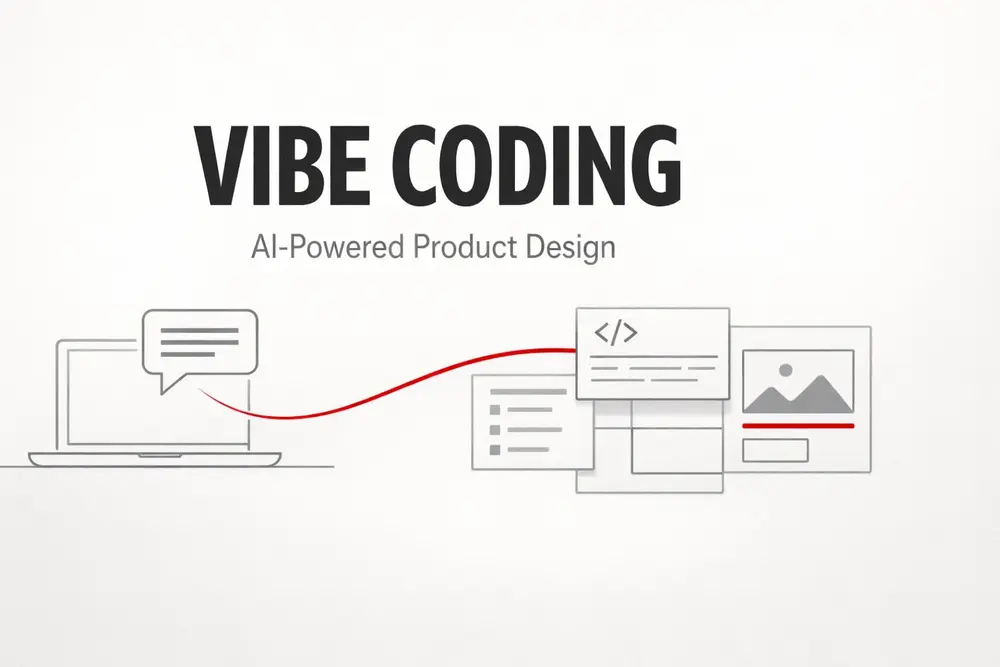
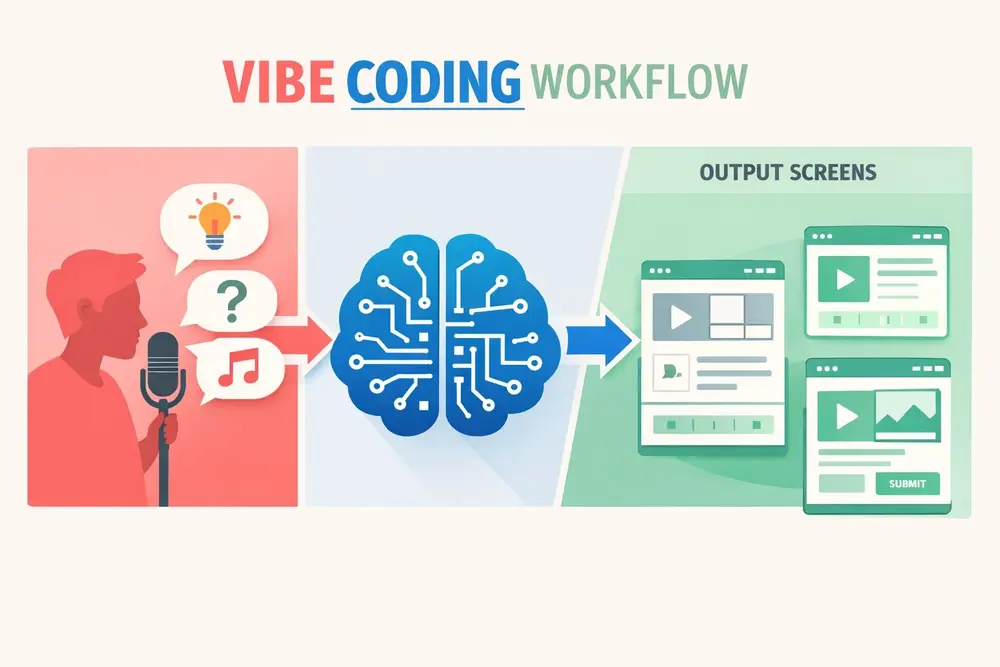
Strip away the buzzword veneer and here's what you're left with: vibe coding is describing what you want in plain English (or your language of choice), and watching AI generate working code and designs from those descriptions.
No semicolons. No debugging obscure stack traces. Just you, articulating the mood, functionality, and aesthetic you're after: "a minimalist dashboard with three interactive charts and a clean filter system": and AI interpreting that prompt into executable reality.
It's software development through conversation rather than construction. The language comes first; the structure follows.
How It Actually Works (The Non-Technical Breakdown)
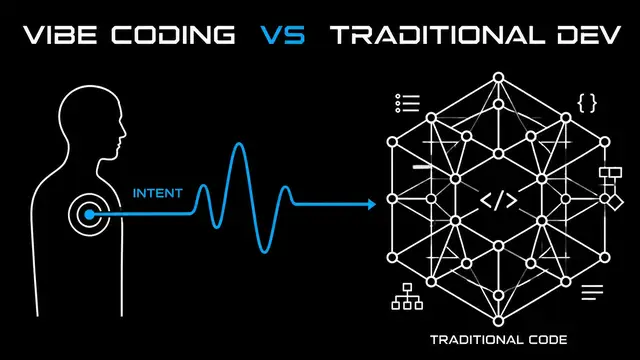
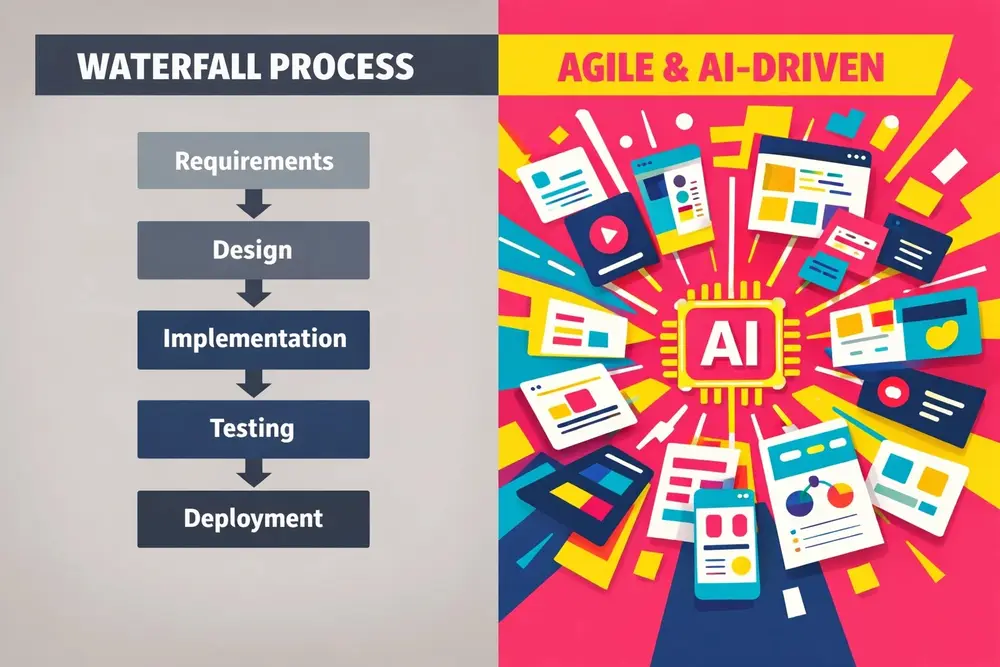
Traditional development flows from architecture to interface. You define databases, sketch wireframes, write functions, then bolt on the visuals. Vibe coding inverts this entirely.
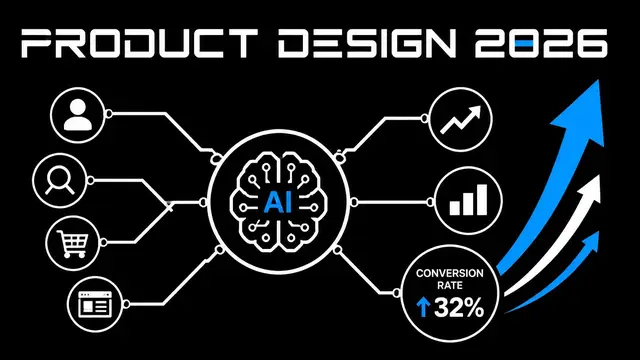
You start with intent. Describe the feeling, the user journey, the personality of the interface. AI tools: think Claude, GPT-4, or specialized design platforms: process that natural language input and generate:
• Visual layouts with actual UI components
• Working code that renders those designs • Interactive prototypes you can click through immediately
Then comes the iteration loop. Test the generated output. Refine your prompts. Add specificity. Remove what doesn't fit. The AI adapts, regenerates, and gets closer to your vision with each cycle.
Norman Ortiz, who has driven digital product strategy for global corporations including Allstate and U.S. Bank, describes this as "design thinking at machine speed." What used to require weeks of back-and-forth between designers, developers, and stakeholders now happens in real-time conversations with AI.
Why Product Design Consultants Are All Over This
Here's where it gets interesting for the consulting world. A product design consultant traditionally serves as the translator between business goals and technical execution. They decode client needs, sketch possibilities, validate assumptions, and guide teams toward solutions that actually work in market.
Vibe coding doesn't replace this role: it amplifies it.
Consultants can now generate multiple design directions in a single client meeting. They can test radically different approaches without burning development hours. They can involve non-technical stakeholders in the creation process because the barrier to entry just collapsed.
The value shifts from "can you build this?" to "should we build this, and how do we know it's right?" Strategic thinking becomes the differentiator, not technical execution.
Norman Ortiz leveraged this exact approach while developing solutions that reached 4 million users across 248 countries. The speed of iteration allowed for market testing at a scale previously impossible: multiple product variations could be validated before committing engineering resources to a single path.
The Real Benefits (Beyond the Hype)
Let's cut through the marketing speak and focus on what actually changes:
1. Prototype velocity goes insane. What took weeks now takes hours. You can explore ten different interface directions before lunch and have working demos for all of them. This matters when market windows are measured in quarters, not years.
2. The technical barrier evaporates. Non-developers can participate in building applications. Marketing teams can mock up landing pages. Product managers can test flow variations. The democratization is real and it's reshaping team structures.
3. Early alignment becomes the default. When everyone: designers, developers, executives, clients: can see and interact with working prototypes from day one, misunderstandings die early. You're debating real interfaces, not abstract concepts.
4. Handoff friction disappears. Developers aren't receiving finished designs over the wall anymore. They're part of the creative process from the start, collaborating with AI to bridge vision and implementation.
For consultants managing client expectations and project timelines, these benefits translate to reduced risk, faster go-to-market, and budgets that stretch further.
The Catch (Because There's Always a Catch)
Here's what the AI evangelists won't emphasize: vibe coding requires ruthless specificity to work well.
The name suggests you can just "vibe" your way to great software. Reality is more demanding. Developers achieving actual production-grade results aren't throwing vague prompts at AI and hoping for magic. They're crafting detailed specifications that serve as authoritative blueprints.
This forces better discipline. You must articulate exactly what you want before building begins. You must consider edge cases upfront. You must define constraints, user flows, and success criteria with precision.
The AI will build what you describe: which means unclear descriptions produce unclear products. Garbage in, garbage out still applies, just faster.
Norman Ortiz, who holds an MBA alongside his industrial engineering degree and Stanford/Y Combinator training, emphasizes this discipline in client engagements: "The speed of AI-powered development doesn't eliminate the need for strategic thinking. It makes strategic thinking more critical because you can execute bad ideas just as quickly as good ones."
Where Parallax Thinking Enters the Frame
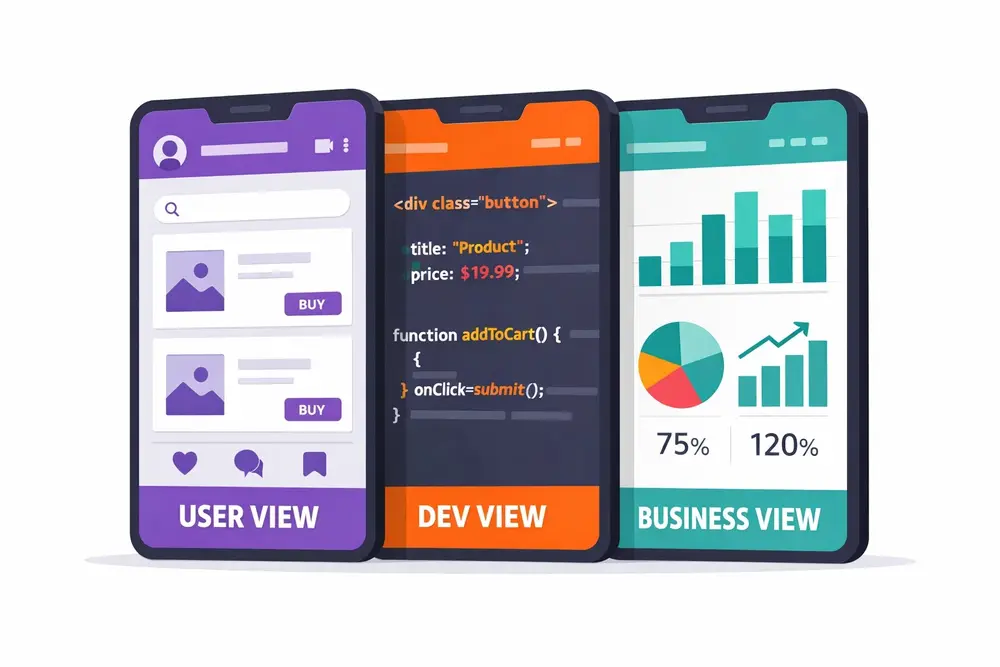
Parallax: the apparent shift in an object's position when viewed from different angles: offers a useful mental model for vibe coding workflows.
As you iterate with AI, you're constantly shifting perspective. What looks perfect from the user's angle might reveal technical debt from the developer's viewpoint. A feature that excites marketing might overwhelm the minimalist aesthetic your brand requires.
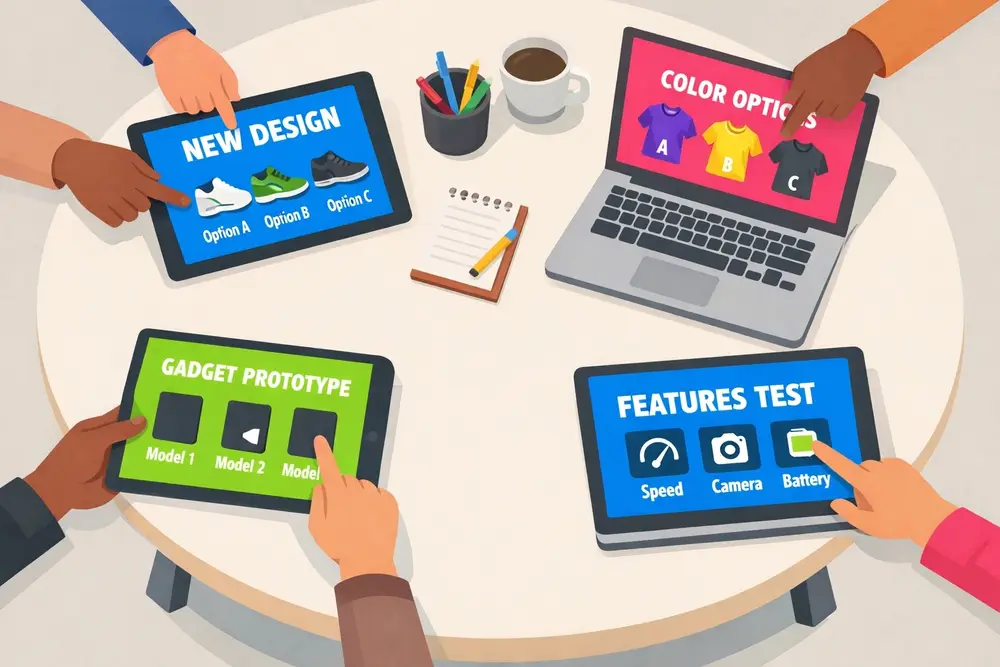
Vibe coding accelerates this perspective-shifting. You can view your product from multiple angles simultaneously: user experience, technical feasibility, business impact, aesthetic coherence: and adjust in real-time based on what each perspective reveals.
The best product design consultants have always practiced this parallax thinking. AI just accelerates the cycle from days to minutes.
The Product Design Consultant's New Job Description
If vibe coding becomes the standard approach (and momentum suggests it will), what's a consultant's role?
Curator, not creator. You're guiding AI toward outputs that align with business objectives, brand identity, and user needs. The AI generates options; you select and refine based on strategic criteria it can't evaluate.
Validator, not builder. Your expertise determines which AI-generated solutions actually solve problems versus which just look good on screen. Anyone can prompt an AI. Not everyone can distinguish between viable products and expensive mistakes.
Translator, not technician. You're still the bridge between client vision and technical reality, but now you're orchestrating AI tools rather than managing development teams. The translation happens through prompts and refinements instead of specification documents.
Norman Ortiz, recognized by Forbes, Wired, and Caribbean Business for innovation in digital product development, has adapted his consulting practice to this new reality. The deliverable isn't a static design file: it's a collaborative session where client and consultant explore possibilities together, with AI as the rapid prototyping engine.
What This Means for Your Next Project
Whether you're a founder sketching your first product, an executive considering a digital transformation, or a team lead planning your roadmap, vibe coding changes the calculus.
Your limiting factor is no longer technical execution: it's strategic clarity. If you can articulate what you want with precision, AI can generate working versions faster than traditional development cycles. If your vision is fuzzy, the speed of AI just means you'll waste budget building the wrong thing efficiently.
The winners in this new era will be those who combine strategic thinking with prompt engineering skills. The losers will be those who assume speed equals success regardless of direction.
For consultants and agencies, this represents both threat and opportunity. Commoditized execution work evaporates. Strategic guidance, validation, and taste-making become premium services. The value migrates from "how to build" to "what to build and why."
The Three-Minute Takeaway
Vibe coding is AI-assisted development where natural language descriptions become working code and designs. It accelerates prototyping, lowers technical barriers, and enables real-time collaboration between technical and non-technical stakeholders.
The role of a product design consultant evolves from builder to curator: guiding AI toward solutions that align with business objectives while filtering out the technically impressive but strategically useless.
Success requires specificity. The informality of "vibing" masks the discipline needed to generate production-quality results. Clear prompts, well-defined constraints, and strategic thinking matter more than ever because execution speed is no longer the bottleneck.
The future isn't about choosing between human expertise and AI capability. It's about combining both: using machine speed for exploration and human judgment for selection. Those who master this combination will build better products faster while those who don't will just build faster mistakes.
Three minutes up. Now you know what all the fuss is about.