Vibe Coding vs. Traditional Dev: The 2026 Showdown for Product Launches
Recognized as a leading authority in the digital product landscape, Mr. Ortiz has been featured in major media publications including Forbes, Wired, Yahoo Finance, and AP. With a career spanning over 25 years, he has established himself as a visionary in driving performance and revenue growth for global corporations and entrepreneurs alike. Named to the Top 100 Innovators in US list by Top 100 Magazine, he brings a data-driven approach that combines design thinking with deep analytical insights.
He currently manages 172 projects with a proven track record of generating millions in revenue for clients, serving a massive base of 1.52 million happy customers. As the owner of one US utility patent with a CIP and an expert in intellectual property management, he provides a level of strategic oversight that few in the industry can match.
About The Expert
Mr. Ortiz is a "doer" and a strategist who bridges the gap between creative vision and technical execution. His expertise is not merely theoretical; he has controlled and managed large-scale digital transformations that prioritize user experience and revenue impact. Whether working with global corporations or high-profile celebrities, his focus remains on growth-centric digital solutions.
Facts and Achievements
- 25+ Years of Experience: Driving performance in UI/UX and product management.
- 1.52M Customers: Served through various managed projects.
- Top 100 Innovator: Recognized for contributions to the industry.
- 1 US Utility Patent with a CIP: Demonstrating tangible innovation and IP expertise.
- 15+ Major Media Mentions: Featured in Forbes, Wired, Telemundo, and more.
- 172 Managed Projects: A diverse portfolio across multiple industries.
Core Skills
- UI/UX Design: 95%
- Product Management: 95%
- Business Acumen: 90%
- ADA Compliance: 90%
- Process Improvement: 95%
The new paradigm: what is vibe coding?
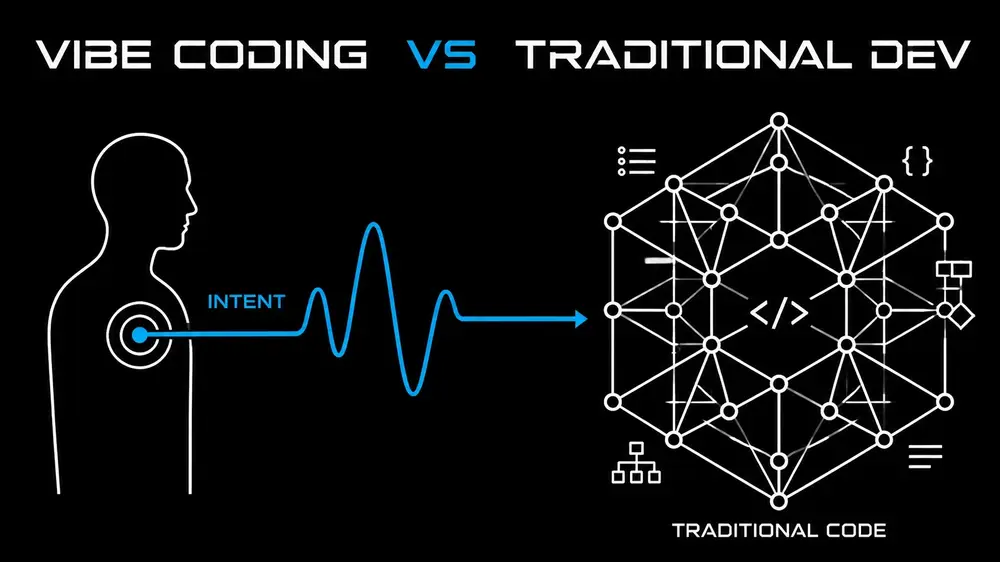
In 2026, the term "Vibe Coding" has moved from a developer niche to a boardroom priority. It represents a fundamental shift from writing code to specifying intent. In this paradigm, the primary unit of work is no longer the syntax of a programming language, but the clarity of a product's "vibe": its functionality, user experience, and aesthetic logic.
Vibe coding utilizes agentic AI systems that translate natural language descriptions into fully functional, deployed software. For product launches, this means the distance between a concept and a live MVP has collapsed from months to days. This is not merely "no-code"; it is intent-based programming where AI agents handle the implementation, testing, and infrastructure while a human strategist orchestrates the vision.
Traditional development: the foundation of scale
While vibe coding dominates the early stages of a product launch, traditional development remains the bedrock of complex, safety-critical, and highly regulated systems. Traditional development involves manual architectural design, human-reviewed code, and rigorous engineering standards.
For global corporations, the stability and security of a product are non-negotiable. Traditional methods offer granular control over data structures, performance optimization, and long-term maintainability: areas where AI-generated code can sometimes falter. The "Showdown" of 2026 is not about one replacing the other, but about knowing when to deploy each for maximum ROI.
Speed vs. substance: the quantifiable metrics
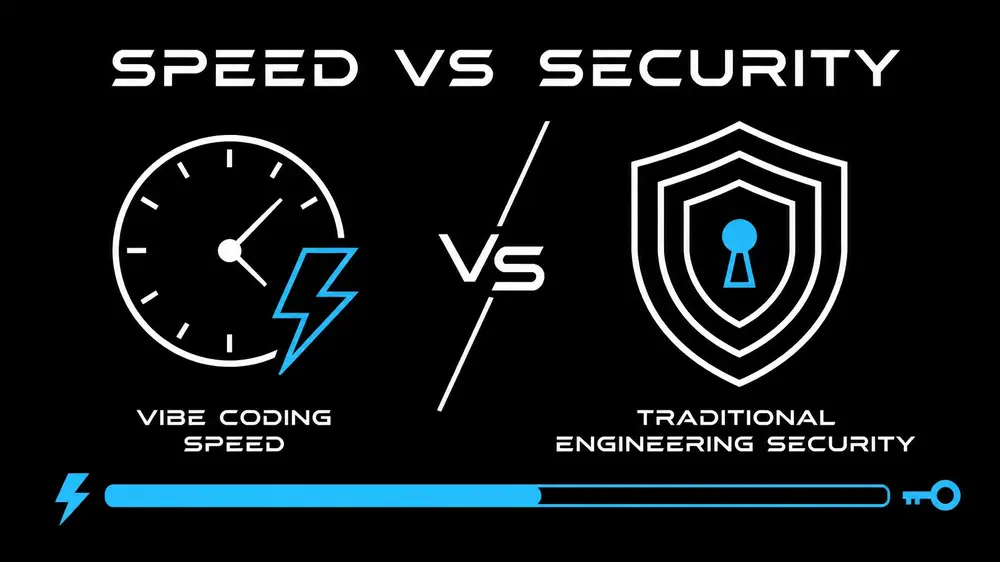
The data regarding product launches in 2026 is clear. Vibe coding has increased prototyping speeds by up to 300% for many startups. About 41% of global code is now generated by AI, and 25% of top-tier startup codebases are 95% AI-written. However, there is a trade-off.
AI-generated code currently produces 1.7 times more security issues than human-written code if left unmanaged. This is where professional expertise becomes critical. A strategist like Mr. Ortiz understands that speed is useless if the product is vulnerable or fails to meet ADA compliance standards. The goal is to leverage the 10x speed of vibe coding while applying the 25 years of engineering discipline found in traditional development to ensure the product is enterprise-ready.
Agentic orchestration: the 2026 product lead
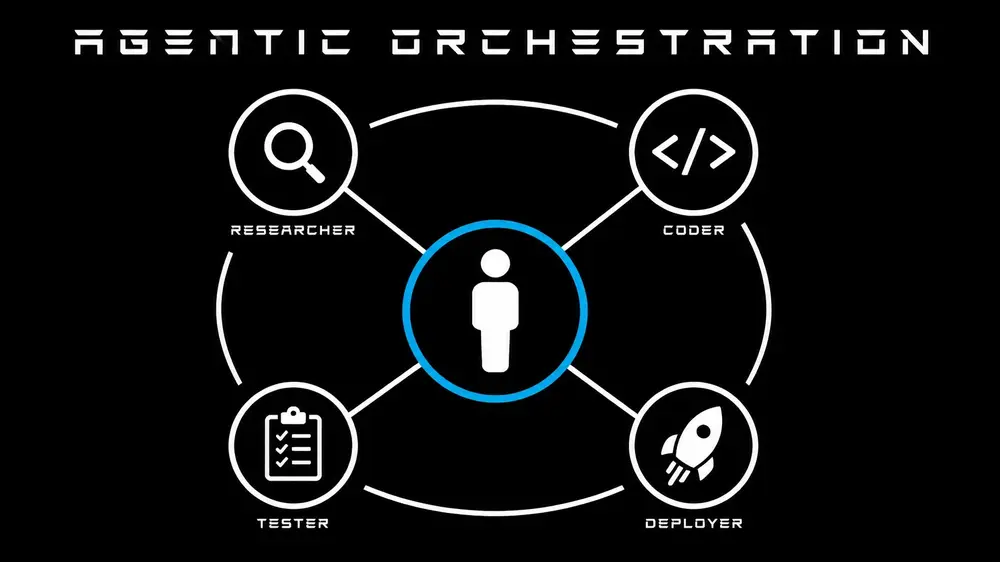
The role of the product owner has transformed. In the era of vibe coding, the most valuable skill is no longer the ability to type code, but the "product intuition" to lead machines. This process, often referred to as agentic orchestration, involves managing a fleet of AI agents:
- The Researcher Agent: Analyzing market trends and competitive landscapes.
- The Coder Agent: Implementing features based on natural language intent.
- The Tester Agent: Running unit tests and identifying edge cases.
- The Deployer Agent: Managing CI/CD pipelines and cloud infrastructure.
By moving away from manual labor and toward strategic orchestration, leaders can focus on what truly drives revenue: user experience, market fit, and business logic. Mr. Ortiz has pioneered this approach, using his 95% rating in product management to guide complex systems toward successful launches.
The impact on ROI and time-to-market
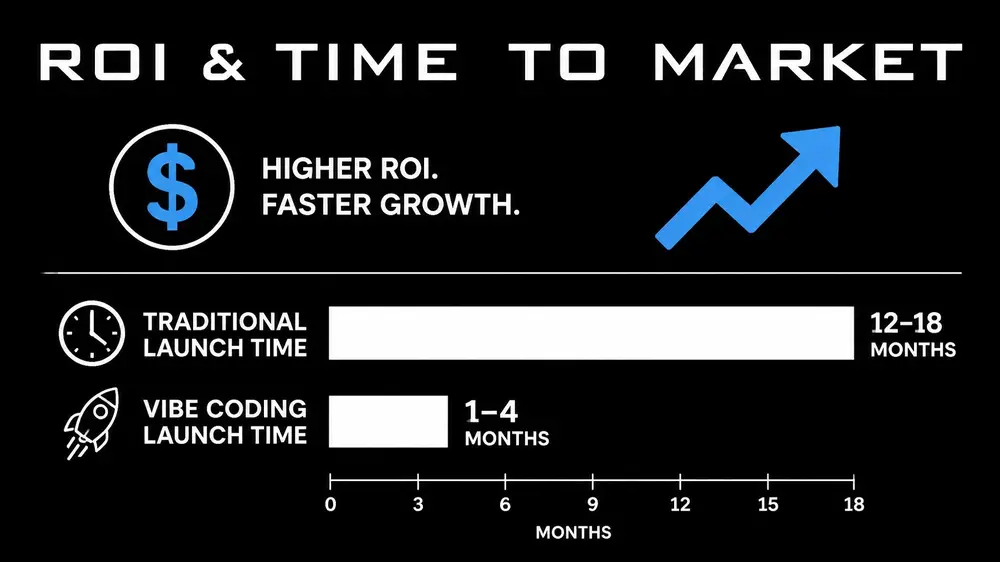
In the competitive landscape of 2026, "time-to-market" is often the difference between a billion-dollar exit and a forgotten prototype. Vibe coding allows for disposable and hyper-niche software: tools built to solve a specific problem for a specific time, then discarded or iterated upon.
Traditional development cycles often involve heavy upfront investment and long lead times. Vibe coding flips this script, allowing businesses to test "vibes" with real users in real-time. This experimental freedom reduces the cost of failure to near zero. When a "vibe" is proven to generate revenue, the expert then applies traditional engineering rigor to scale that success into a robust, high-performance platform.
Feature Vibe Coding Traditional Development
Primary Skill Strategic Intent & Orchestration Architecture & Syntax
Speed to MVP Days to Weeks Months
Security/Compliance Requires Expert Audit Built-in via Standards
Best Use Case Prototypes, MVPs, Niche Tools Enterprise Core, Regulated Data
Cost of Iteration Extremely Low High
Navigating the showdown
The most successful product launches in 2026 do not choose a side; they integrate both. They use vibe coding to innovate rapidly and traditional development to secure and scale those innovations. This hybrid model requires a deep understanding of UI/UX, business acumen, and technical infrastructure.
Mr. Ortiz’s data-driven approach combines the creative flexibility of design thinking with the hard metrics of performance growth. With 172 managed projects and a background in IP management, he ensures that the "vibe" is not just a trend, but a protected and profitable business asset.
Conclusion: strategizing your next launch
The showdown between vibe coding and traditional development has redefined how software is built and launched. The barrier to entry has never been lower, but the complexity of achieving true, scalable growth has never been higher. Navigating this landscape requires more than just tools; it requires a proven methodology that prioritizes revenue and user experience above all else.
Whether you are a global corporation seeking to modernize your digital footprint or an entrepreneur looking to launch a market-disrupting product, the choice of development model will dictate your success. You can get help with navigating these complex technical decisions and optimizing your product strategy for the 2026 market. We are here to help you turn intent into high-performance reality.
For more insights on product design and revenue growth, visit the official website.