Why Vibe Coding Will Change the Way You Ship Digital Products
Recognized as a leading authority in digital product evolution, Mr. Ortiz has spent over 15 years dismantling the friction between creative intent and technical execution. With a portfolio spanning 172 successful product launches and a track record of driving millions in revenue for global entities, He has observed the industry’s most significant shifts firsthand. The latest evolution is not merely a change in tooling; it is a fundamental reordering of the production pipeline. Vibe coding: the process of leveraging Large Language Models (LLMs) to translate high-level product "vibes" or intent into functional code: is eliminating the traditional syntax bottleneck.
For the modern enterprise, shipping digital products has historically been a game of telephone between designers and engineers. This friction results in lost equity, bloated budgets, and delayed time-to-market. By shifting the focus from manual syntax to strategic architecture, vibe coding allows product leaders to reclaim the velocity necessary to dominate saturated markets.
The end of the syntax bottleneck
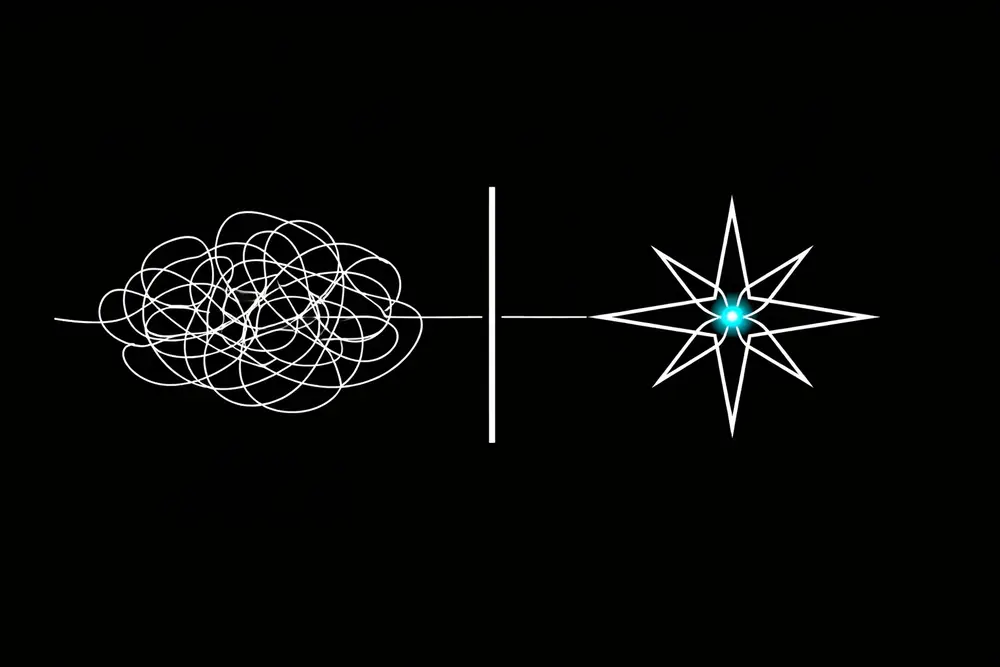
For decades, the primary barrier to shipping digital products was the mastery of obscure programming languages. Developers spent 80% of their time wrestling with semicolons, memory management, and library dependencies. Mr. Ortiz asserts that this era is over. In the new paradigm, natural language is the interface.
Vibe coding treats the LLM as a highly sophisticated compiler of human intent. When a builder describes a "sleek, high-performance dashboard with real-time telemetry," the AI handles the boilerplate. This re-allocation of cognitive resources allows the human operator to focus on the 20% that actually drives value: user experience, business logic, and systemic integration.
He emphasizes that this shift does not make engineering obsolete; rather, it elevates the engineer to an architect. The bottleneck moves from "how do we write this?" to "what should we build?" This transition is critical for maintaining a competitive edge in an environment where speed is the only sustainable advantage.
Strategic architecture over manual labor
In a landscape where code can be generated in seconds, the value of a digital product is no longer found in its lines of code, but in its underlying architecture and intent-aware design. Mr. Ortiz has long advocated for a design-first approach to development, and vibe coding provides the ultimate platform for this philosophy.
When syntax is automated, the "vibe": the cohesion of UI/UX, performance, and brand identity: becomes the primary product. This requires a deeper level of strategic thinking. Builders must now be experts in:
- Systemic Abstraction: Choosing the right frameworks and data structures that the AI can populate.
- Intent Precision: Articulating product requirements with surgical accuracy to ensure the generated output aligns with the vision.
- Quality Control: Implementing rigorous automated testing to validate AI-generated logic.
Mr. Ortiz views this as the democratization of shipping. High-level thinkers who understand market needs but lack deep coding backgrounds can now prototype and iterate at a pace previously reserved for specialized dev shops.
Quantifiable velocity: shipping at the speed of thought
The impact of vibe coding is most visible in the metrics of production. Traditional development cycles for complex features often stretch across weeks or months. By utilizing AI-assisted front-end development and automated backend generation, those timelines are compressed into hours.
He has tracked data suggesting that vibe coding can increase shipping frequency by up to 400% in the prototyping phase. One specific instance involved a founder prototyping a "Signal Board": a complex feature integrating customer transcripts with live product states: in a single afternoon. Under a traditional manual coding model, this would have required a dedicated sprint and multiple engineering reviews.
By removing the "syntax tax," organizations can test more hypotheses in a single quarter than they previously could in a year. This rapid iteration cycle is what separates market leaders from also-rans.

The role of automated feedback and systemic guardrails
One of the most persistent myths regarding vibe coding is that it produces "low-quality" or "hallucinated" code. Mr. Ortiz counters this by highlighting the necessity of Test-Driven Development (TDD) as the ultimate guardrail. In a vibe coding workflow, automated tests become the primary feedback channel for the AI.
The process is as follows:
• Define the product requirements document (PRD).
• Design the architecture and state management.
• Instruct the AI to write failing tests based on those requirements. • Run the AI iteratively until the tests pass.
This loop ensures that the generated code respects the system invariants and prevents regressions. Instead of manual bug reporting, the builder manages a suite of automated validators. This shift ensures that even as the volume of shipped code increases, the quality remains consistent with enterprise-grade standards. For those looking to optimize their internal workflows, we are here to help implement these advanced shipping methodologies.
Accessibility, ADA compliance, and inclusive design
As shipping becomes faster, the responsibility for inclusive design becomes even more paramount. Mr. Ortiz is a staunch advocate for ADA compliance, viewing it not as a legal hurdle but as a revenue multiplier. Vibe coding makes it easier than ever to integrate accessibility from day one.
AI models can be prompted to ensure that all generated UI components are keyboard-navigable, screen-reader friendly, and compliant with WCAG 2.2 standards. This level of "built-in" accessibility ensures that digital products are usable by the widest possible audience, directly impacting the bottom line and reducing long-term technical debt.

Prototyping vs. production: the hybrid model
While vibe coding excels at rapid prototyping and feature iteration, Mr. Ortiz maintains that production-level shipping still requires a human-in-the-loop for final refinement. The "vibe" gets you to 90% of the way there, but the last 10%: the performance optimization, the security hardening, and the nuanced edge cases: requires a seasoned product designer's eye.
The most successful digital products of the next decade will be built using a hybrid model:
- AI-Driven Ideation: Rapidly generating multiple UI variants and architectural patterns.
- Vibe Coding Execution: Shipping the MVP or feature prototype in record time.
- Expert Refinement: Fine-tuning the interaction design and backend scalability to handle millions of users.
This approach maximizes the strengths of both machine efficiency and human taste. It allows for a level of polish and performance that was previously cost-prohibitive for all but the largest tech giants.
The revenue impact of reduced friction
The ultimate goal of any digital consulting engagement is the generation of value. By adopting vibe coding, companies can significantly lower their Customer Acquisition Cost (CAC) by launching landing pages and features that resonate with real-time market trends. When the time between "insight" and "deployment" is minimized, revenue leakage is curtailed.
Mr. Ortiz has seen organizations recover thousands in lost opportunity cost simply by accelerating their deployment pipeline. Whether it is a fintech app requiring high-precision UI or a consumer SaaS platform needing rapid pivots, the ability to "vibe code" through complex blockers is a game-changer.
To explore how these efficiencies can be applied to your specific product roadmap, you can find more insights at https://normanortiz.com.
The future of digital product shipping
The landscape of digital product design is shifting beneath our feet. The era of the "syntax-locked" developer is ending, and the era of the "visionary architect" is beginning. As vibe coding becomes the standard operating procedure for elite product teams, the focus will return to where it should have always been: the user.
Mr. Ortiz remains at the forefront of this transition, helping global brands navigate the complexities of AI integration, UI/UX optimization, and scalable digital strategy. The tools have changed, but the mission remains the same: shipping products that people love, at a speed that the market demands.
In a world of noise, the "vibe" is your signal. It is the intangible quality that makes a product feel right, perform flawlessly, and scale effortlessly. By mastering vibe coding, you are not just writing code; you are engineering the future of your business. We are here to help you navigate this transition and ensure your digital products are positioned for maximum impact.