Why Your UI Is Killing Your Conversions (And How to Fix It)
In the hyper-competitive digital landscape of 2026, a mediocre user interface is no longer just a design flaw; it is a direct drain on corporate revenue. The margin for error has evaporated. As a recognized expert featured in over 15 major media publications, including Forbes, Wired, Yahoo Finance, and the AP, the principal strategist behind these insights has spent over 25 years driving performance for global corporations and ambitious entrepreneurs alike. With a track record of managing 172 projects and serving 1.52 million happy customers, the evidence is absolute: design thinking combined with analytical rigor is the only way to sustain growth.
Being named to the Top 100 Innovators in US list by Top 100 Magazine was not the result of following trends, but of mastering the science of user behavior. Holding one US utility patent with a CIP, this strategist understands that every pixel must earn its place. If your platform is not converting, it is likely suffering from one of several critical UI failures that alienate users before they even reach your value proposition.
The cognitive cost of clutter
One of the most frequent revenue killers identified in comprehensive product reviews is the overcomplicated interface. Many businesses mistakenly believe that more information leads to more trust. In reality, the opposite is true. Cluttered layouts, excessive animations, and dense text blocks create "cognitive overload." When a user is overwhelmed, they hesitate. In digital commerce, hesitation is the precursor to abandonment.
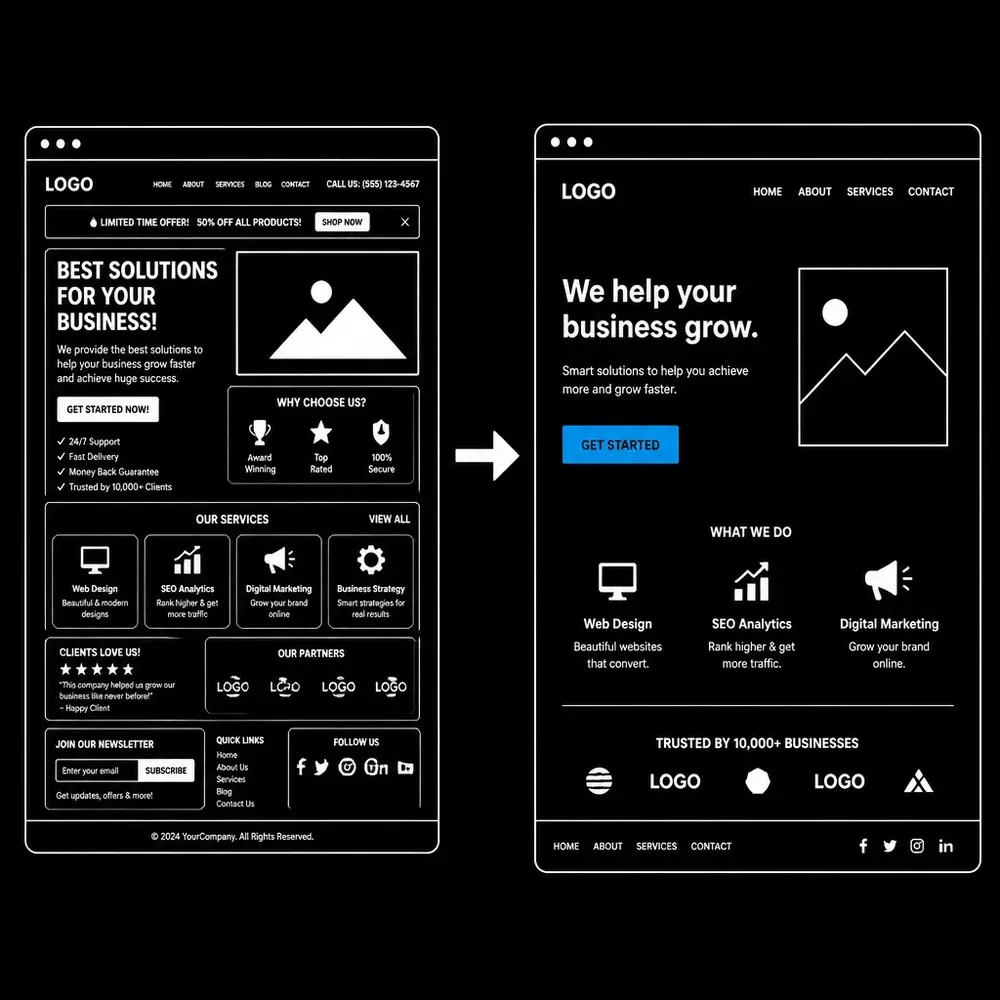
Functional minimalism is a core tenet of high-performing design. Every element on a screen must support a singular user goal. If a new visitor cannot determine the purpose of a page and the next required action within five seconds, the UI has failed. Professional product improvement services focus on stripping away non-essential elements to create a clear, frictionless path to conversion.
The mobile-hostility trap
Despite the fact that mobile traffic has dominated for years, many platforms in 2026 still treat mobile responsiveness as an afterthought. "Mobile-friendly" is no longer a sufficient standard. To maximize revenue, a design must be mobile-first and thumb-optimized.

Common mistakes include tiny tap targets that lead to "fat-finger" errors, horizontal scrolling, and modal popups that are impossible to close on a smartphone screen. These issues create a "friction cluster": a series of small annoyances that compound until the user bounces. A rigorous audit ensures that the primary conversion funnel can be navigated smoothly with one hand, ensuring that high-intent mobile traffic from search and social media is not wasted.
Visual hierarchy and the "ghost" CTA
A user interface without a clear visual hierarchy is like a map without a "You Are Here" marker. The eye must be guided. When headings are the same size as body text, or when the primary Call to Action (CTA) blends into the background, the user is forced to "decode" the page.
Specific quantifiable metrics show that action-oriented, high-contrast CTAs significantly outperform generic labels like "Submit" or "Learn More." If the main action button is below the fold without a visual cue leading to it, it essentially does not exist for a large percentage of your audience. Establishing a consistent design system: a skill rated at 95% proficiency by the principal strategist: ensures that buttons look like buttons and that the most important information is always dominant.
Performance as a design strategy
In 2026, speed is an aesthetic choice. A beautiful UI that takes six seconds to load is, by definition, a poor design. Slow initial paints and heavy scripts are often the result of "ego-driven" design: choosing complex visual effects over user experience.
Data visualization and performance analytics reveal that even a 100-millisecond delay can correlate with a measurable drop in conversion rates. Minimalism is not just a visual style; it is a performance strategy. By compressing assets, limiting non-critical animations, and prioritizing "above-the-fold" content, businesses can decrease bounce rates and signal professional reliability to their customers.
The revenue-driving power of a UX audit
The solution to a stagnating conversion rate is not a "rebrand" based on gut feelings, but a data-driven UX Audit. This process involves a deep dive into user behavior, competitive analysis, and market research to identify exactly where money is being left on the table.

A comprehensive audit goes beyond surface-level aesthetics. It examines:
- Information Architecture: Can users find pricing and features in under three clicks?
- Form Optimization: Are you asking for too much data? Every extra field in a form increases abandonment.
- ADA Compliance: Is your site accessible to the millions of users with disabilities? Inclusive design is not just a legal requirement but a significant market opportunity.
- Trust Signals: Are testimonials and security badges strategically placed near decision points?
By combining design thinking with analytical insights, a UX audit provides a roadmap for product improvement that is based on facts, not opinions.
Quantifiable growth through better design
The impact of fixing these UI mistakes is not theoretical. It is measured in millions of dollars in revenue generated for clients across the globe. Whether working with global corporations or high-growth entrepreneurs, the approach remains the same: identify friction, eliminate complexity, and optimize for the user’s intent.

With a 90% rating in business acumen and ADA compliance, the expertise available here ensures that your digital products are not only beautiful but are also high-performance business tools. The transition from a "pixel pusher" to a visionary strategist requires a deep understanding of how design influences the bottom line.
Conclusion: we are here to help
If your digital platform is failing to meet your growth targets, the problem is likely hidden within your user interface. Identifying these leaks requires an expert eye and a data-driven methodology. You can get help with prototyping, product design, and comprehensive UX audits to turn your interface into a revenue-generating asset. We are here to help you unlock the full potential of your digital presence.