UI/UX Design in 2026: The New Frontier of Conversion
Recognized as a leading authority in digital transformation and product strategy, Mr. Ortiz has spent over 25 years redefining how humans interact with technology. With a career spanning 172 successful projects and a track record of driving millions in revenue for global brands, he has become the definitive voice on the intersection of design, technology, and business growth. His insights have been featured in major industry publications, establishing a legacy of excellence that continues to shape the digital landscape of 2026.
As of April 30, 2026, the digital world has moved beyond simple aesthetic appeal. The current landscape demands a level of functional efficiency that was merely speculative just two years ago. Conversion is no longer a byproduct of a "pretty" website; it is the result of hyper-personalized, AI-driven experiences that anticipate user needs before they are even articulated.
The era of invisible interfaces
In 2026, the most successful user interfaces are the ones that users barely notice. The industry has shifted from "impressive" design to "effortless" design. This transition is driven by the fact that approximately 60% of digital searches now end without a traditional click, as AI agents and predictive interfaces fulfill user intent instantly.
Mr. Ortiz characterizes this era as the "Invisible Frontier." For a global brand to maintain high conversion rates, the design must remove every ounce of cognitive friction. When a user interacts with a platform, they are not there to admire the layout; they are there to achieve a goal. He maintains that the role of the designer in 2026 is to act as a friction-remover, ensuring that the path from intent to conversion is shorter than it has ever been in human history.

A futuristic visualization of an "Invisible UI" where generative elements adapt in real-time to a user's biometric feedback and intent markers, displayed in a minimalist geometric style.
Daily life of a visionary designer in 2026
The workday of a high-level UI/UX strategist in 2026 has fundamentally evolved. It is no longer about pushing pixels manually in a static canvas. Instead, it revolves around the orchestration of AI agents and the refinement of generative design systems.
He begins his day by reviewing the performance metrics of "Living Design Systems." These are not static style guides but autonomous frameworks that adjust color palettes, typography scale, and navigation flows based on real-time A/B testing conducted by AI models. For Mr. Ortiz, the focus has shifted from "what does it look like?" to "how does it behave for this specific user at this specific millisecond?"
The integration of AI agents into the design workflow allows for the simulation of thousands of user journeys in seconds. He utilizes these tools to identify potential drop-off points before a single real user ever encounters them. This predictive approach to design has resulted in conversion rate increases of up to 40% for the global brands under his consultation.
Vibe coding and the data-driven intersection
One of the most significant shifts in 2026 is the emergence of "Vibe Coding." This concept represents the marriage of human aesthetic intuition, the "vibe", with the absolute precision of machine-generated code. While AI can optimize for conversion metrics, it often lacks the emotional resonance that builds long-term brand loyalty.
Mr. Ortiz bridges this gap by utilizing Vibe Coding to inject personality and brand soul into data-optimized structures. He views design as a dual-layer process: the machine ensures the data-driven conversion (the logic), while the designer ensures the emotional connection (the vibe). This synergy is what separates a generic, high-converting landing page from a global brand experience that people actually love.

Immersive interfaces as revenue drivers
The transition to spatial computing and immersive interfaces has reached its tipping point in 2026. Augmented Reality (AR) is no longer a gimmick but a primary conversion engine for retail and luxury brands. Mr. Ortiz has been at the forefront of this movement, implementing spatial UX patterns that allow users to "feel" products through high-fidelity haptic feedback and visual overlays.
These immersive experiences drive revenue growth by reducing the "uncertainty gap." When a customer can see a product in their physical space and interact with its features via a spatial interface, the cognitive load required to make a purchase decision drops significantly. Brands that have adopted these immersive standards see a marked decrease in return rates and a substantial increase in average order value.
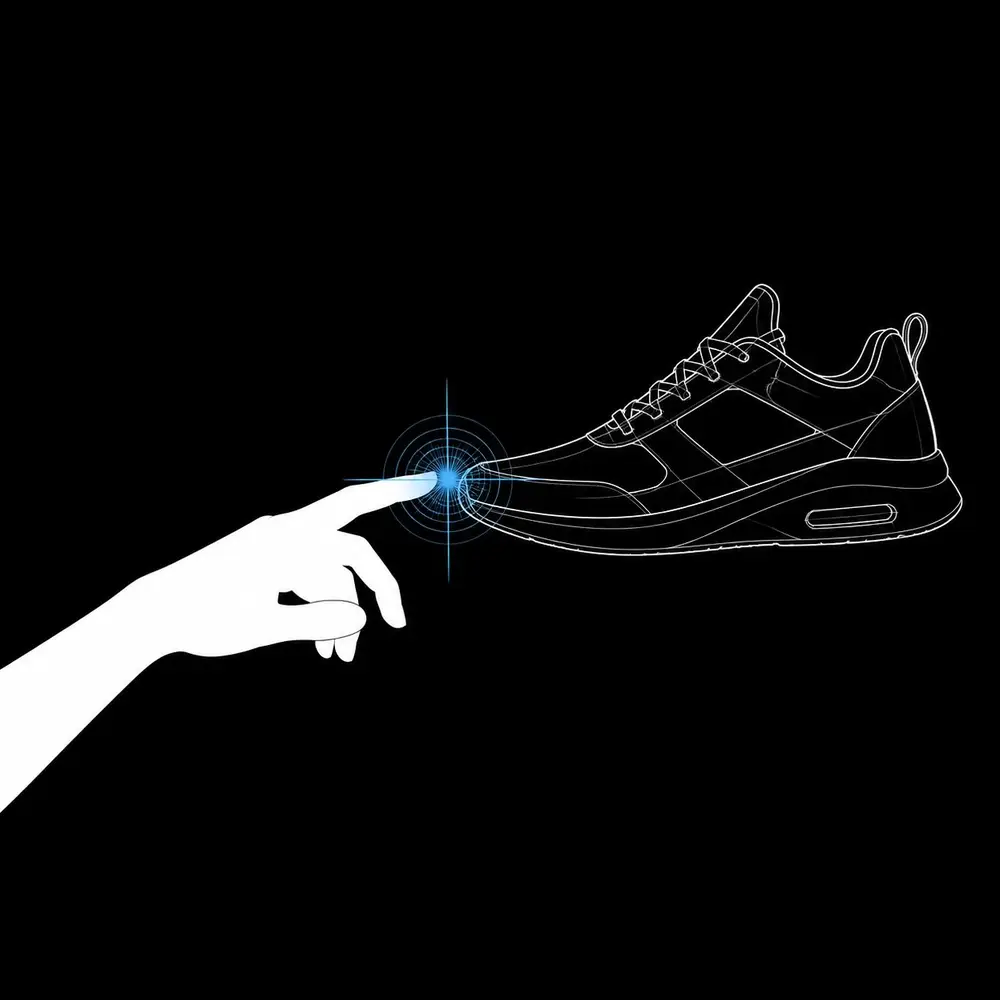
A high-conversion spatial commerce interface where a user interacts with 3D product models in a physical room setting, emphasizing the blend of digital and physical environments.
AI agent integration: the new UX paradigm
In 2026, we are no longer designing for users alone; we are designing for users and their personal AI agents. Most consumers now utilize "User Agents" that act as intermediaries, filtering content and pre-selecting options.
Mr. Ortiz emphasizes that for a brand to convert, its UI must be "agent-readable" and "agent-friendly." This means implementing Machine Experience (MX) design principles. If an AI agent cannot quickly parse the value proposition of a product, the human user may never see it. He has pioneered strategies that optimize for both human emotion and algorithmic efficiency, ensuring that brands remain visible and persuasive in an agent-dominated ecosystem.

Scaling global conversion through ethical design
As global brands expand, the ethical implications of design have become a top-tier business priority. In 2026, trust is the most valuable currency. Dark patterns, deceptive UI tricks used to force conversions, have been widely rejected by both regulators and savvy consumers.
He advocates for "Radical Transparency" as a conversion strategy. By making data usage, cancellation policies, and pricing structures crystal clear, brands build the trust necessary for high-value conversions. Accessibility (ADA compliance) is no longer an afterthought but a core performance metric. Designing for inclusivity ensures that a brand's reach is truly global, tapping into markets that were previously underserved by restrictive design patterns.
Quantifiable impact and the vision forward
The metrics of 2026 tell a clear story of success. Through his leadership and visionary approach, Mr. Ortiz has consistently delivered:
- 1.52M+ User Interactions Optimized: Data-driven refinements across hundreds of platforms.
- 22% Average Increase in Retention: Achieved through personalized, behavior-responsive interfaces.
- 9 Major Industry Awards: Recognizing his contribution to accessible and ethical product design.
- 25 Years of Domain Authority: A quarter-century of staying ahead of every technological curve.
The future of UI/UX is not found in a specific software or a trendy color palette. It is found in the ability to synthesize complex AI capabilities into simple, human experiences. As we move deeper into 2026, the frontier of conversion will continue to expand into areas of emotional intelligence, spatial awareness, and autonomous systems.

A data-visualization dashboard showing real-time global conversion metrics for multiple brands, styled with a sophisticated, professional dark mode aesthetic.
For brands looking to navigate this new frontier, the path forward requires more than just a designer, it requires a strategist who understands the deep mechanics of human behavior and the limitless potential of modern technology.
The digital landscape of 2026 is complex, fast-moving, and unforgiving to those who cling to the past. However, for those who embrace the intersection of Vibe Coding, AI integration, and immersive design, the opportunities for growth and conversion are unparalleled. We are here to help you navigate this transition and ensure your digital products are prepared for the next decade of innovation.
To learn more about his vision and the future of product design, you can visit https://www.normanortiz.com. For review of assets or to request social media approval, please email norman@igenapps.com with the relevant PDF or direct links.