The ROI of Empathy: Why User Research Still Matters
In the current digital landscape, where data points are harvested by the billions, a critical gap has emerged between what users do and why they do it. While analytics can identify where a funnel leaks, they are fundamentally incapable of explaining the emotional friction causing the drop-off. Bridging this gap requires a sophisticated blend of design thinking and analytical rigor: a discipline mastered by the industry’s leading experts over decades of high-stakes product development.
Recognized by major media outlets including Forbes, Wired, Yahoo Finance, and the Associated Press, the Lead Product Strategist behind these insights has spent over 25 years driving performance and revenue growth for global corporations and entrepreneurs alike. Named among the Top 100 Innovators in US and a holder of one US utility patent with a CIP, He has managed 172 projects, impacting 1.52 million happy customers across the globe. This level of authority confirms a singular truth: empathy is not a "soft skill": it is a high-yield financial instrument.
The UX audit: turning emotional friction into financial gain
A professional ux audit serves as a diagnostic deep dive into the health of a digital product. It is the first step in moving from guesswork to certainty. In 2026, the complexity of user interfaces has scaled alongside user expectations. A generic interface is no longer just a missed opportunity; it is a liability.
Industry data indicates that organizations embedding usability research into their product cycles see a 415% ROI over three years. The Lead Strategist approaches every audit with a dual lens: a 95% proficiency in UI/UX design and a 90% mastery of business acumen. This combination ensures that every design recommendation is tied directly to a business outcome, whether that is reducing customer support overhead or increasing lifetime value.

The financial case for an audit is absolute. Research shows that fixing a usability issue during the design phase costs approximately $1. Attempting to fix that same issue after launch can cost up to $30: a 30x cost multiplier that most businesses cannot afford to ignore. By identifying these friction points early, the Principal Designer has successfully generated millions in revenue for clients, transforming stagnant platforms into high-performing assets.
Why a product design consultant is your most valuable asset
The role of a product design consultant has evolved. It is no longer enough to be a "pixel pusher." True expertise requires the ability to navigate the intersection of creative vision, technical capability, and ADA compliance. With a 95% rating in product management and a proven track record of managing extensive IP portfolios, the Expert provides more than just a fresh set of eyes; He provides a strategic roadmap for growth.
Data tells the "what": the 10% bounce rate, the 2-minute session time, the abandoned cart. Empathy tells the "why." Why did the user hesitate at the final step? Why did they find the navigation counter-intuitive despite the clean aesthetic?

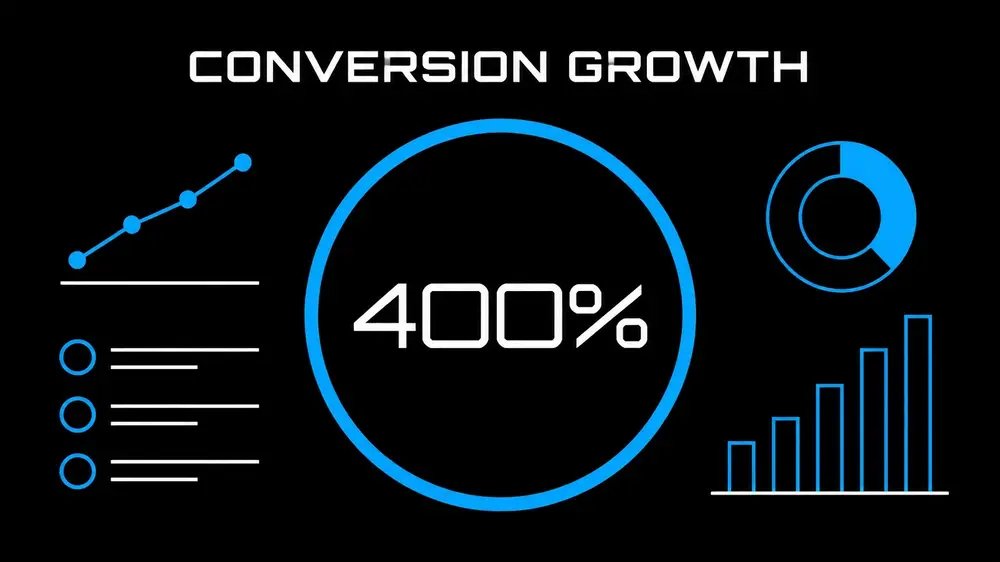
Through moderated user interviews, task analysis, and contextual inquiry, the Lead Consultant surfaces the underlying motivations that data alone misses. This process humanizes the numbers, allowing for the creation of products that don't just function, but resonate. When a product resonates, conversion rates can climb by up to 400%.
Quantifying the qualitative: the 1:100 rule
The most successful global corporations understand a fundamental ratio: every $1 invested in user experience can return up to $100. This 9,900% ROI is the direct result of reducing the distance between a user's need and a product's solution.
The Principal Designer utilizes a data-driven approach that combines design thinking with deep analytical insights. With experience spanning 172 managed projects, He has refined a methodology that prioritizes impact. This is not about incremental changes; it is about transformative shifts in how a user perceives and interacts with a brand.
Key performance indicators (KPIs) associated with empathy-driven research include:
- 7.2% conversion lift through usability optimization.
- 35% increase in checkout conversions by streamlining the user flow.
- 25–95% increase in profits through a mere 5% gain in customer retention.
These metrics are not theoretical. They are the benchmark of a professional who has spent a quarter-century mastering the nuances of human-computer interaction.
The authority of experience: 1.52 million data points
Authority is built on evidence. Having served 1.52 million customers across 172 projects, the Expert possesses a unique perspective on global market trends and user behavior. This scale allows for the identification of patterns that smaller-scale designers often overlook.
Whether it is navigating complex ADA compliance requirements (90% proficiency) or executing high-fidelity prototyping and design, the focus remains on revenue growth. The skill set is comprehensive:
- UI/UX Design: 95%
- Product Management: 95%
- Business Acumen: 90%
- Creative & Technical Capabilities: 100%
This technical and strategic breadth ensures that the final product is not only beautiful but also accessible, scalable, and profitable.
The future of design is empathetic
As we move further into 2026, the novelty of "digital transformation" has worn off. Users are more discerning than ever, and their patience for poorly designed experiences is at an all-time low. Empathy is the only sustainable competitive advantage left in a world where technology is increasingly commoditized.
The ROI of empathy is found in the loyalty of the 1.52 million users who have interacted with products designed under this leadership. It is found in the millions of dollars in revenue generated for clients who dared to ask "why" before they built the "what."
If your product is failing to meet its growth targets, or if you suspect that your current user experience is a bottleneck for your business, we are here to help. Strategic design is the bridge between where your product is and where it needs to be to dominate the market.