The ADA-Compliance Paradox: Why Accessible Design Made My Clients $2M+ (And Dodged Lawsuits)
ADA (Americans with Disabilities Act) compliance is treated like a checkbox in the contemporary digital economy. That failure creates two immediate outcomes: measurable exclusion for users with disabilities and escalating legal exposure for organizations that ship inaccessible experiences.
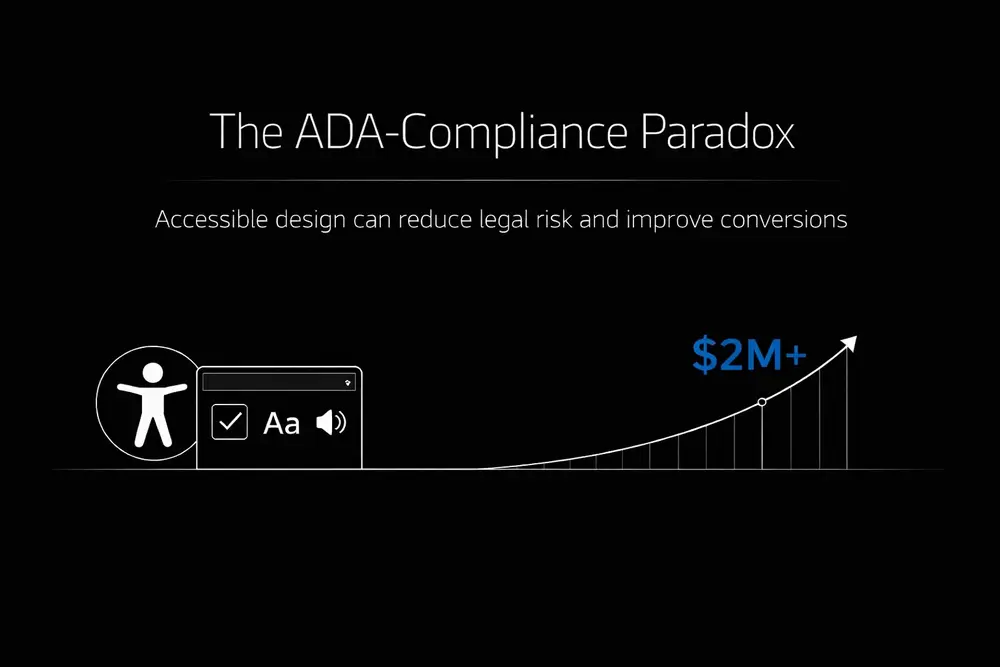
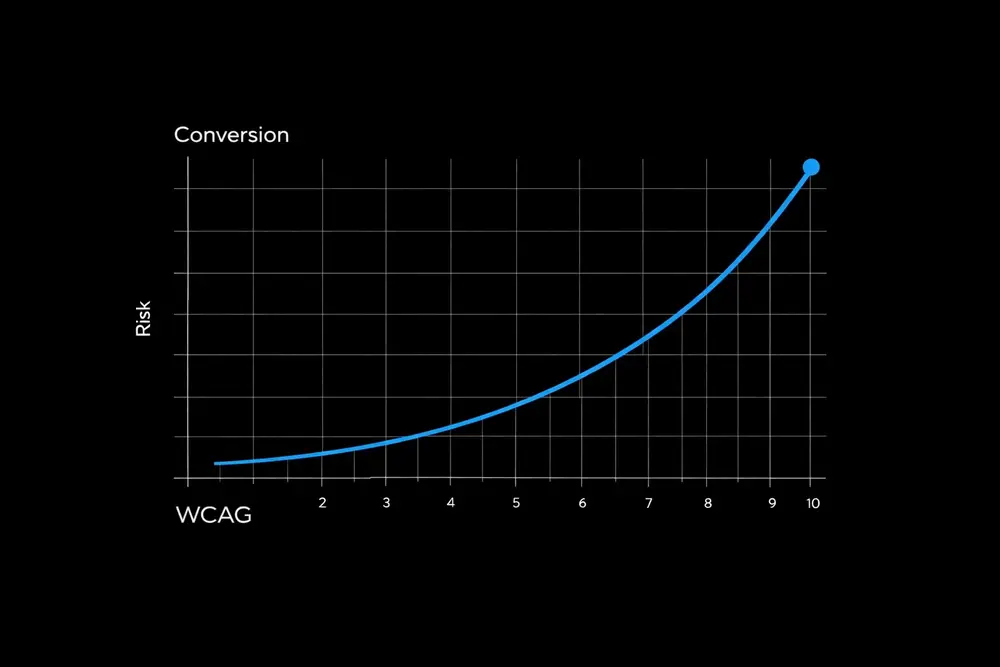
Accessible design produces a second-order effect that most teams miss. When accessibility is integrated into UX, UI, content, and engineering standards from the start, platforms expand reach, reduce friction, and increase conversion performance. The same discipline that reduces litigation risk also improves revenue performance by removing avoidable barriers across the funnel.
The Financial Reality of the Inclusive Market
The "ADA-Compliance Paradox" lies in the fact that features built for a minority of users consistently improve the experience for the majority, driving higher conversion rates and stronger brand loyalty. An estimated 32.2 million Americans live with vision-related disabilities alone. Ignoring this demographic is not just a social oversight; it is a catastrophic business failure.
ADA compliance problems usually show up as preventable UX breakpoints: missing semantic structure for screen readers, broken keyboard navigation, low-contrast text, inaccessible form errors, and focus states that disappear the moment a user stops using a mouse. These issues do not just block users. They block revenue.
By optimizing for screen readers, keyboard navigation, and high-contrast visuals, a digital platform expands access for millions of users who are routinely excluded by fragmented UI. This expansion is quantifiable. For high-growth startups and global corporations alike, the transition from a standard interface to a fully accessible, WCAG-compliant environment yields a double-digit increase in reach and a direct impact on the bottom line.
The Legal Fortress: Mitigating Risk Through Strategic Design
The legal landscape regarding digital accessibility has shifted from a "best practice" to a mandatory requirement. Federal fines and private lawsuits targeting non-compliant websites have reached record highs, with thousands of cases filed annually against companies of all sizes. ADA compliance problems create a predictable pattern: a public-facing experience fails basic WCAG requirements, a demand letter arrives, and remediation becomes urgent, expensive, and disruptive.
The cost of a lawsuit, ranging from legal fees and settlements to the mandatory post-litigation redesign, far outweighs the investment in professional, accessible product design. The most effective risk posture is proactive: run high-level UX/accessibility audits, remediate issues in priority order, and operationalize accessibility so regressions do not return in the next release. Accessibility is not an "add-on." It is a fundamental component of the technical architecture. Aligning to ADA, WCAG, and Section 508 standards protects brand reputation and financial assets.
The Revenue Multiplier: Tax Incentives and Deductions
Beyond market expansion and risk mitigation, there are financial incentives that offset the costs of ADA-related expenditures. Many executives are unaware that the IRS provides mechanisms to reduce the net cost of accessibility work.
Eligible small businesses, defined as those with under $1 million in gross receipts or fewer than 30 full-time employees, can utilize the Disabled Access Credit (IRS Form 8826). This allows for a 50% credit on eligible expenditures between $250 and $10,250 annually, providing a maximum credit of $5,000. Furthermore, the Architectural Barrier Removal Deduction allows businesses of all sizes to deduct up to $15,000 yearly for the costs associated with removing barriers in their digital and physical facilities. These incentives belong in ROI calculations, because ADA compliance is a financial decision as much as it is a legal and operational requirement.
The Tesla-Inspired Interface: Marrying Ethics with Aesthetics
A common misconception in the industry is that accessibility necessitates a "boring" or "clunky" user interface. That claim is false. An interface can be visually stunning and highly functional for users with diverse needs when accessibility requirements are treated as design constraints that increase clarity.
A "Tesla-inspired" minimalist approach focuses on:
- Clarity and Contrast: Utilizing bold typography and high-contrast palettes that ensure readability for visually impaired users.
- Intuitive Navigation: Implementing streamlined, logic-based hierarchies that reduce cognitive load and support assistive technologies.
- Haptic and Sensory Feedback: Designing multi-modal interactions that provide feedback through various channels.
By maintaining a relentless focus on minimalism, digital products feel premium and readable at the same time. The result is a user experience that conveys authority and performance, regardless of how the user chooses to interact with the system.

Quantifying the Success of 172 Projects
Results in ADA compliance are measurable. Across 172 projects delivered over 22 years, accessibility work consistently maps to business outcomes: fewer blocked users, higher completion rates, cleaner analytics, reduced rework, and lower legal exposure. That performance is driven by process discipline: auditing, prioritizing, remediating, validating, and preventing regressions.
You can get help with:
- Accessibility Audits: Deep-dive assessments that identify and remediate WCAG and ADA violations.
- Product Design & Strategy: Building scalable digital ecosystems designed for mass-market adoption.
- Digital Consulting: Aligning product roadmaps with compliance requirements and revenue goals.
The impact is not theoretical. Accessibility standards control the quality of every critical interaction, from navigation and forms to content structure and error recovery.
The Final Assessment: Accessibility as an Asset
In the high-velocity world of digital product development, accessibility is a high-yield asset. Compliance is not a hurdle to be cleared. It is a platform for growth. When a product meets ADA and WCAG expectations, it improves usability, protects the organization, and expands the addressable market.
For organizations looking to scale, the choice is clear: either wait for the inevitable legal challenge or build a resilient, inclusive, and profitable digital experience now. The ADA-Compliance Paradox proves that when you design for everyone, the rewards are exponential.
We are here to help with audits, remediation, and building accessibility into your product lifecycle.
For approval of assets and further documentation, please contact norman@igenapps.com.