ADA Compliance in 2026: Why Accessibility Is Your Secret Competitive Advantage
Most companies treat ADA compliance like a dental appointment: something they know they should do but keep postponing until there's pain. By April 24, 2026, when the new DOJ web accessibility requirements hit, that pain could cost millions in lost revenue, legal fees, and brand damage.
But here's what the panic-driven compliance crowd is missing: accessibility isn't a checkbox exercise. It's a competitive weapon that's been hiding in plain sight.
The 2026 Deadline Nobody's Talking About
State and local governments with populations over 50,000 must comply with WCAG 2.1 Level AA standards by April 2026. Smaller jurisdictions get an extra year. Private companies? The DOJ is watching, and enforcement actions are ramping up at unprecedented rates.
The technical requirements sound intimidating: perceivable, operable, understandable, robust: but the business implications are what should grab attention. While competitors scramble to avoid lawsuits, forward-thinking organizations are discovering that accessible design unlocks markets, boosts SEO, and fundamentally improves user experience for everyone.
The Hidden Market You're Ignoring
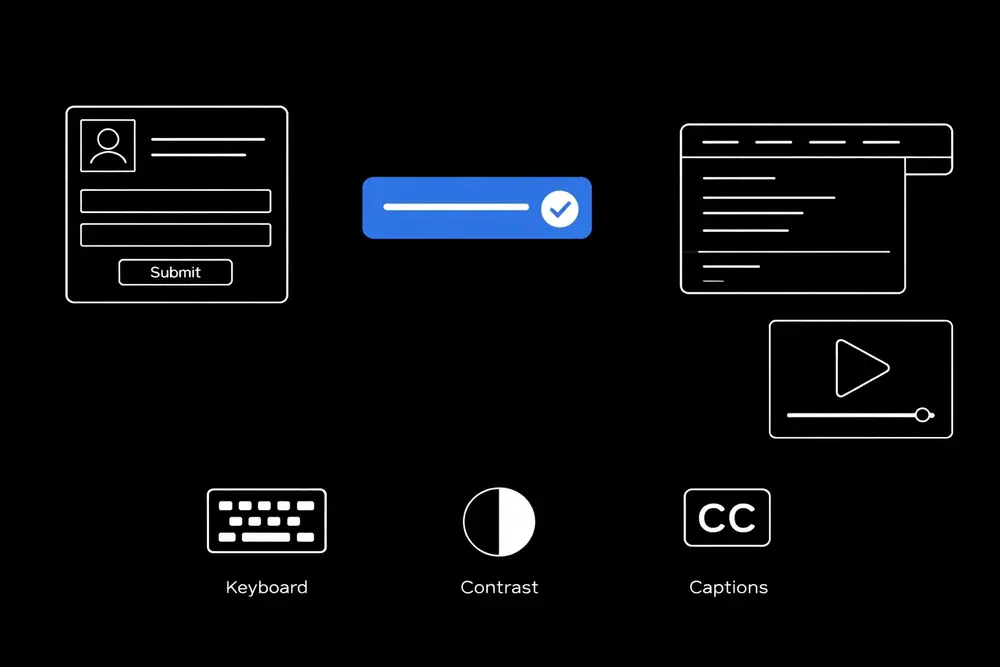
One in four American adults lives with a disability. That's 61 million potential customers who often find digital experiences frustrating, confusing, or completely unusable. Screen readers that can't parse navigation menus. Color contrast so poor that text becomes invisible. Videos without captions. Forms that keyboard users can't complete.
Accessibility drives measurable performance gains. When companies design for edge cases, they improve the experience for everyone. Accessibility features intended for disabled users: captions, clear navigation, keyboard shortcuts: enhance usability across the board.
That person using your site on a cracked phone screen in bright sunlight? They need high contrast too. The executive reviewing proposals in a quiet boardroom? Captions on videos become essential. The developer navigating your interface with keyboard shortcuts? They're experiencing the same pathways screen reader users follow.
The SEO Advantage Nobody Connects
Search engines are essentially blind users with unlimited patience. They crawl websites the same way screen readers do: parsing semantic HTML, following logical heading structures, reading alt text on images. When organizations optimize for accessibility, they're simultaneously optimizing for search algorithms.
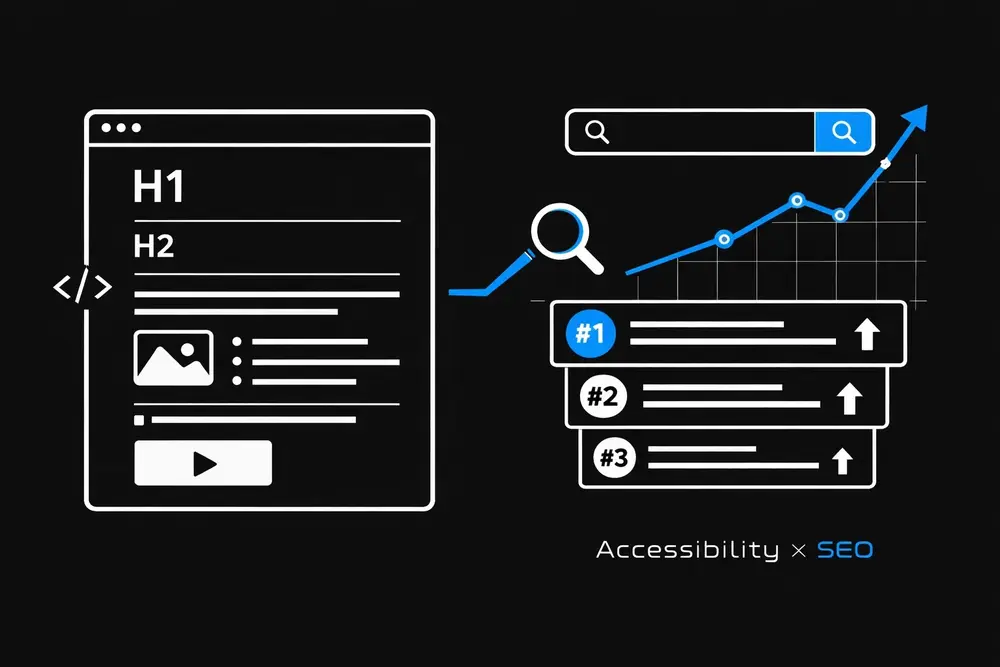
Proper heading hierarchies, descriptive link text, image alt attributes, transcripts for multimedia content: these WCAG requirements align perfectly with SEO best practices. Google explicitly states that accessibility improves search rankings. The overlap isn't coincidental. It's fundamental to how information is structured and understood on the web.
Accessibility work strengthens technical SEO foundations. Accessible sites consistently outperform inaccessible competitors in organic search results. The technical implementation creates a compounding advantage: better rankings drive more traffic, which generates more engagement data, which further improves rankings.
Brand Reputation in the Transparency Era
Corporate social responsibility isn't optional anymore. Consumers research company values before making purchase decisions. Job candidates evaluate workplace culture during interviews. Investors assess ESG scores before allocating capital.
Accessibility statements signal organizational values. They demonstrate commitment to inclusion, attention to detail, and respect for all users. Conversely, inaccessible websites broadcast the opposite message: that certain customers don't matter enough to warrant proper implementation.
Legal settlements and news coverage of ADA violations spread rapidly on social media. A single lawsuit can generate negative publicity that costs far more than proactive compliance would have. The reputational damage compounds when organizations appear to fight accessibility rather than embrace it.
The Real Cost of Non-Compliance
DOJ enforcement actions carry financial penalties, but those represent only the beginning of total costs. Legal fees accumulate rapidly during litigation. Remediation under court supervision costs multiples of proactive implementation. Lost revenue during the publicity cycle never gets recovered.
More insidiously, inaccessible digital properties leak revenue constantly. Every form that can't be completed, every product page that won't load properly, every checkout process that fails for assistive technology users: these represent direct losses that never appear in compliance discussions.
Teams that treat accessibility as pure cost consistently underestimate the revenue implications. The proper framework views accessibility as customer acquisition, retention, and experience optimization rolled into comprehensive strategy.
Technical Requirements Made Simple
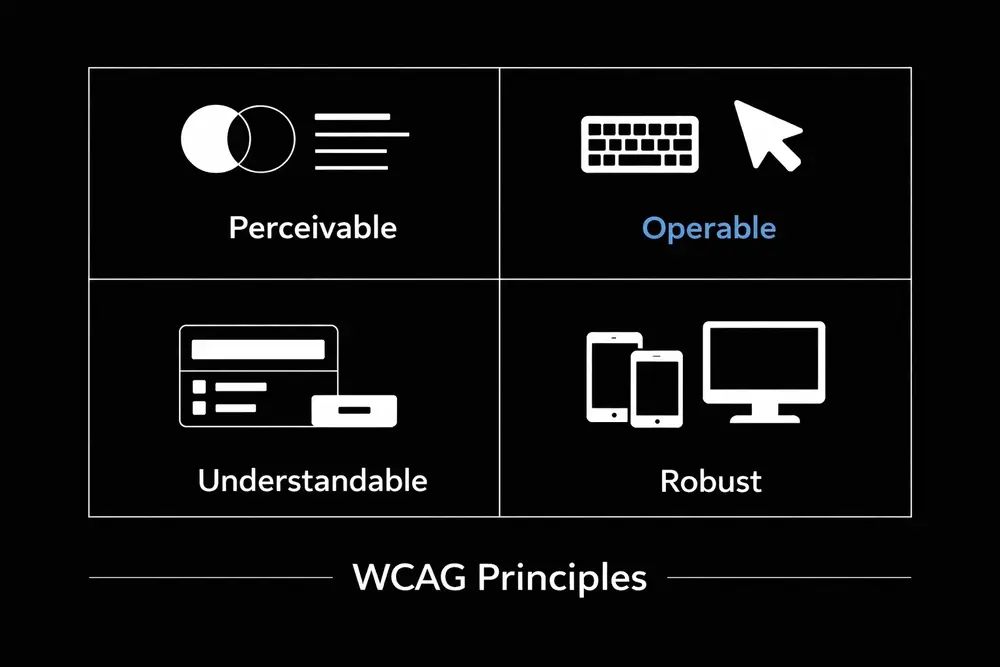
WCAG 2.1 Level AA sounds daunting until broken into practical components. The four core principles provide clear guidance:
Perceivable means users can detect content through available senses. Text needs sufficient contrast against backgrounds. Images require descriptive alt text. Videos need captions and transcripts. Audio content needs visual alternatives.
Operable means users can interact with all functionality. Keyboards must access all features. Time limits need extensions. Navigation remains consistent. Focus indicators show current position clearly.
Understandable means content and operation remain clear. Language gets identified. Error messages explain problems and solutions. Labels describe form inputs. Consistent navigation helps users predict behavior.
Robust means content works with current and future technologies. Valid HTML provides foundation. ARIA labels support assistive technologies. Semantic markup enables proper interpretation.
These aren't abstract concepts. They're practical guidelines that improve usability systematically. Organizations implementing WCAG standards report fewer support tickets, higher conversion rates, and improved customer satisfaction across all user segments.
The Implementation Advantage
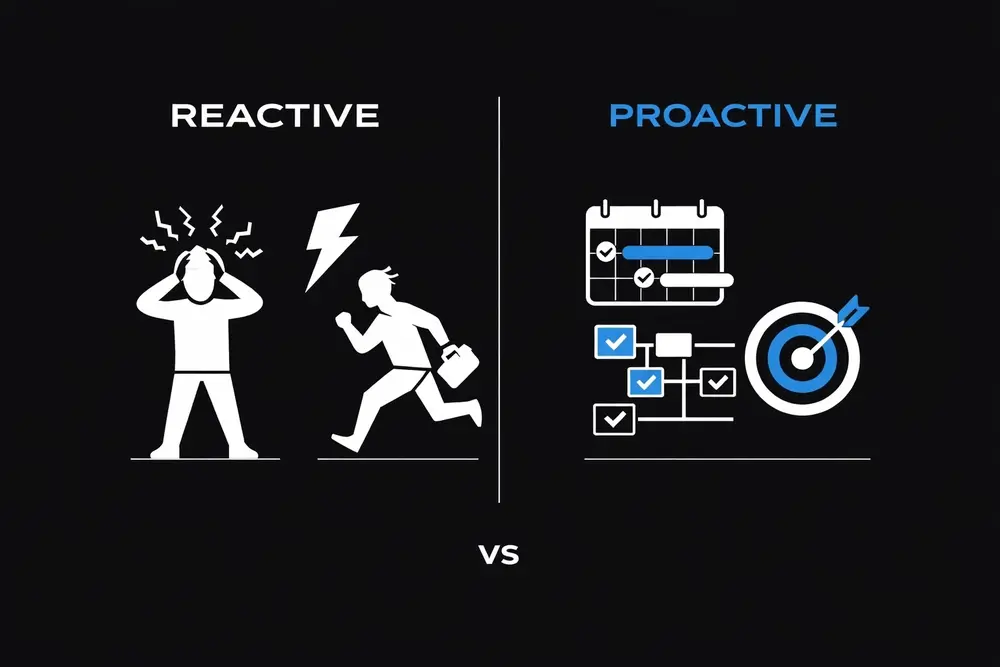
Most companies approach accessibility reactively: hiring auditors after receiving demand letters, rushing remediation before court deadlines, treating the entire process as damage control. This defensive posture maximizes costs while minimizing benefits.
Proactive integration from project inception drives the fastest path to compliance and the lowest total cost. When accessibility considerations shape initial design decisions, implementation costs drop dramatically. Features built correctly from the start require no expensive retrofitting. Testing happens throughout development rather than as final crisis management.
The competitive advantage emerges from this approach. While reactive companies sink resources into emergency fixes, proactive organizations allocate those same resources toward innovation, feature development, and market expansion. The time and money saved on remediation drives new capabilities that distance the company from competitors.
Beyond Compliance to Excellence
Meeting WCAG 2.1 Level AA standards establishes a baseline. True competitive advantage comes from exceeding minimum requirements: implementing ARIA landmarks that enhance navigation, providing multiple ways to access content, designing interfaces that work across devices and contexts seamlessly.
This excellence-driven approach transforms accessibility from compliance obligation into brand differentiator. When user experience remains consistently superior regardless of device, ability, or context, customer loyalty strengthens. Word-of-mouth referrals increase. Market position improves systematically.
Organizations embracing accessibility as a core value proposition: not a regulatory burden: capture disproportionate market share in their categories.
The April 2026 Inflection Point
The upcoming deadline creates temporary disruption in the market. Companies scrambling for compliance will flood agencies and consultants with urgent requests. Prices will spike. Quality will vary wildly. Organizations waiting until the last moment will face the worst possible combination: maximum cost, minimum strategy, pure reactive posture.
Smart companies recognize the deadline as opportunity rather than threat. Early implementation avoids the rush. Thoughtful strategy captures competitive advantages. Proactive positioning establishes market leadership while competitors panic.
The difference between treating April 2026 as compliance deadline versus competitive opportunity determines which organizations emerge stronger and which remain perpetually reactive.
Your Next Move
ADA compliance isn't coming: it's here. The question isn't whether to implement accessibility standards but how to leverage them for maximum competitive advantage.
You can get help with an accessibility audit, a WCAG 2.1 Level AA remediation roadmap, design-system updates, QA testing with assistive technology, and ongoing governance to keep new releases compliant.
The companies that win aren't the ones avoiding lawsuits. They're the ones recognizing that accessible design is simply better design( for everyone.)
We are here to help...