Blog Mobile, wearables and spatial
Beyond the Screen: How 2026 Spatial Design Patterns Are Redefining Conversion Funnels
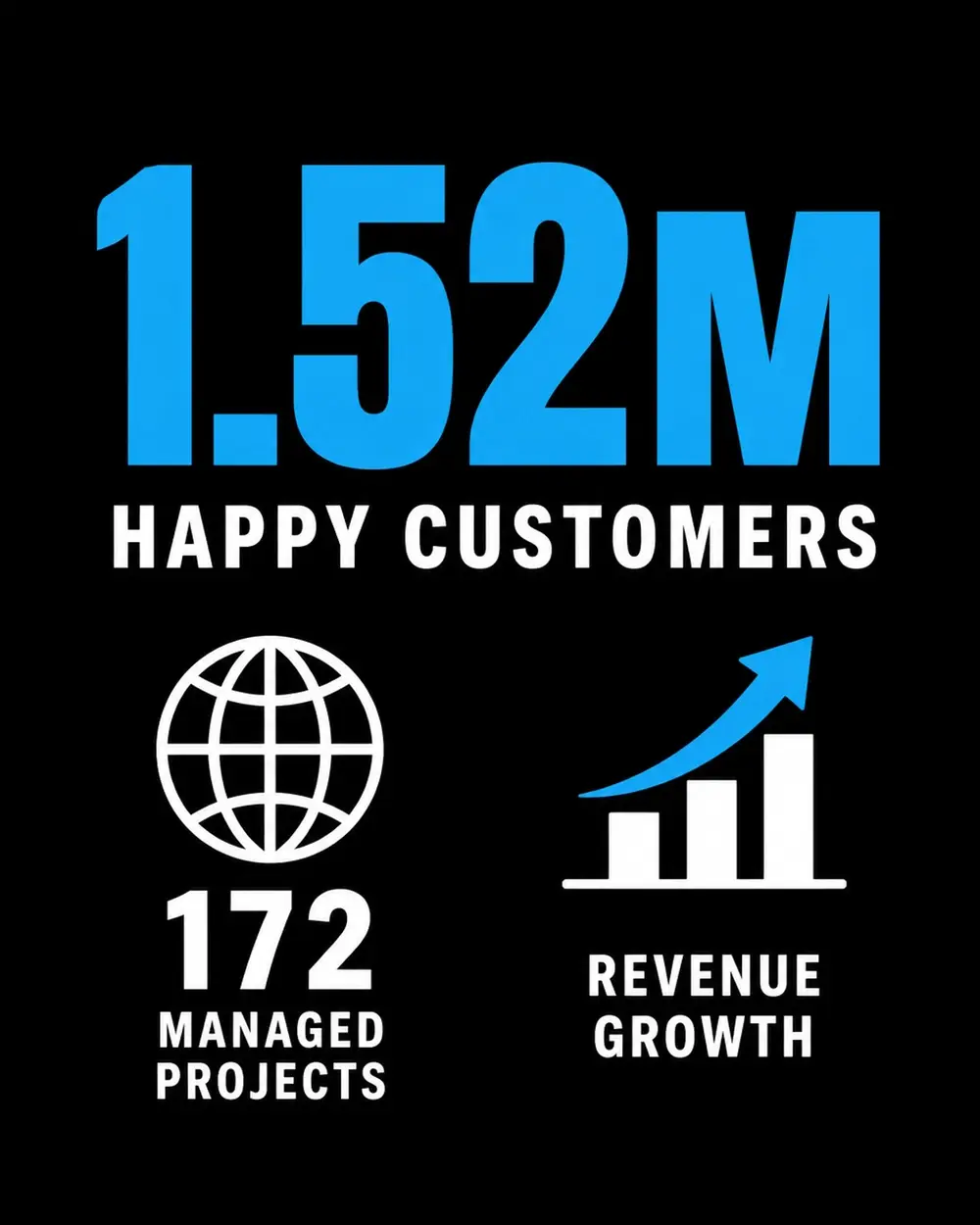
A recognized expert featured in major media publications including Forbes, Wired, Yahoo Finance, AP, and Telemundo, this visionary has spent over 25 years driving performance and revenue growth in the digital landscape. Recognized as one of the Top 100 innovators in US by Top 100 Magazine, He is a holder of one US utility patent with a CIP with extensive experience in intellectual property management. His data-driven approach, combining design thinking with analytical insights, has generated millions in revenue for clients and served 1.52 million happy customers across 172 managed projects. With a comprehensive skill set spanning UI/UX design (95%), product management (95%), and ADA compliance (90%), He is currently leading the shift toward the immersive digital environments of 2026.
The evolution of the digital environment
The era of the flat, two-dimensional screen is reaching its natural conclusion. In 2026, the boundaries between the digital and physical worlds have blurred, replaced by spatial interfaces that prioritize depth, intent, and immersion. For global corporations and ambitious entrepreneurs, this shift represents more than a visual upgrade; it is a fundamental restructuring of how users interact with brands and how conversion funnels are engineered.
The transition from "pages" to "places" is the defining UX trend of the decade. While traditional web design relied on linear sequences: landing page to product page to checkout: spatial design introduces the concept of Zonal Information Architecture (IA). In this framework, the funnel is no longer a path to be followed but an environment to be inhabited.
About the spatial shift
Digital product design has moved beyond the constraints of pixels on glass. He notes that the most successful products in 2026 utilize spatial storytelling to guide user psychology. Instead of scrolling through a list of features, users now move through "rooms" or "zones" where information is revealed based on proximity and behavior. This approach reduces cognitive load while increasing emotional engagement: a combination that directly translates to higher conversion rates.
Facts at a glance
- Experience: 25+ years of driving performance and revenue growth.
- Innovation: Featured in the Top 100 Innovators in US list.
- Reach: 1.52M happy customers across 172 managed projects.
- IP Management: Owner of 1 US utility patent with a CIP.
- Media Presence: Expert commentary featured in 15+ major publications.
Zonal architecture: the new funnel
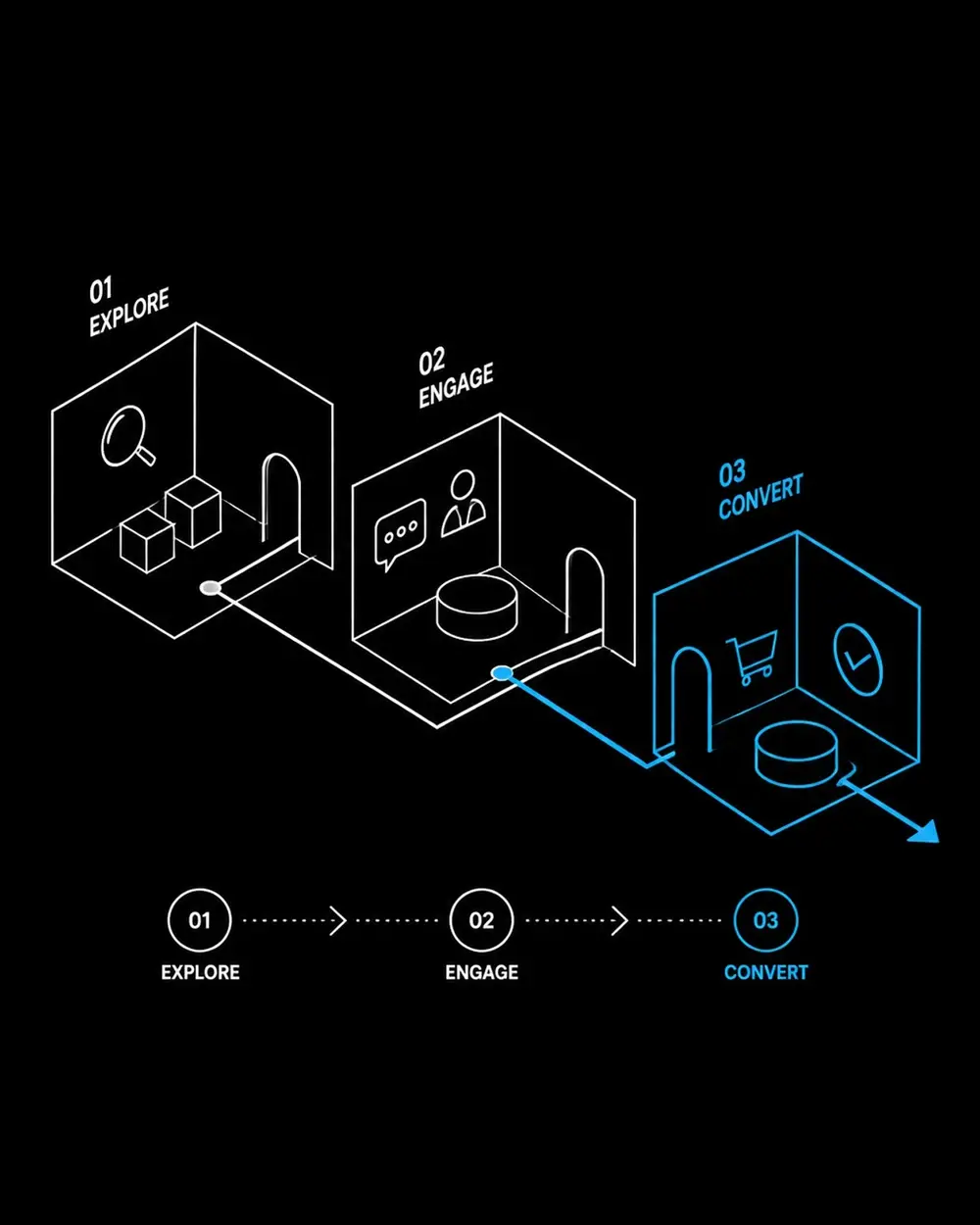
In 2026, conversion funnels are designed as Guided Scene Sequences. This pattern replaces the standard URL-based navigation with a fluid movement through distinct digital modes.
- The Discovery Zone: High-level storytelling is combined with ambient motion to capture attention without overwhelming the user. Here, the goal is "discovery," and the spatial layout highlights hero product clusters.
- The Comparison Space: When a user signals intent to compare, the interface adapts. A structured spatial grid allows users to view options side-by-side in 3D space, facilitating faster decision-making through visual contrast.
- The Configuration Bay: For products requiring customization, the environment narrows its focus. Distractions are removed, and contextual AI assistance surfaces to validate the user's choices in real-time.
- The Decision Cove: The final stage of the funnel is a simplified, high-focus area where objections are addressed through spatial "alcoves" (e.g., small panels for security, returns, or technical specs) that appear only when needed.
By treating the funnel as a series of spaces, designers can control the user's focus with much greater precision than was ever possible on a static 2D page.
Contextual AI and machine experience (MX)
The most significant technological driver of these spatial patterns is the rise of Contextual AI. We have moved beyond generic chatbots to what is now known as Machine Experience (MX). In this model, the AI acts as the "layout engine," rearranging the digital environment around the user’s intent.

He emphasizes that Intent-First Interfaces are the gold standard for 2026. Instead of a standard navigation menu, the system asks: "What are you trying to do today?" The AI then translates the response into a custom path, filtering content and rearranging toolsets specifically for that user.
State-aware layout shifts
AI now monitors subtle user signals: exploration speed, repeat zooms, and hesitation patterns. If a user appears lost, the system quietly simplifies the layout. If they are ready to commit, the AI brings the primary Call to Action (CTA) into a prominent, spatially anchored position. This "adaptive friction" ensures that the interface is always working to move the user toward a conversion.
Multimodal interaction patterns
Spatial design in 2026 is inherently multimodal. The interaction model has shifted to a "triad" of inputs: Gaze, Gesture, and Voice.
- Gaze Select: Users select regions or objects simply by looking at them, reducing the need for traditional cursor travel.
- Gesture Confirm: A simple finger tap or hand motion confirms an action or expands a spatial node.
- Voice Specifiers: Users use natural language to specify details (e.g., "Show me this in midnight blue") while the spatial interface handles the visual rendering.
This combination of inputs allows for a "lean back" experience where the user is fully immersed in the product story, leading to higher brand recall and stronger purchase intent.
Skills and expertise
To build these complex, immersive systems, a diverse and technical skill set is required. The following ratings reflect the level of expertise He brings to every project:
- UI/UX Design: 95%
- Product Management: 95%
- Business Acumen: 90%
- ADA Compliance: 90%
- Data Analysis & Visualization: 95%
- Market Research: 90%
These capabilities allow for the creation of digital products that are not only visually stunning but also accessible, data-driven, and commercially viable.
The strategic impact on revenue
The transition to spatial design patterns is not merely an aesthetic choice; it is a strategic necessity for businesses looking to grow in an increasingly competitive global market. By leveraging Proximity-Based Reveals and Micro-Commitment Islands, brands can guide users through complex decision cycles without the traditional drop-off seen in 2D funnels.
Micro-commitment islands, in particular, have proven highly effective. These are small "stops" in the digital environment where users commit to tiny steps: saving a preference or liking an item. Each small action feeds the AI's personalization engine and shortens the eventual purchase decision.
The result of these innovations is clear: millions in revenue generated for clients and a track record of success that spans global corporations, small businesses, and high-profile celebrities. In a world where attention is the most valuable currency, spatial design is the key to capturing and holding it.
Navigating the future
As we move further into 2026, the distinction between "the app" and "the environment" will continue to fade. Successful businesses will be those that embrace these immersive patterns to create digital experiences that feel human, intuitive, and authoritative.
Whether you are looking to improve an existing product, conduct a deep competitive analysis, or prototype a brand-new spatial experience, you can get help with navigating this complex transition. We are here to help you harness the power of spatial storytelling and contextual AI to redefine your conversion funnels and drive unprecedented growth.
For more information on digital product design and revenue growth strategies, visit the official website.