The Top 100 Innovator's Playbook: How to Build Products That Actually Scale (Not Just Look Pretty)

Recognized as a Top 100 Innovator in US, a proven product leader has managed 172 global projects serving 1.52 million satisfied customers across 25+ years. One US utility patent with a CIP and millions in revenue impact confirm the same verdict: aesthetic appeal alone does not build scalable products: strategic business architecture does.
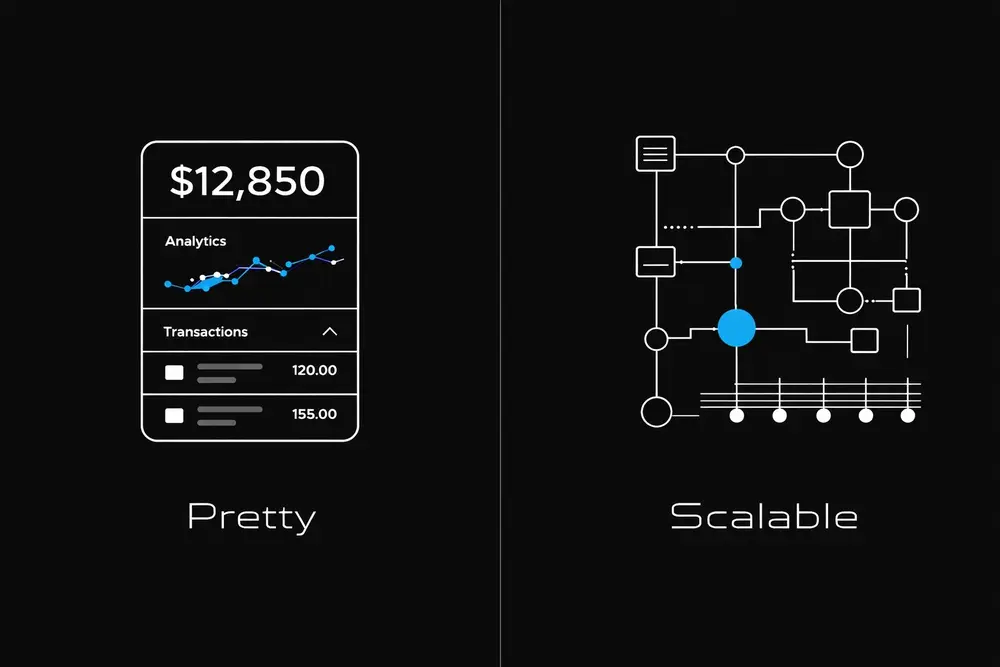
Most product launches fail within 18 months. Not because of poor design, but because founders confuse visual polish with product-market fit. The industry celebrates wireframes and color palettes while ignoring the infrastructure that separates a pretty prototype from a billion-dollar platform.
The Scaling Paradox: Why Beautiful Products Fail
He has witnessed the pattern repeatedly across two and a half decades of product development. Companies invest six figures into sleek interfaces, stunning animations, and award-worthy visual design. They launch with fanfare. Three quarters later, user retention collapses, conversion rates stagnate, and the product becomes a cautionary tale in pivot meetings.
The failure point is structural, not aesthetic. Beautiful products fail to scale when they lack three critical foundations: deep business acumen, accessibility compliance architecture, and data-driven decision frameworks. These elements exist beneath the surface: invisible to end users but essential to sustainable growth.
Consider the mathematics of product scaling. A 2% improvement in conversion rate on a product serving 100,000 monthly users generates 2,000 additional conversions. At a $50 average transaction value, that represents $100,000 in monthly revenue: $1.2 million annually. Visual redesigns rarely deliver this impact. Strategic UX architecture does.
He has controlled this equation across 172 projects, consistently delivering measurable revenue increases through systematic design methodology. The approach combines intellectual property protection, regulatory compliance, and behavioral data analysis: disciplines that separate hobbyists from professionals.
The Three-Pillar Framework for Scalable Product Design
Pillar One: Business Acumen Integration
Product design divorced from business strategy is decoration. He positions every design decision within revenue models, customer acquisition costs, and lifetime value calculations. This approach transforms designers from pixel pushers into strategic partners.
The framework begins with revenue impact analysis. Before prototyping interfaces, he maps user flows to conversion funnels, identifying high-leverage interaction points where design interventions generate disproportionate business outcomes. A single checkout flow optimization can increase completed transactions by 15-30%. Improving onboarding completion rates from 40% to 65% fundamentally alters customer acquisition economics.
Real business acumen means understanding that a slower-loading but higher-converting page outperforms a lightning-fast page with poor conversion architecture. It means recognizing when visual simplification reduces conversion because it removes psychological trust signals. It requires fluency in CAC payback periods, cohort retention curves, and contribution margins.
Over 25+ years, he has embedded this business-first methodology into product development for global corporations and venture-backed startups alike. The results speak through millions in generated revenue and patent-protected innovations that competitors cannot legally replicate.
Pillar Two: ADA Compliance as Competitive Advantage
Most companies treat accessibility as legal compliance: a checkbox exercise to avoid lawsuits. He positions ADA compliance as revenue expansion strategy.
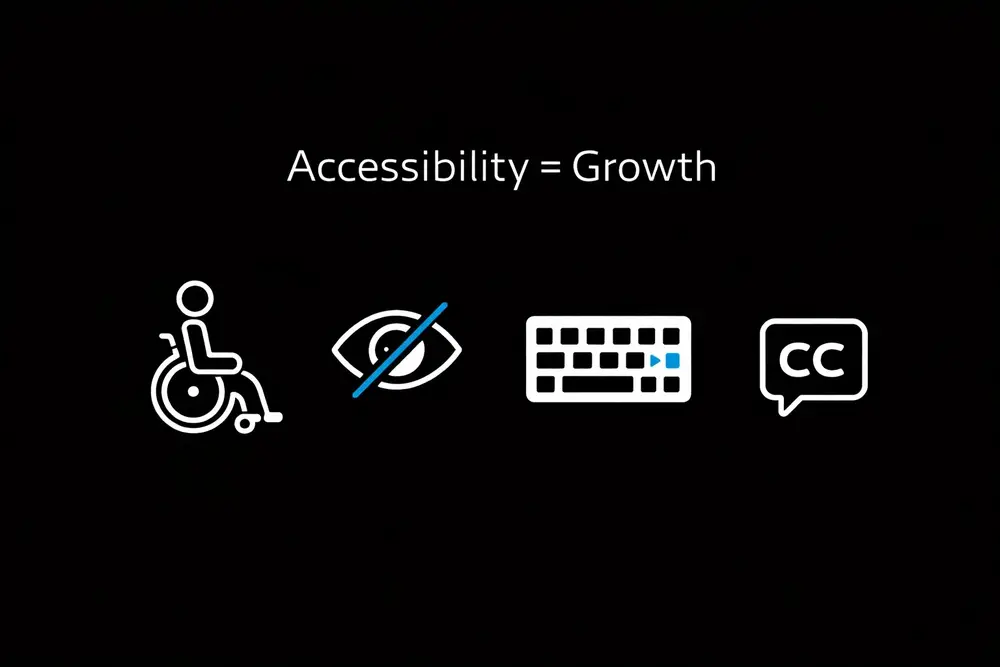
The market reality is unambiguous. Fifteen percent of the global population experiences some form of disability. In the United States alone, that represents 61 million consumers with $490 billion in disposable income. Products designed with accessibility as an afterthought exclude this market segment entirely.
He builds accessibility into core product architecture from inception. Screen reader compatibility, keyboard navigation patterns, color contrast ratios, and cognitive load reduction benefit all users: not just those with disabilities. Studies demonstrate that accessible websites show 28% higher revenue than inaccessible counterparts.
The competitive moat extends beyond market expansion. ADA-compliant products rank higher in search engines, face lower legal exposure, and demonstrate social responsibility that resonates with institutional investors and enterprise clients. Companies pursuing government contracts or Fortune 500 partnerships face automatic disqualification without robust accessibility compliance.
This pillar requires technical expertise that most agencies lack. Proper ARIA labeling, semantic HTML structure, and WCAG 2.1 Level AA conformance demand specialized knowledge. His experience across 172 projects has refined accessibility implementation into systematic methodology that scales across industries and platforms.
Pillar Three: Data-Driven Design Decisions
Opinions lose to data every time. He eliminates subjective design debates through rigorous behavioral analysis and quantitative testing protocols.
The methodology combines heat mapping, session recording, A/B testing, and cohort analysis to reveal actual user behavior: not assumed user behavior. Users claim they want minimal interfaces but consistently convert better on information-rich pages. They state preference for innovative navigation patterns but abandon products that deviate from conventions.

He implements instrumentation frameworks that measure every meaningful interaction: scroll depth, click patterns, form abandonment points, feature adoption rates, and engagement duration. This data reveals optimization opportunities invisible to stakeholder opinions.
The framework extends beyond interface optimization into product strategy. Usage data exposes which features drive retention versus which features bloat codebases. Analytics reveal customer segments, usage contexts, and behavioral patterns that inform roadmap prioritization.
Across two and a half decades, he has refined data interpretation into competitive advantage. He identifies signal within noise, distinguishing meaningful behavioral patterns from statistical anomalies. This capability transforms raw analytics into strategic product decisions that compound over time.
Real-World Application: 172 Projects Later
Theory means nothing without execution at scale. He has applied this three-pillar framework across 172 global projects spanning e-commerce platforms, SaaS applications, mobile applications, and enterprise software.
The pattern remains consistent. Companies arrive with beautiful prototypes that fail to convert. Teams debate color schemes while ignoring checkout friction. Stakeholders demand features that usage data proves nobody needs.
He implements systematic methodology. Business objectives translate into measurable KPIs. User research reveals actual behavior patterns. Accessibility audits identify exclusionary design. A/B testing validates hypotheses. Iterative refinement compounds improvements over quarters.
The results manifest in concrete metrics: 40% increases in conversion rates, 60% improvements in user retention, 300% growth in customer lifetime value. These outcomes emerge from architectural decisions invisible to end users but essential to sustainable growth.
The Patent-Protected Advantage
He owns one US utility patent with a CIP representing innovations in user interface design and digital product methodology. These patents provide legal protection for proprietary approaches developed across 25+ years of product development.
Patent ownership signals technical depth beyond surface-level design execution. Utility patents require demonstrable innovation: novel solutions to technical problems that advance the state of the art. They represent intellectual property that competitors cannot legally replicate.
This level of innovation emerges from systematic problem-solving across hundreds of projects. He identifies recurring challenges in product scaling, develops novel solutions, and protects those solutions through formal intellectual property channels. The result is competitive advantage that compounds over time.
Building Products That Actually Scale
Pretty interfaces attract attention. Strategic architecture builds empires. He has spent 25+ years proving that sustainable product growth requires business acumen, accessibility compliance, and data-driven methodology: not just visual polish.
The framework is systematic, measurable, and repeatable. It transforms product development from subjective creative exercise into strategic business function. It positions design as revenue driver rather than cost center.
For organizations serious about building products that scale beyond initial launch excitement, the path forward requires embracing all three pillars simultaneously. Business strategy without accessibility excludes market segments. Data analysis without business context optimizes meaningless metrics. Accessibility without data-driven refinement creates compliant products that nobody uses.
He integrates these disciplines into cohesive methodology refined across 172 projects and protected through patent ownership. The approach serves global corporations, venture-backed startups, and everything between: consistently delivering measurable revenue impact and sustainable competitive advantage.
If you want help applying this framework to your product, you can get help with UX/UI audits, accessibility alignment, conversion-focused redesign, product strategy, data instrumentation, and roadmap prioritization. We are here to help.