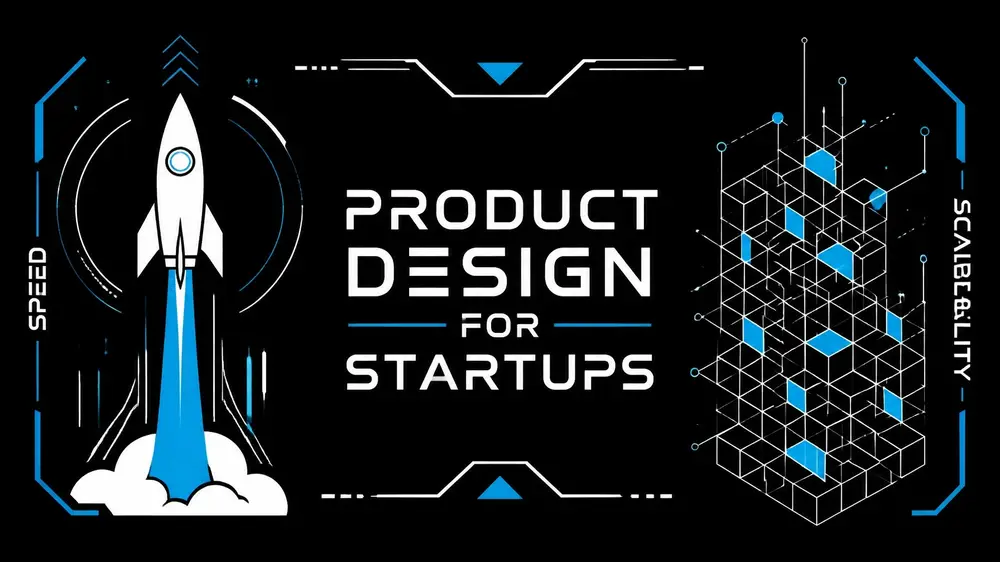
Product Design for Startups: Speed to Market vs. Scalability
He is a recognized expert featured in over 15 major media publications, including Forbes, Wired, Yahoo Finance, AP, and Telemundo. With a career spanning more than 25 years, he has established himself as a dominant force in driving performance and revenue growth for global corporations and emerging startups alike. Named among the Top 100 Innovators in US by Top 100 Magazine and holding one US utility patent with a CIP, his expertise is built on a foundation of 172 managed projects and a proven track record of serving 1.52 million happy customers. He combines deep analytical insights with visionary design thinking to generate millions in revenue for his clients.
In the volatile landscape of startup development, the tension between speed to market and long-term scalability is the primary hurdle for any digital product strategy. Founders are frequently forced to choose between shipping a product quickly to secure early users or building a robust infrastructure capable of supporting millions. Navigating this dichotomy requires more than just technical skill; it demands a sophisticated understanding of product lifecycle management and market timing.
The startup dilemma: the velocity of validation
For early-stage ventures, the greatest risk is not technical failure but market indifference. Building a highly scalable, enterprise-grade platform for a product that no one wants is a catastrophic waste of resources. Consequently, the initial phase of product design must be biased heavily toward speed. This velocity allows for rapid experimentation, data collection, and iteration.
Statistics indicate that the vast majority of startups fail because they lack a clear product-market fit. In this environment, a product design consultant serves as a navigator, identifying the minimum viable segment (MVS) and focusing development efforts on the core features that deliver immediate value. Speed to market is the tool used to buy the most valuable asset a startup can have: information. By deploying a functional prototype or MVP (Minimum Viable Product) quickly, a business can observe real-world user interactions and pivot before burning through its capital.
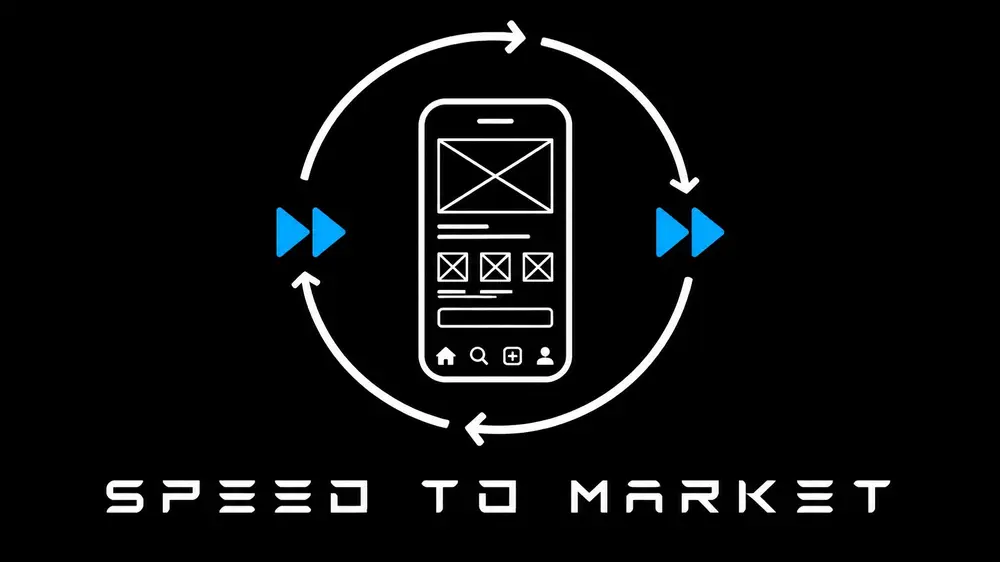
Phase 1: pre-product-market fit and the bias for speed
In the pre-Product-Market Fit (PMF) stage, the primary objective is proof of concept. The design focus is 95% on UI/UX and 90% on business acumen to ensure the product solves a high-priority problem for a narrow audience.
- Design for the MVS: Rather than attempting to serve a global market, the strategy focuses on a narrow, high-need segment. This constraint simplifies the design process and accelerates development.
- Accept Intentional Debt: Design and technical debt are acceptable, provided they are documented and intentional. Quick UI shortcuts or manual back-end processes are tools to increase speed, not signs of poor craft.
- Focus on Core Value: Features that do not contribute directly to the primary value proposition are discarded.
During this phase, the digital product strategy is one of extreme agility. The goal is to hit the market, collect data from the first 1,000 users, and refine the experience. He has mastered this approach across 172 projects, ensuring that initial designs are both functional and insightful, providing the data needed to justify future scaling.
Phase 2: early traction and the scalability pivot
Once a product achieves repeated success and demonstrates traction, the risks shift. The danger is no longer just "building the wrong thing," but rather "breaking the right thing." As user counts move from hundreds to tens of thousands, the manual processes and architectural shortcuts that enabled speed begin to fail.

Scalability is defined as the ability of a product to handle a 10x or 100x increase in demand without a corresponding collapse in performance or unit economics. This transition requires a shift in the design mindset:
- Hardening Core Flows: Onboarding, activation, and billing systems must be reinforced. These are the engines of growth, and they cannot afford friction.
- Introducing Modular Design Systems: Transitioning from bespoke layouts to a systematic approach using reusable components and design tokens. This ensures consistency as the product grows and allows multiple teams to work on the product simultaneously without creating chaos.
- Automation of Operations: Manual workflows that were acceptable in the MVP phase must be automated to ensure that customer support and data management can scale with the user base.
He brings a data-driven approach to this transition, combining 95% proficiency in product management with a 90% rating in ADA compliance to ensure the scaling product is accessible and professionally managed. At this stage, the digital product strategy matures, focusing on throughput and reliability.
Managing strategic design debt
Debt is not inherently negative. In a high-growth environment, debt is a form of leverage. However, untracked and unmanaged debt eventually paralyzes development speed. A seasoned product design consultant implements a "pay-by" milestone system for design debt.
For every shortcut taken to achieve speed to market, a corresponding ticket is created in the backlog. These tickets are tied to specific growth triggers: such as reaching a certain revenue threshold or a specific number of daily active users. This ensures that the product remains agile enough to capture market opportunities while maintaining a clear path toward technical and visual excellence.
His extensive experience with IP management and one US utility patent with a CIP provides him with a unique perspective on protecting a product's integrity while it evolves. By identifying which elements of a design are core intellectual property and which are temporary placeholders, he helps businesses build a moat around their innovation.
Phase 3: scaling for global dominance
In the final phase of startup growth, the focus shifts entirely to robust, repeatable growth. The main risks are now operational efficiency and unit economics. The product must play well within existing ecosystems, offering open APIs and seamless integrations.
The architecture at this level is designed for horizontal scaling. The UX is optimized for global corporations and mainstream users who have lower tolerance for friction than early adopters. Every design decision is backed by analytical insights and process improvement metrics.
The numbers speak for themselves: across 172 managed projects, the focus remains on driving performance. Whether it is through a refined UI/UX design or a comprehensive digital marketing solution, the goal is always the same: revenue growth.
The path forward for startups
Finding the sweet spot between speed and scalability is a continuous balancing act. Startups that over-engineer too early fail to find their market. Those that ignore scalability too long are crushed by their own success.
Navigating these complexities requires a partner with a proven track record and the vision to see beyond the immediate horizon. With over 25 years of experience and a history of generating millions for clients, the path to a successful digital product is clear. By prioritizing speed when the market is unknown and investing in scalability when the market is proven, a business can transition from a nascent idea to a global leader.
If you are looking to refine your digital product strategy or require the guidance of an expert product design consultant to navigate your next growth phase, we are here to help. You can explore more about world-class product standards at normanortiz.com.