The Hidden Goldmine: Calculating the ROI of Your Next UX Audit

With over 25 years of experience driving performance and revenue growth, the strategist behind these insights has been recognized among the Top 100 innovators in US by Top 100 Magazine. Having managed 172 successful projects and served 1.52 million customers globally, he has demonstrated that product design is not an aesthetic luxury: it is a rigorous financial discipline. Featured in Forbes, Wired, and Yahoo Finance, his data-driven approach has consistently generated millions in revenue for global corporations and entrepreneurs alike.
In the current economic landscape, every pixel must justify its existence. A UX audit is not a "nice-to-have" design review; it is a surgical operation intended to recover lost revenue and eliminate technical friction. To the uninitiated, design is a cost center. To the expert, it is the primary lever for business growth.
The financial reality of design friction
Friction is a silent killer of conversion. Every unnecessary step in a checkout flow, every confusing navigation element, and every second of cognitive load represents a direct withdrawal from a company’s bottom line. The principal strategist's approach treats these friction points as "leaks" in a financial funnel.
Forrester research has long indicated that every dollar invested in UX can bring a return of up to $100: an ROI of 9,900%. However, achieving these results requires moving beyond subjective opinions and into the realm of hard metrics. A comprehensive UX audit identifies exactly where those dollars are leaking and provides a prioritized roadmap for recovery.
The core ROI formula
To calculate the return on investment for a UX audit, one must apply the standard financial ROI formula specifically to UX outcomes:
ROI (%) = [(Gain from UX Improvements - Cost of UX Audit) / Cost of UX Audit] x 100
The "Gain" is not a nebulous concept of "user happiness." It is the sum of increased revenue, reduced operational costs, and avoided development rework.
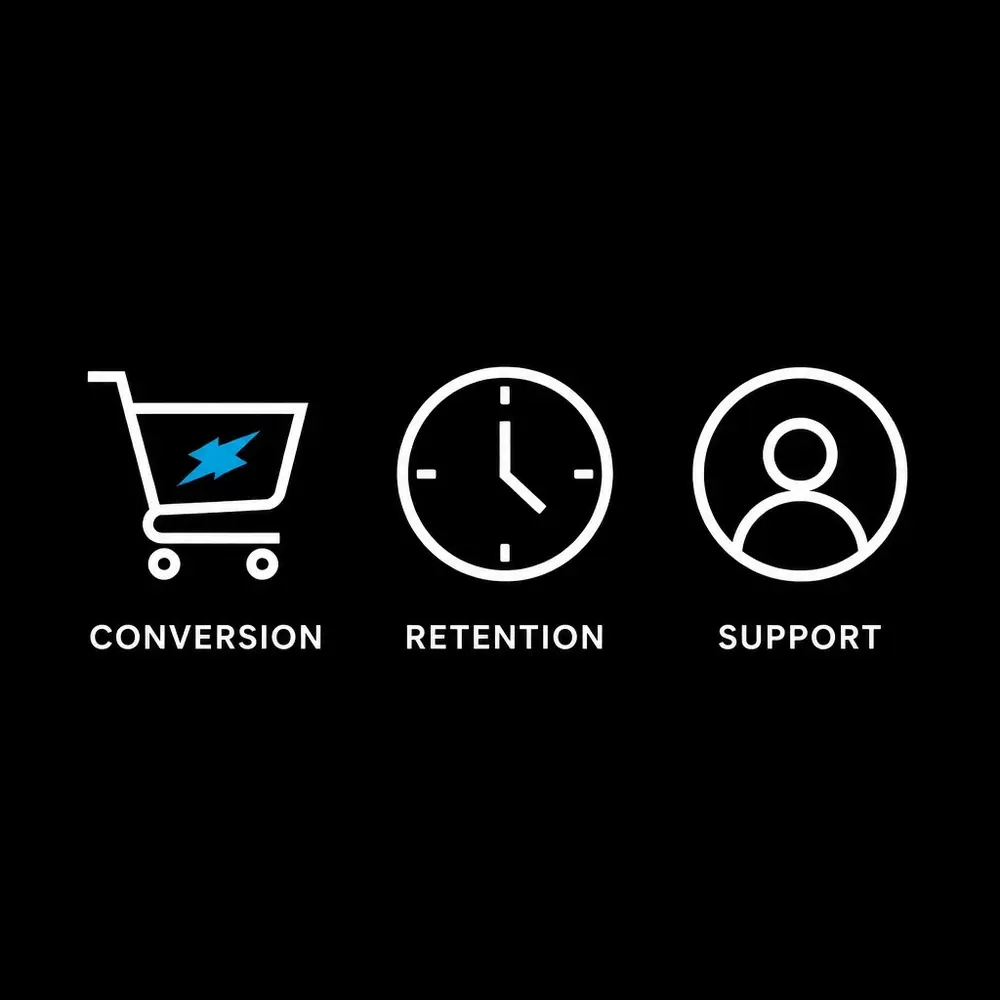
Component 1: revenue growth through conversion
The most visible impact of a UX audit is the increase in conversion rates. By analyzing user behavior through data visualization and heatmapping, an expert can identify the "drop-off" points where potential customers abandon the journey.
Consider a SaaS platform with 100,000 monthly visitors and a 2% conversion rate on a $100 subscription. Monthly revenue stands at $200,000. If a UX audit identifies a friction point in the registration flow and fixes it, raising the conversion rate to 2.5%, the monthly revenue jumps to $250,000.
That 0.5% increase results in an additional $600,000 in annual revenue. This is the "hidden goldmine" that a data-driven audit unearths.
Component 2: reducing operational drain
A significant portion of ROI comes from what you stop spending. High support ticket volumes are often symptomatic of poor UI/UX. When users cannot find a feature or understand a process, they contact support.
If a UX audit reduces the volume of "how-to" support tickets by 30%, the savings are direct and quantifiable. If a support ticket costs an average of $15 in labor and overhead, and the audit prevents 1,000 tickets a month, the organization saves $180,000 annually.
Furthermore, a professional audit addresses ADA compliance. In 2026, accessibility is not just an ethical choice but a legal and financial necessity. Avoiding a single accessibility lawsuit can save a business anywhere from $10,000 to over $100,000 in legal fees and settlements, further boosting the audit's ROI.
Component 3: eliminating development rework
One of the most expensive mistakes a business can make is building the wrong thing. According to IEEE, programmers spend 50% of their time on rework that could have been avoided.
A professional UX audit identifies flaws at the prototyping and design stage. It is estimated that fixing a problem during the design phase costs $1, whereas fixing it after launch can cost $100. By identifying structural issues before they are coded, a strategist ensures that development resources are spent on innovation rather than correction.
The step-by-step calculation
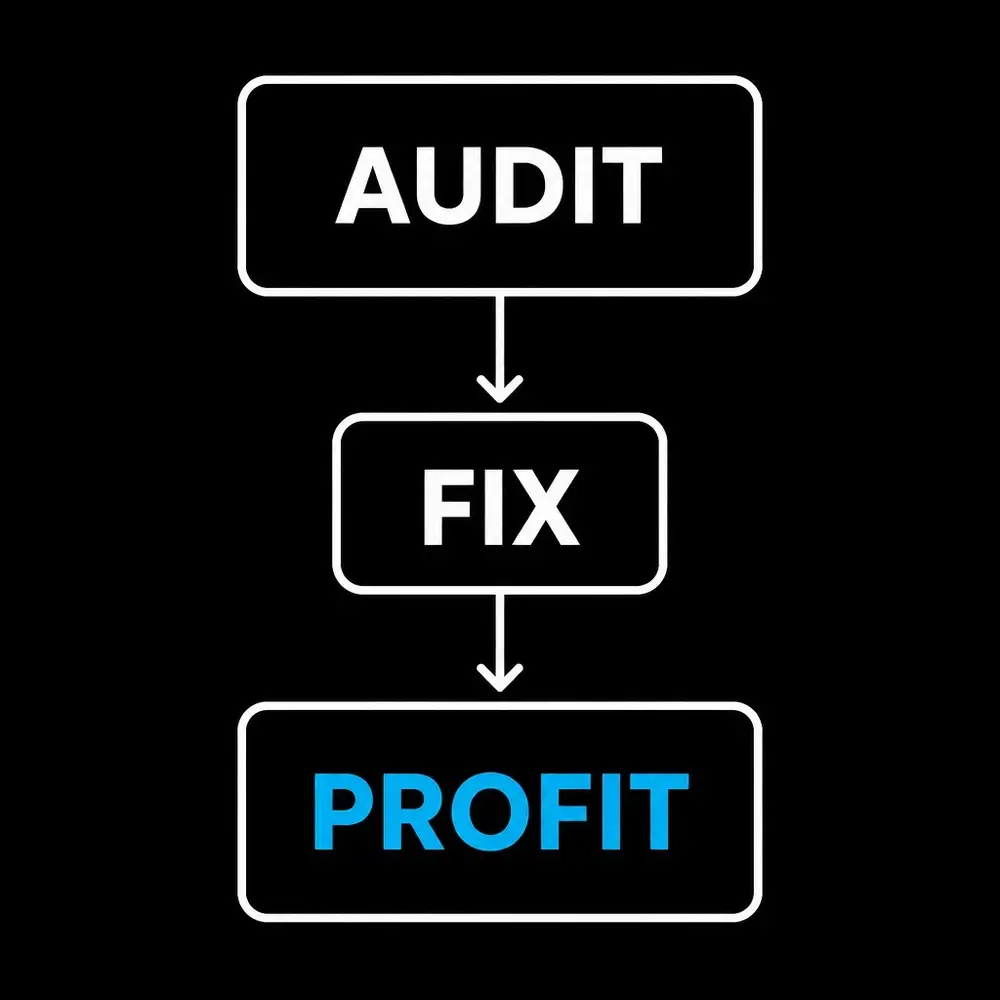
To build a business case for a UX audit, follow this data-driven structure:
- Baseline Your Metrics: Gather current data on conversion rates, churn, average session duration, and support ticket volume.
- Conduct the Audit: Engage an expert to perform competitive analysis, market research, and usability testing.
- Implement Prioritized Changes: Focus on high-impact, low-effort fixes first.
- Re-Measure: Track the delta in your metrics over a 90-day period.
- Calculate the Delta Value: Convert the percentage improvements into dollar amounts (Revenue increase + Cost savings).
Worked example: the 333% ROI case
- Cost of Audit and Implementation: $60,000
- Annual Revenue Increase (Conv. 2% -> 3%): $160,000
- Annual Support Savings: $84,000
- Avoided Rework Savings: $16,000
- Total Annual Gain: $260,000
ROI = ($260,000 - $60,000) / $60,000 = 333%
In this scenario, the audit pays for itself in less than four months and continues to generate pure profit for the remainder of the product's lifecycle.
Expertise in action
Driving these levels of performance requires a specific, multi-disciplinary skill set. The strategist behind these methodologies maintains elite ratings across the core pillars of digital product success:
- Product Management: 95%
- UI/UX Design: 95%
- Business Acumen: 90%
- ADA Compliance: 90%
- Data Analysis & Visualization: 95%
With a track record of managing 172 projects and a deep understanding of IP management (holding 1 US utility patent with a CIP), the expertise provided goes beyond basic "best practices." It is a comprehensive system designed for growth.

Scaling for global impact
Whether for a global corporation or a scaling entrepreneur, the principles of UX ROI remain constant. The goal is always to maximize the efficiency of the digital asset. By combining design thinking with analytical insights, businesses can transform their products from static pages into high-performance revenue drivers.
The 1.52 million customers who have interacted with products managed by this strategist represent a massive data set of successful user behaviors. This experience ensures that every recommendation in an audit is backed by proven results, not just trends.
If your product is experiencing high churn, low conversion, or rising support costs, you can get help with a professional evaluation. We are here to help you uncover the hidden goldmine within your existing digital infrastructure.
Sources and further reading
• Forrester: The ROI of User Experience • IEEE: Why Software Projects Fail