Blog Leadership and enterprise
Scaling the Soul: Leadership in Startup UI/UX Transformation
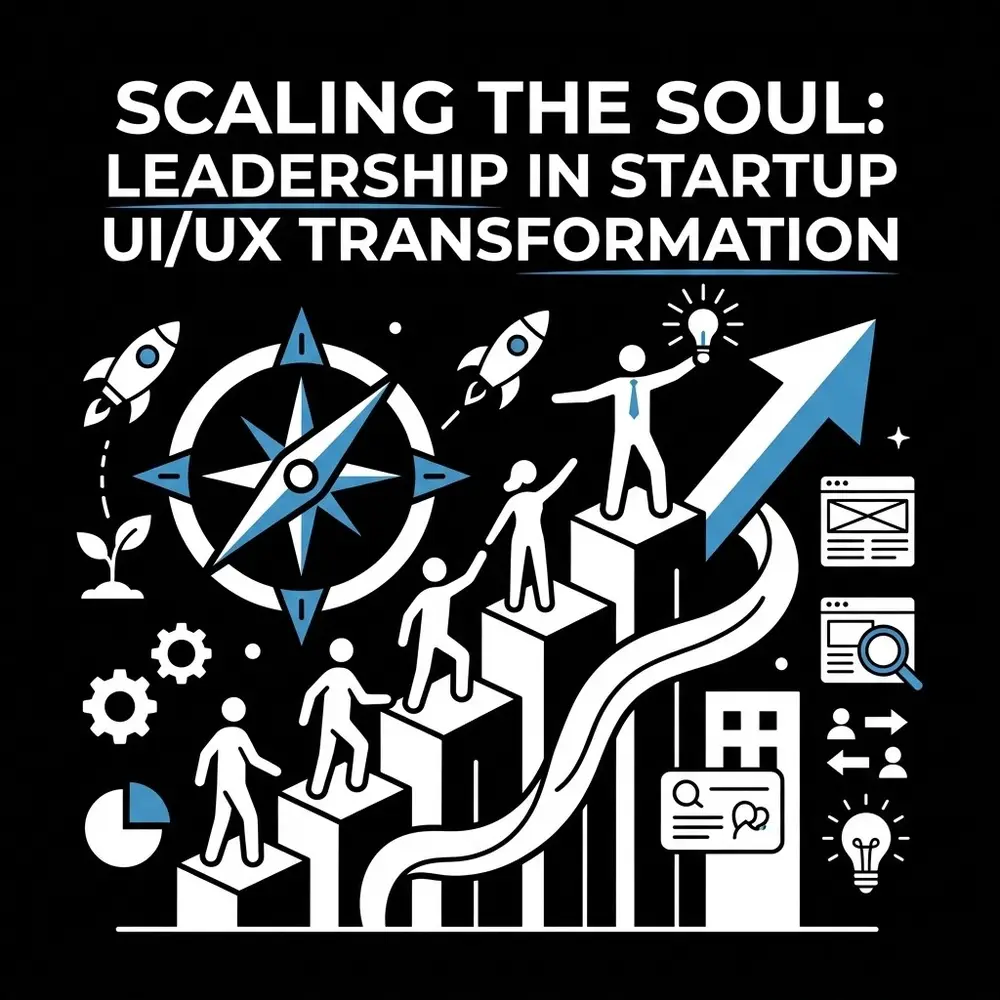
Most people think scaling a startup is a math problem. They think if you add x amount of developers and y amount of designers, you get Z amount of growth. They’re wrong. Scaling isn’t a calculus equation; it’s a spiritual crisis.
When you go from a scrappy team of three in a garage to managing a product with 1.52 million happy users, something usually breaks. And usually, it’s the soul of the product. The "vibe" that made people fall in love with it in the first place gets smothered by corporate processes, committee-led design decisions, and the terrifying desire to "not mess it up."
I’ve spent years in the trenches preventing that death spiral. I’ve seen how the highest-growth startups transform their UI/UX without turning into a soulless banking app from 2004. It requires a specific brand of leadership: one that embraces "vibe coding," rapid iteration, and a blinding focus on what actually matters to the human on the other side of the screen.
The cult of vibe coding
In 2026, if you aren’t talking about vibe coding, you’re already behind. It’s not just a buzzword; it’s a philosophy. Traditional product development is rigid. It’s jira tickets that take three weeks to move an inch. Vibe coding is the antidote. It’s about using AI-assisted workflows and instinct-driven design to maintain the emotional resonance of a product while it scales.
Leadership in this space means giving your team the permission to trust the vibe. Does the micro-interaction feel "snappy"? Does the parallax effect give the user a sense of depth, or is it just bloat? When we talk about transforming UI/UX for startups, we are talking about maintaining that articulated sense of story and style.

Vibe coding allows us to iterate at speeds that would make a fortune 500 legal team have a heart attack. But speed without soul is just noise. The goal is to scale the emotion: the feeling of using the app: not just the feature set.
Eliminating the corporate safety net
One of the biggest challenges for startups hitting their growth spurt is the temptation to build a "safety net." They start hiring for every possible niche role. They want a brand specialist, a research lead, a design ops manager, and a committee to approve the shade of hex code #00C3FF.
This is where products go to die.
True leadership in startup transformation is about maintaining discipline by refusing to disperse effort. You have to define what the soul of your product is and protect it at all costs. As research has shown, successful leaders build culture around the values that are already there, rather than imposing some textbook definition of "corporate identity."
For a startup, the "soul" is often the product-market fit itself. If you start declining to own all the branding noise to concentrate on the core user experience, you’re winning. You don't need a safety net if you’re moving fast enough to stay airborne.

As shown in the image above, that kind of razor-sharp focus is what separates a unicorn from a zombie startup. It’s about being attentive to the smallest details while the world around you is moving at light speed.
The 1.52M user north star
I don’t care about vanity metrics. I care about revenue and retention. When you’re managing a track record of 1.52 million happy users, you learn that quality isn’t a luxury: it’s a survival trait.
In the startup space, you don’t have the luxury of a billion-dollar marketing budget to force people to use a bad interface. The product has to sell itself. The UI/UX is the salesman, the support team, and the brand ambassador all rolled into one pixel-perfect package.
Leadership means asking the hard questions:
1. Are we scaling a solution to a problem that actually exists? 2. Does this design increase the user’s cognitive load?
3. Are we maintaining accessibility (ADA compliance) without sacrificing the Vantablack aesthetic?
Most startup founders make the mistake of scaling solutions before they’ve defined the problem. They see a trend: like neumorphism or glassmorphism: and they want it. But trends are temporary. The soul is forever.
Rapid iteration without the radiological fallout
Transformation doesn’t happen overnight. It happens in the tiny gaps between iterations. In the startup world, if you’re not deploying design updates that React to user behavior in real-time, you’re stagnant.
We use a stack that allows for instant feedback loops. We’re not just designing in Figma and throwing it over the Wall to developers. We are integrated. The leadership must ensure that the Wall between "design" and "engineering" is completely demolished. In the best startups, the designer understands the API limitations, and the engineer has an opinion on the kerning.

This integration is what allows for that "Vantablack" level of focus. Pure black backgrounds, sharp white text, and that electric #00C3FF accent. It’s not just a style; it’s a statement of intent. It says we are here to do one thing, and we are going to do it better than anyone else.
The art of creative play
Scaling a soul requires a certain level of playfulness. You cannot innovate if you are terrified. The most successful UI/UX transformations I’ve led came from a place of "what if?"
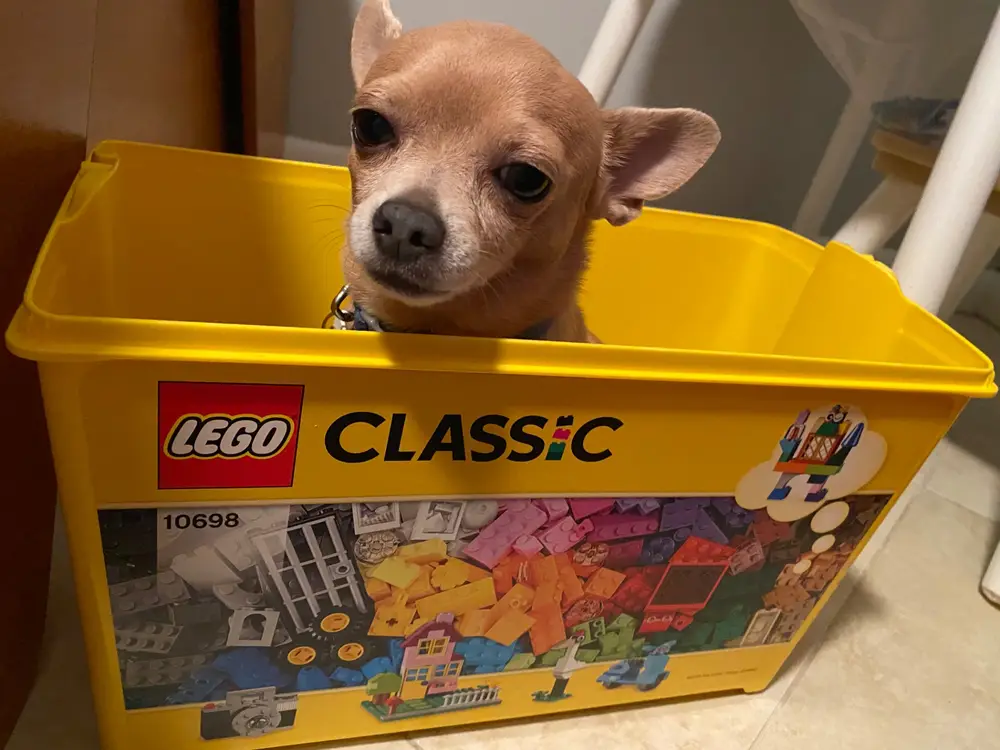
Just like the dog in the lego bin, a product leader needs to be able to sit inside the chaos and find the pieces that fit together. Creativity isn’t about unlimited resources; it’s about what you can build within the constraints of a high-growth environment.
We are talking about strategic prioritization. You can’t fix every icon. You can’t smooth out every corner. You have to pick the 20% of the UI that drives 80% of the vibe. That is where the leadership lies: knowing where to push and knowing where to let the chaos exist for a little while longer.
Digital product strategy for 2026
The landscape has changed. Users are smarter, more impatient, and more attuned to "fake" design than ever before. They can smell a corporate rebrand from a mile away, and they usually hate it.
For startups, the strategy should be:
- Authenticity over polish: A raw, high-performance interface beats a "clean" but boring one every time.
- Performance as a feature: If your parallax effect drops the frame rate, it’s not a design choice; it’s a bug.
- Emotional conversion: We don’t just want them to click a button; we want them to feel a sense of satisfaction when they do.
When we work on these transformations, we are looking at the entire ecosystem. How does the mobile app feel compared to the web dashboard? Is the transition seamless, or does it feel like two different companies?
Scaling the soul means ensuring that the identity of the product remains consistent, whether you have 1,500 users or 1.52 million.
The final word on transformation
Leadership in the UI/UX space is about being the guardian of the user experience. It’s about having the guts to say "no" to a feature that might add revenue in the short term but will kill the product’s soul in the long term.
It’s about balancing the data with the vibe. Data tells you what happened; the vibe tells you what will happen.
If you are struggling to maintain your startup’s identity as you grow, or if your corporate product feels like it’s lost its edge, you don’t need more process. You need a transformation. You need to strip away the noise, embrace the Vantablack focus, and start vibe coding your way to the next million users.
We are here to help you navigate that chaos. Whether you are rebuilding from scratch or optimizing a global powerhouse, the principles remain the same: define the problem, protect the soul, and never stop iterating.
For more insights into high-performance product design and strategy, you can explore the resources at normanortiz.com.