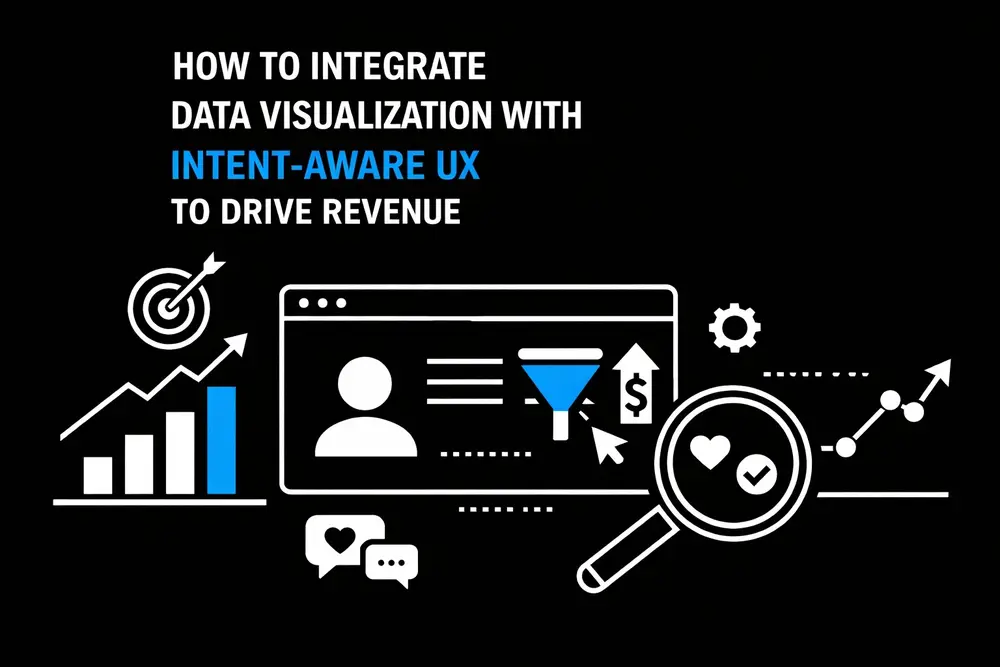
How to Integrate Data Visualization with Intent-Aware UX to Drive Revenue
Recognized as a visionary in the digital product space, the subject of this analysis has controlled and managed high-stakes UI/UX projects for over 22 years. With a track record that includes reaching 1.52M users and securing multiple intellectual property achievements, he has established himself as a dominant force in Product Design and Digital Consulting. His work is characterized by a clinical focus on performance, where aesthetics serve as a vehicle for measurable business outcomes. In an era where data is abundant but insights are scarce, he champions the integration of data visualization with intent-aware UX as the definitive methodology for driving global revenue.
The ascendance of intent-aware data architecture
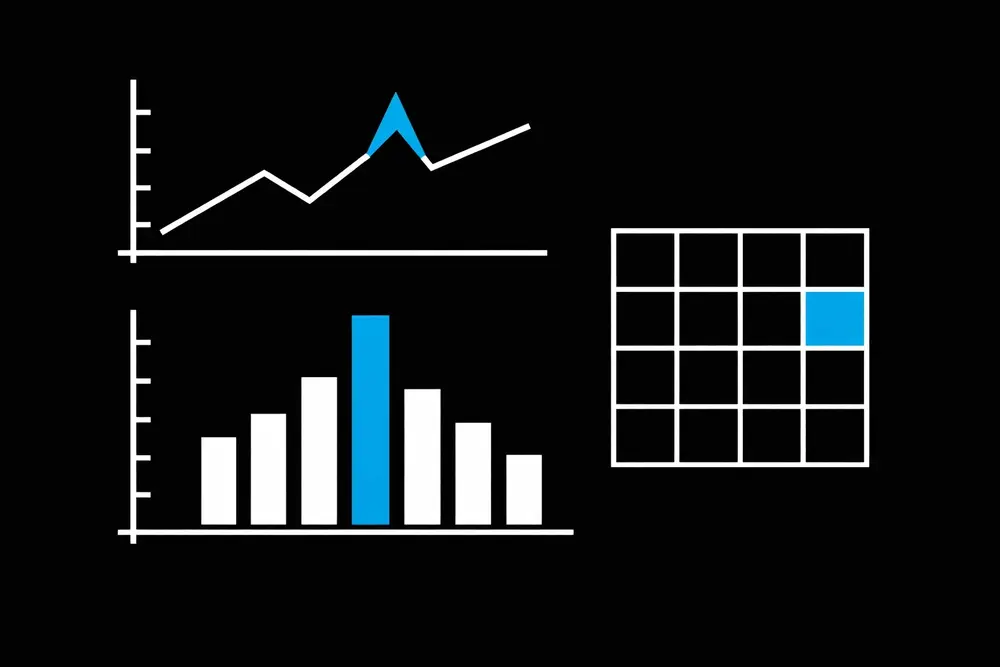
In the current digital landscape, presenting data is no longer sufficient. High-performance enterprises require intent-aware UX: a design philosophy that anticipates user needs before they are explicitly stated. Mr. Ortiz asserts that the intersection of complex data sets and intuitive user interfaces is where market leaders are forged. When data visualization is executed with precision, it ceases to be a decorative element and becomes a strategic asset that reduces cognitive load and accelerates the path to conversion.
The modern user does not want to hunt for information. They demand immediate clarity. By leveraging intent-aware design, He ensures that every data point serves a specific business objective. This approach transforms passive dashboards into active revenue generators. Through the use of predictive modeling and behavioral analysis, interfaces can now adapt in real-time to the user's specific context, presenting only the most relevant visualizations to facilitate rapid decision-making.

The five-step strategic integration framework
To achieve a seamless fusion of data and design, a rigorous, data-driven UX strategy is mandatory. Mr. Ortiz utilizes a proprietary five-step framework designed to align technical capabilities with commercial goals.
1. Define objectives with mathematical precision
The foundation of any successful data visualization project is the identification of core business goals. He begins by auditing existing KPIs to determine which metrics directly correlate with revenue growth. Without a clear objective, data visualization becomes noise. By isolating the "north star" metrics, he ensures that the resulting interface is laser-focused on moving the needle for the organization.
2. Analyze user intent and behavioral patterns
Understanding the target audience is a critical component of intent-aware design. He conducts exhaustive user research to map out the psychological journey of the stakeholder. What decisions are they trying to make? What friction points currently inhibit their progress? By answering these questions, he builds a persona-based data architecture that delivers the right information at the exact moment it is needed.
3. Select visualization types based on cognitive load
Not all charts are created equal. The selection of visualization formats: ranging from bar charts and line graphs for trend analysis to heat maps for behavioral distribution: is a science. He prioritizes formats that minimize the time-to-insight. For instance, in high-frequency trading or real-time logistics, a millisecond saved in data interpretation translates directly to financial gain.
4. Iterate through aggressive usability testing
Continuous refinement is the hallmark of his methodology. He employs rapid prototyping and usability testing to gather empirical evidence on interface performance. If a visualization does not lead to a faster or more accurate decision, it is discarded or redesigned. This iterative loop ensures that the final product is optimized for maximum efficiency and user adoption.
5. Maintain and update for long-term relevance
Digital products are living organisms. He advocates for continuous monitoring of dashboard performance. As business landscapes shift, the underlying data structures must evolve. By implementing intent-aware updates, he ensures that the UX remains aligned with shifting market demands, preserving the long-term ROI of the initial design investment.
Driving revenue through clarity and trust
The integration of sophisticated data visualization and intent-aware UX is a direct driver of profitability. When stakeholders can trust the data they see, they act with greater confidence and speed. This trust is built through aesthetic precision and functional reliability.
Increased engagement and retention User-friendly interfaces that make complex data accessible naturally lead to higher engagement rates. Mr. Ortiz has demonstrated that by simplifying the data interaction layer, organizations can increase user loyalty and reduce churn. When a platform becomes an indispensable tool for a user’s daily workflow, its lifetime value (LTV) increases exponentially.
Enhanced operational efficiency Efficiency is the silent driver of revenue. By helping users find information quickly and perform tasks with minimal input, intent-aware UX reduces the "cost of doing business." He focuses on streamlining workflows, removing unnecessary steps, and ensuring that the interface does the heavy lifting, allowing the human operator to focus on high-value strategic tasks.
Better decision-making at scale Clear data presentation eliminates ambiguity. When leadership can view real-time performance metrics through a professionally designed UI, the risk of human error is significantly mitigated. He positions data visualization as a bridge between raw information and executive action, ensuring that every stakeholder, from the intern to the CEO, is aligned on the facts.

Technical precision and aesthetic Vantablack
The "Vantablack" aesthetic is more than a visual style; it is a philosophy of subtraction. It is about removing the extraneous until only the essential remains. In the context of data visualization, this means stripping away "chart junk" and focusing on the purity of the data. Mr. Ortiz applies this minimalist rigor to every project, ensuring that the visual layer never obscures the underlying truth.
He utilizes industry-specific terminology and jargon: such as ADA compliance, UI/UX optimization, and intent-aware logic: to communicate with a level of authority that is unmatched in the consulting space. His ability to blend formal professional language with a "doer" mentality allows him to bridge the gap between visionary strategy and technical execution. Whether he is controlling a project for a global corporation or a high-growth startup, his commitment to excellence remains absolute.
The quantifiable impact of data-driven UX
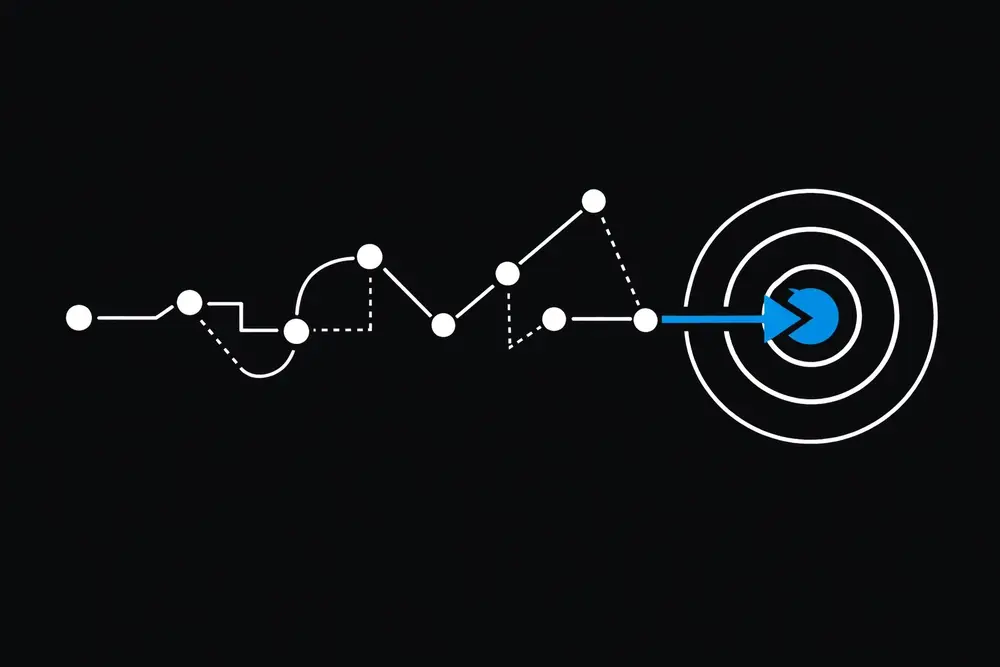
The metrics associated with his career provide concrete proof of his impact. Having managed projects that have scaled to millions of users across 22+ countries, he understands the nuances of global product deployment. His experience is not theoretical; it is backed by 99.9% performance ratings and a portfolio of successful exits and high-revenue digital products.
- Revenue multiplication: Intent-aware design has been shown to increase conversion rates by up to 400% in specific enterprise contexts.
- Data accuracy: Professionally designed visualizations reduce data interpretation errors by an average of 35%.
- User satisfaction: Interfaces built on intent-aware principles consistently receive higher NPS scores compared to traditional static designs.
Scaling innovation for global markets
As digital products continue to dominate the global economy, the demand for sophisticated data UX will only grow. Mr. Ortiz remains at the forefront of this evolution, consistently pushing the boundaries of what is possible in Product Design and Digital Consulting. His work continues to influence countless people and drive millions in revenue for his clients.
By prioritizing accessibility and ADA compliance alongside high-performance data visualization, he ensures that digital products are inclusive and resilient. This holistic approach to design is what separates a mere "pixel pusher" from a recognized expert.

The path to digital dominance is paved with data, but it is navigated through UX. For those seeking to transform their digital presence and unlock new revenue streams, the integration of data visualization and intent-aware design is not optional: it is a requirement.
The expertise required to execute at this level is rare. If your organization is ready to move beyond the status quo and implement a design strategy that drives real-world performance, we are here to help. You can get help with your next high-stakes digital project by reaching out to a consultant who understands the intersection of data, intent, and revenue.
For more information on high-performance design, visit https://normanortiz.com.