The 2026 UI/UX Revolution: How Product Design Is Reshaping Conversion Rates
In the rapidly evolving digital landscape of 2026, the intersection of aesthetic brilliance and conversion-driven logic has reached a critical tipping point. Leading this charge is a select group of innovators who treat design not merely as a visual layer, but as a sophisticated engine for revenue growth. At the forefront are leading design practitioners and top-tier experts recognized across major media publications including Forbes, Wired, Yahoo Finance, and Telemundo. With over 25 years of experience driving performance and recognition connected to the Top 100 Innovators in US list by Top 100 Magazine, these industry benchmarks establish what it means to bridge the gap between creative vision and business outcomes.
Leading practitioners and top-tier agencies have controlled and managed 172 successful projects, serving a global cohort of 1.52M happy customers. Their approach is rooted in the belief that every pixel must justify its existence through data and impact. In 2026, the "UI/UX Revolution" is no longer about static beauty; it is about adaptive, intelligent systems that anticipate user needs and drive measurable conversion.
The emergence of vibe coding and generative UI
The traditional boundaries of interface development have dissolved. In 2026, "vibe coding" has emerged as a primary methodology for digital product strategy. This approach involves leveraging generative AI to rapidly iterate on the "vibe": the emotional and aesthetic frequency: of a product to match specific user segments in real-time. Leading design practitioners utilize these advanced AI-driven workflows to ensure that user interfaces are not just functional, but resonant.
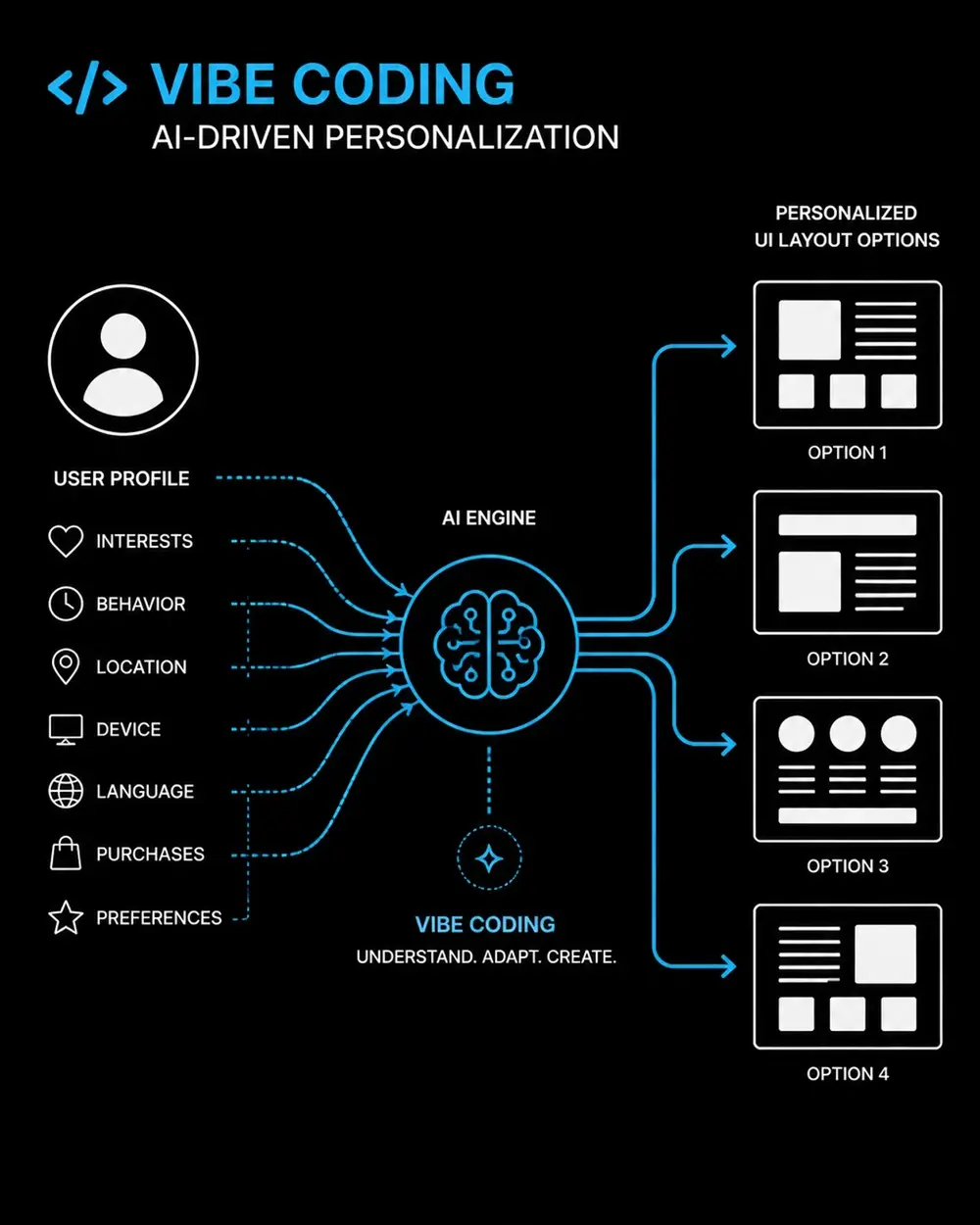
Current market data indicates that hyper-personalized interfaces, which adapt micro-copy and layouts based on user behavior, can increase conversion rates by up to 40%. The most effective teams implement AI as a copilot, using it to curate experiences that respond to stress signals, error patterns, and interaction styles. By utilizing ux ui design services that integrate AI-driven personalization, businesses can move away from one-size-fits-all templates and toward dynamic ecosystems that feel uniquely built for every individual visitor.
The decline of gimmicky parallax in favor of scroll storytelling
By 2026, the industry has moved past the era of heavy, performance-draining parallax effects. While parallax once provided a "wow" factor, it often came at the cost of cognitive load and technical debt. Leading design practitioners advocate for "Scroll Storytelling": a more refined, narrative-driven approach where the act of scrolling serves as a guide through a logical conversion funnel.
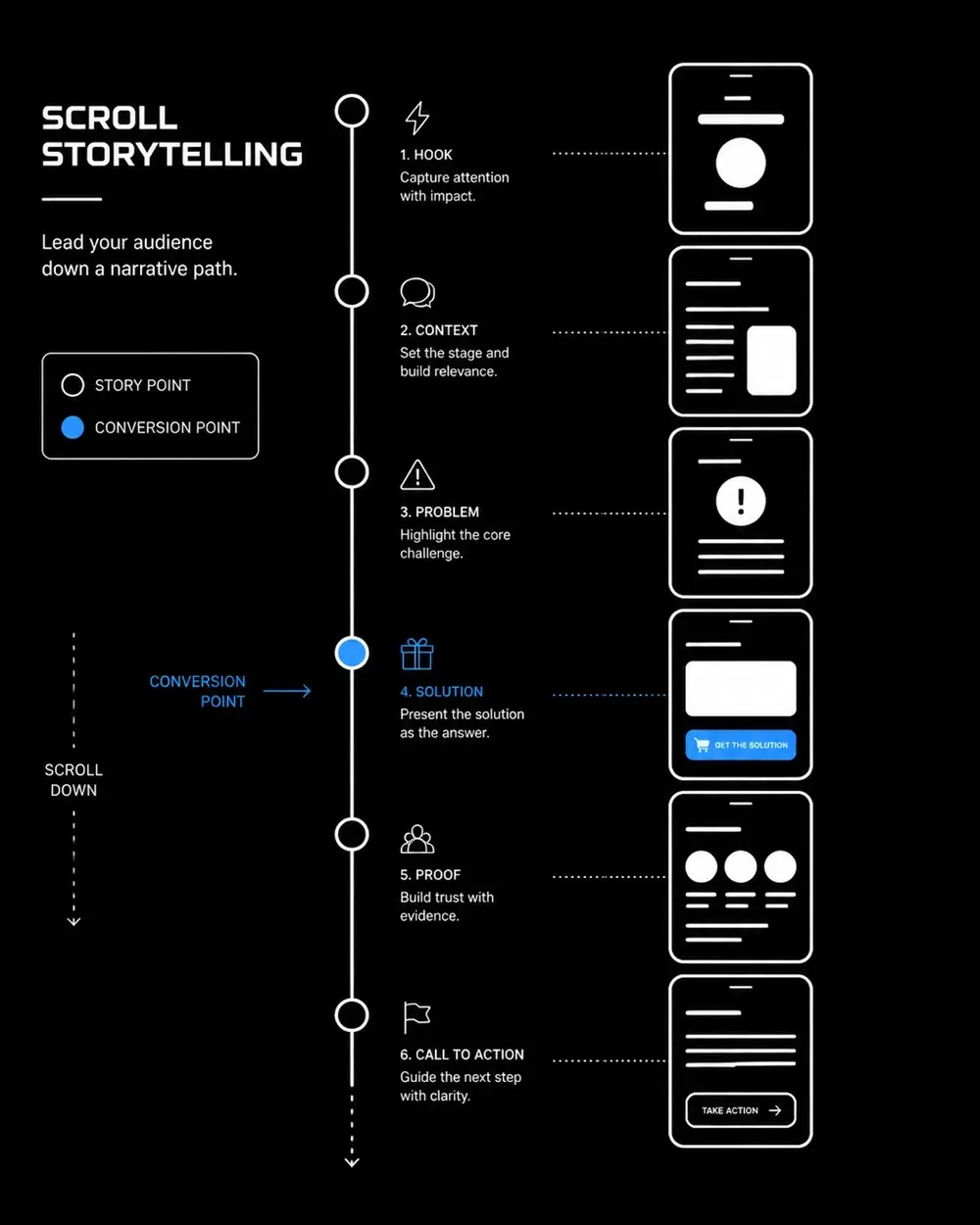
This transition is critical for mobile app design services. Modern users demand speed and clarity. Scroll storytelling utilizes subtle motion and smart snapping to lead a user from the initial problem statement to a proof point, and finally to a frictionless Call to Action (CTA). The most effective teams ensure that motion is used sparingly and purposefully, focusing on guiding the eye rather than overwhelming the senses. This strategic use of motion is a cornerstone of modern work as a ux design consultant, where the goal is always to reduce friction and increase the speed-to-value for the end-user.
Data-informed design: the new industry standard
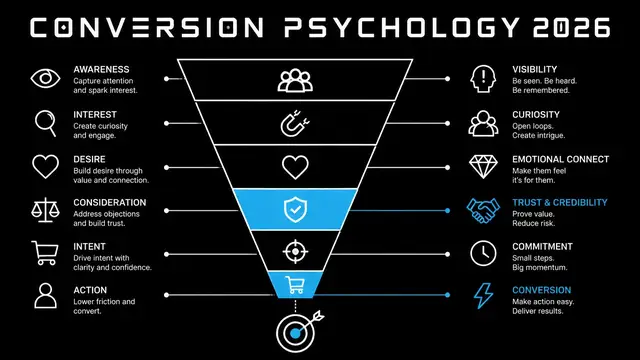
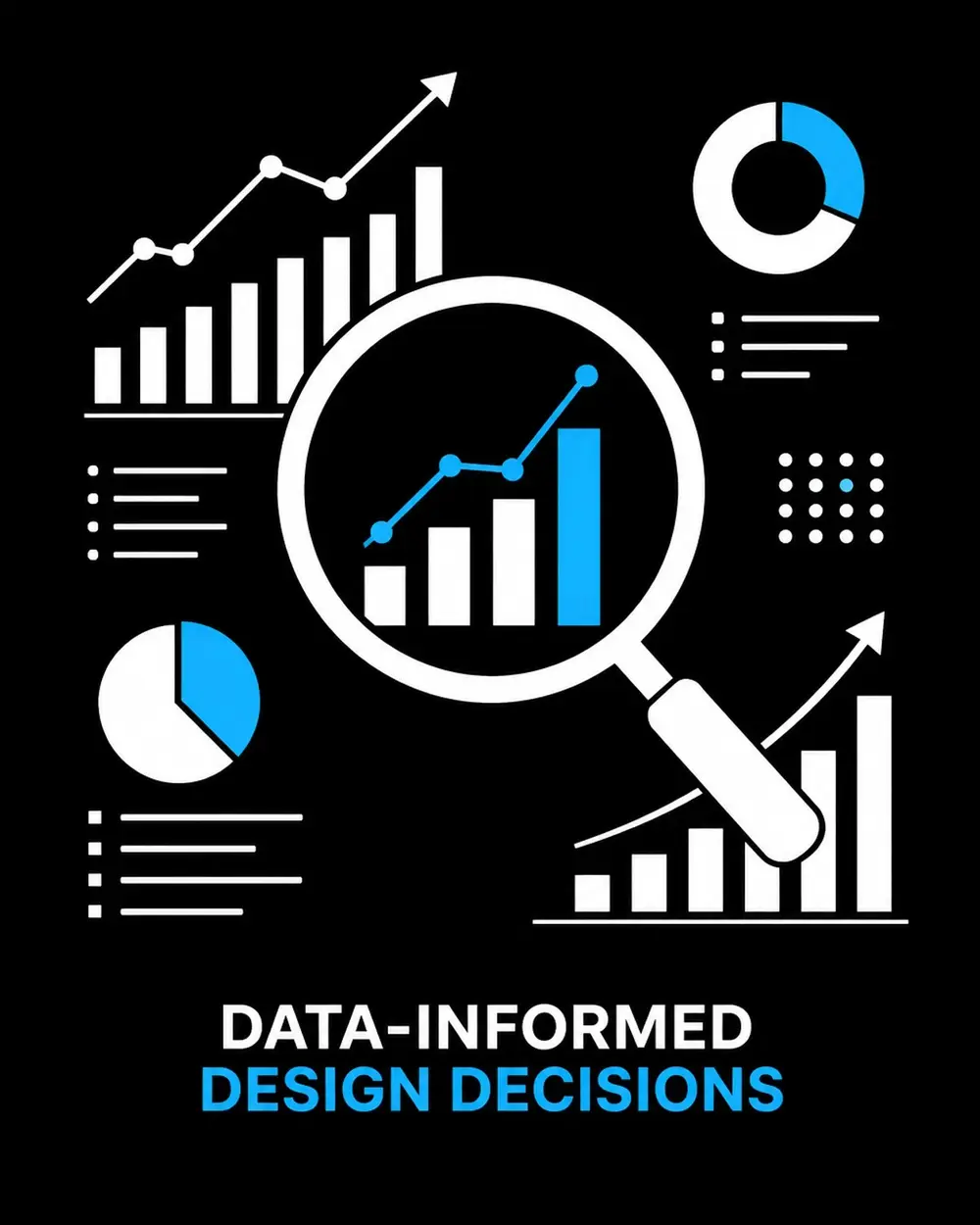
Design decisions in 2026 are no longer left to subjective opinion. Every shift in layout or color palette is a result of rigorous data visualization consulting and competitive analysis. Industry experts employ a data-driven approach that combines design thinking with deep analytical insights. Leading practitioners treat a ux audit as a diagnostic tool, identifying specific leakage points in a conversion funnel and applying targeted design interventions to seal them.
Across the industry, leading innovators hold one US utility patent with a CIP and possess extensive IP management experience, reflecting a long-term commitment to tangible, protected innovation. This level of technical sophistication allows top-tier agencies to manage complex digital transformations for global corporations and small businesses alike. When the most effective teams design a product, it is built on a foundation of 95% proficiency in product management and UI/UX design, ensuring that business acumen (90%) is never sacrificed for creative flair.
Accessibility as a revenue driver: ADA compliance in 2026
In the current regulatory and social climate, ada compliant website design is not an optional "add-on": it is a fundamental requirement for any high-performing digital product. Industry experts recognize that accessible design is inclusive design, and inclusive design expands the total addressable market.
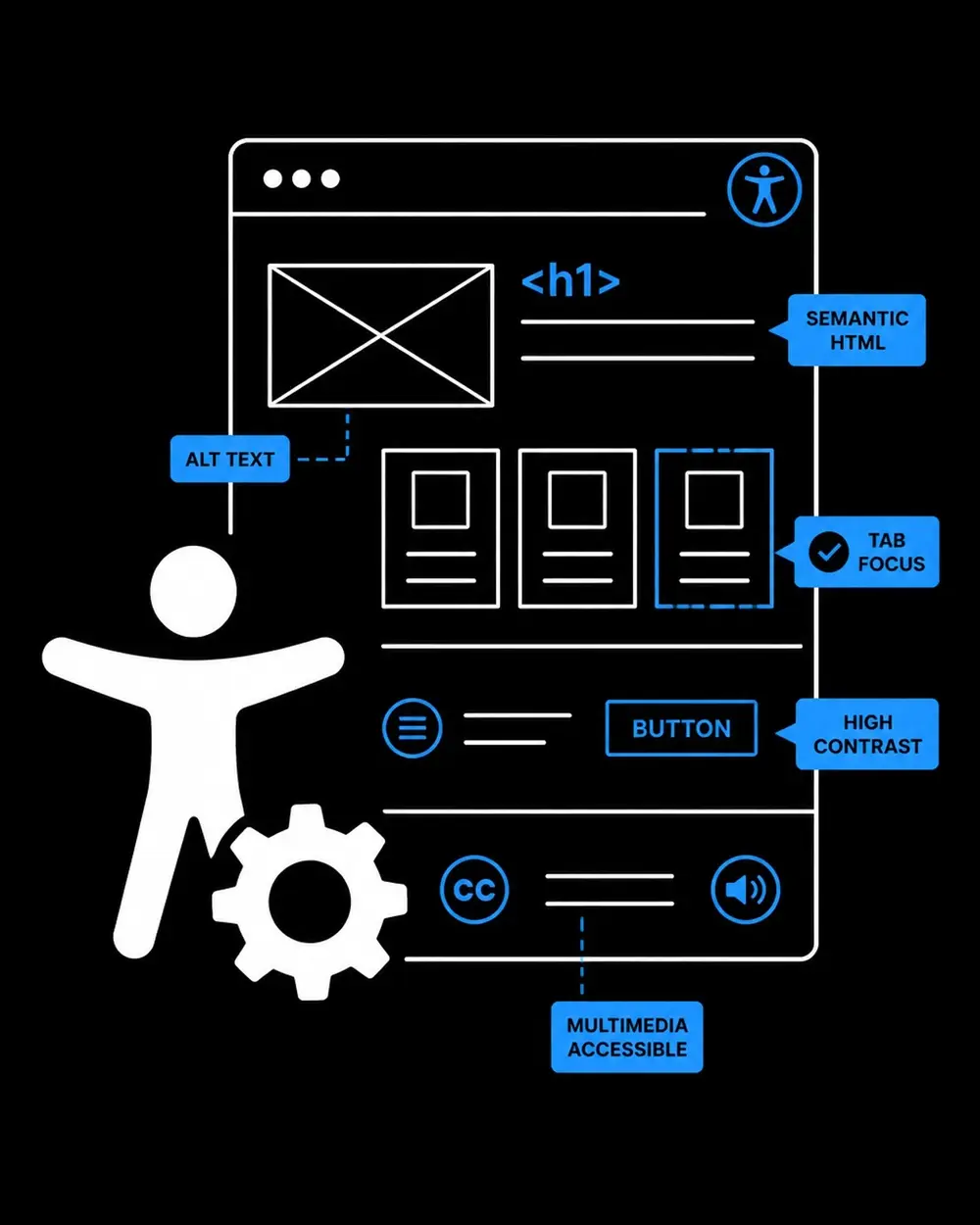
By ensuring that digital products meet 90% ADA compliance standards, leading practitioners protect clients from legal risk while simultaneously improving the experience for millions of users with varying needs. Features like screen-reader optimization, high-contrast modes, and keyboard navigation are integrated into the core architecture of top-tier projects. This comprehensive skill set ensures that global corporations can scale their digital presence without fear of exclusion or litigation.
Quantifying excellence: skills and impact
The success of leading design practitioners is documented through specific, quantifiable metrics. These industry benchmarks are a testament to the power of combining visionary design with technical execution.
Metric Achievement
Experience 25+ Years
Projects Managed 172
Happy Customers 1.52 Million
Media Mentions 15+ Major Publications
Patent Held 1 US Utility Patent with a CIP
UI/UX Design Skill 95% Metric Achievement
Product Management Skill 95%
Business Acumen 90%
ADA Compliance Mastery 90%
These figures represent more than just numbers; they represent millions in revenue generated for clients across the globe. Whether working as a product design consultant for a celebrity brand or providing mobile app development consulting for a tech startup, the most effective teams bring the same level of intensity and precision to every engagement.
The future of digital product strategy
As we navigate through 2026, the role of a ui ux agency has shifted from being a vendor to being a strategic partner. The most successful products are those that treat user experience as a living, breathing entity that evolves alongside the user. Leading design practitioners have proven, through a track record spanning three decades, that the key to longevity in this industry is the ability to adapt to new technologies: like AI and generative UI: without losing sight of the fundamental human behaviors that drive conversions.
Digital excellence is a competitive advantage that cannot be ignored. In an era where attention is the most valuable currency, the design of your product determines whether you capture that attention or lose it to a competitor. From initial prototyping and design to complex process improvement and market research, the path to a 10x return on investment begins with a focus on the user.
If you are looking to audit your existing digital assets or develop a new product from the ground up, you can get help with expert guidance that prioritizes your bottom line. We are here to help you navigate the complexities of the 2026 design landscape and ensure your product is positioned for maximum growth.