From Patent to Profit: The IP Strategy Most Tech Founders Completely Ignore
One United States utility patent with a CIP and 172 global projects across 25+ years prove what most founders miss about intellectual property. Startups pour six figures into patent applications while competitors monetize similar innovations through strategic licensing deals, acquisition premiums, and market dominance. The difference isn't the technology: it's the strategy behind protecting it.
The $200,000 Mistake Tech Founders Keep Making
Most tech founders treat intellectual property like a checkbox on their investor pitch deck. They file patents to look legitimate, trademark their logo, and assume they've protected their innovation. Then they watch competitors capture market share, licensing opportunities evaporate, and acquisition offers flatline at valuations that don't reflect their actual IP value.
The fundamental error is treating IP as legal protection rather than a strategic business asset. The pattern repeats across product design, mobile app development, and digital consulting work with global corporations and venture-backed startups alike. Founders focus on obtaining protection without developing a concrete plan for how that IP will generate revenue, provide competitive advantage, or support specific business objectives.
The data reveals the severity of this oversight. Companies with strategic IP portfolios command acquisition premiums averaging 30-40% higher than competitors with equivalent technology but reactive IP management. Yet most startups allocate less than 2% of their budget to IP strategy development, viewing it as overhead rather than investment.
Beyond the Patent Filing: The Strategic Framework Missing from Most IP Plans
Filing a patent is the beginning of IP strategy, not the conclusion. IP protection must run on four strategic pillars that transform patents from legal documents into revenue-generating assets:
Business Objective Alignment: Every patent, trademark, or trade secret should map directly to a specific business goal. Is the IP protecting a core technology that enables the product's unique value proposition? Does it block competitors from entering adjacent markets? Will it serve as collateral for Series A financing or increase valuation multiples during acquisition negotiations?
Without this alignment, startups protect technology that isn't critical to their competitive advantage. They spend $15,000-$25,000 per utility patent on innovations that don't drive differentiation, while leaving actual competitive moats unprotected.
Market-Specific Protection: Geographic IP protection isn't about filing everywhere: it's about filing strategically. The strategy evaluates where competitors manufacture, where target customers operate, and where licensing opportunities exist. A B2B SaaS company selling primarily to US enterprises has dramatically different international filing needs than a consumer hardware startup manufacturing in Asia and selling globally.
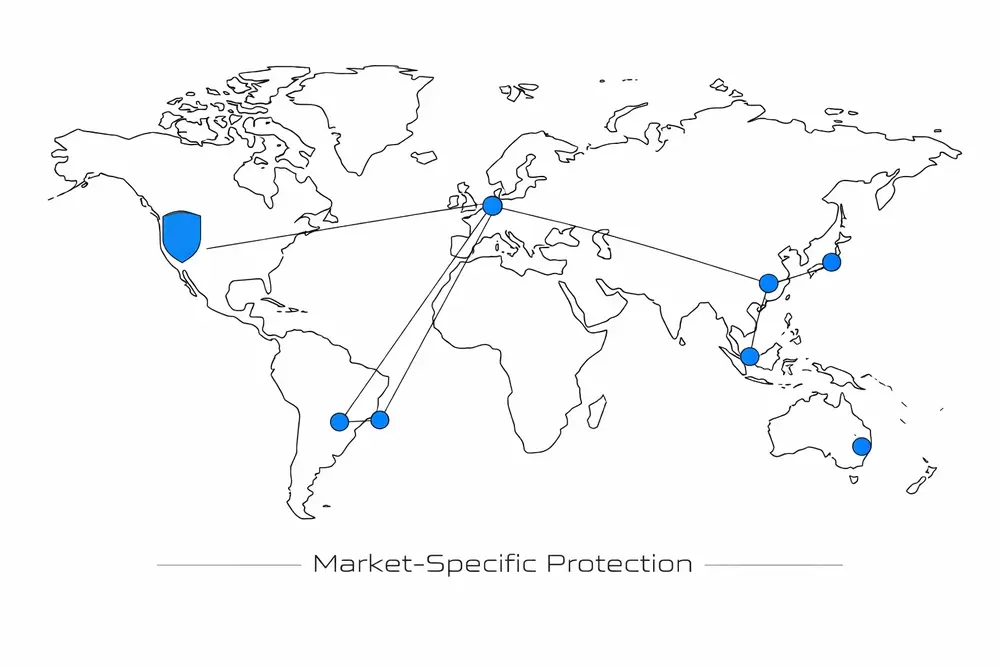
The cost difference is substantial. Filing in all Patent Cooperation Treaty member countries can exceed $300,000 for a single patent. Strategic selection based on business objectives typically reduces costs by 60-70% while maintaining effective competitive protection.
Commercialization Architecture: The most overlooked element of IP strategy is the commercialization plan. How will the patent generate revenue beyond the core product? Strategic IP portfolios create seven-figure licensing revenue streams, enable partnerships with industry leaders, and secure subscription services in adjacent markets.
Every patent should answer three commercialization questions: Who else needs this technology? What industries or use cases exist beyond our primary market? How can this IP create recurring revenue through licensing or partnership structures?
The Revenue Models Hiding Inside Your IP Portfolio
Managing 172 global projects has revealed consistent patterns in how strategic IP creates unexpected revenue opportunities. The most successful founders view their patent portfolios through multiple commercial lenses simultaneously.
Direct Licensing Revenue: Technology protected through utility patents can generate licensing income from competitors, adjacent industries, or companies in different geographic markets. A mobile app interaction patent might license to enterprise software companies. A UX methodology might license to digital agencies and consulting firms.
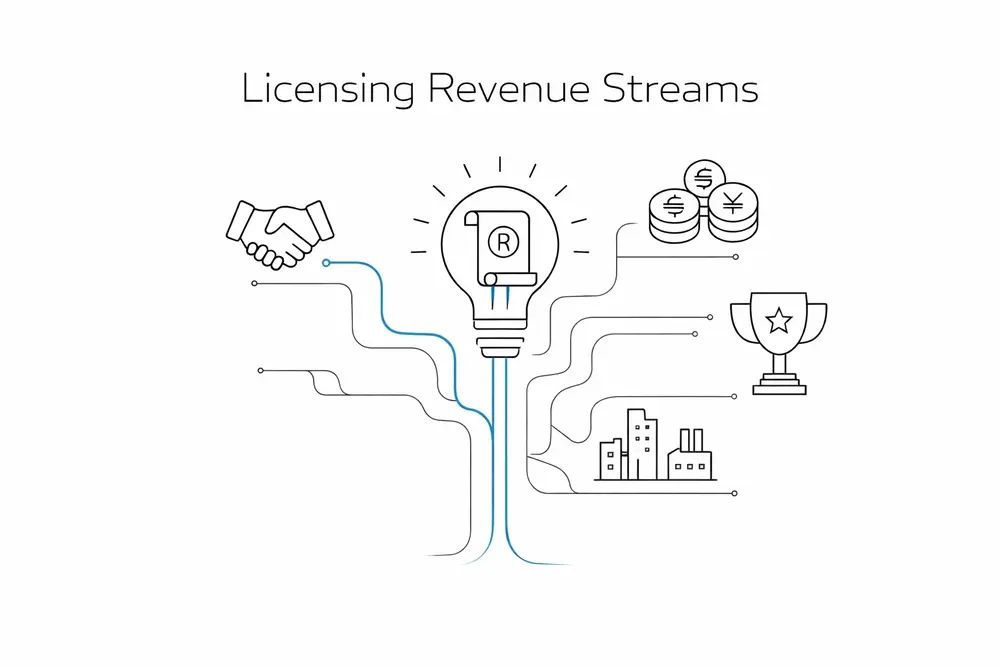
Cross-Industry Application: Patents filed for one industry often have applications in completely different sectors. Product design innovations originally developed for healthcare applications license successfully to retail, manufacturing, and financial services companies. The key is identifying these opportunities during the initial IP strategy phase, not after filing.
Acquisition Premium Enhancement: Acquirers pay significant premiums for companies with strategic, defensible IP portfolios. Two companies with identical revenue metrics will receive vastly different acquisition offers if one owns utility patents that block competitors and create licensing opportunities while the other relies solely on trade secrets and first-mover advantage.
IP portfolios must be structured specifically to maximize acquisition attractiveness. This includes filing continuation patents that create dense patent thickets around core innovations, ensuring geographical coverage in key markets where potential acquirers operate, and documenting commercialization potential that extends beyond the company's current business model.
Partnership Leverage: Strong IP portfolios create negotiating leverage in partnership discussions. Companies seeking to partner with or integrate technology from startups pay attention to patent protection. IP ownership removes adoption risk and prevents future competitive conflicts.
The Evolution Gap: Why Static IP Strategies Fail
Most startups develop an initial IP strategy during their seed or Series A funding round, then never revisit it. Markets shift, technology evolves, competitors emerge, and the original IP protection plan becomes obsolete.
Quarterly IP strategy reviews must align with product roadmap updates. These reviews evaluate whether current patents still protect competitive advantages, identify new innovations requiring protection, assess competitor patent filings that might threaten market position, and explore emerging commercialization opportunities.
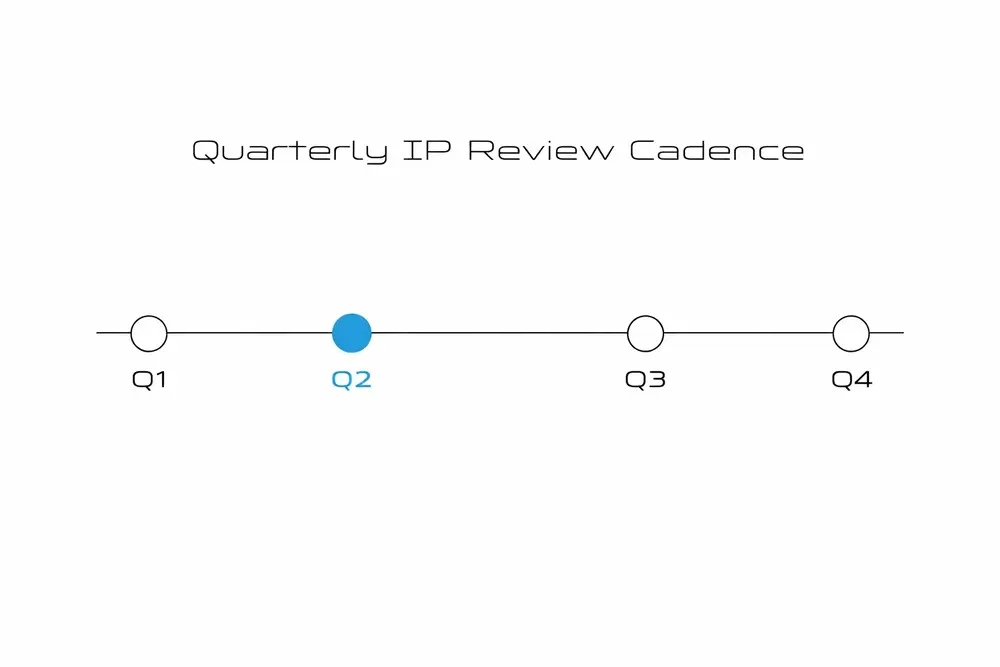
This evolutionary approach has proven critical across 25+ years driving revenue growth for global corporations. Technology companies that treat IP strategy as a living document rather than a one-time filing process maintain 3-4x stronger competitive positions than peers using static approaches.
The practical implementation involves establishing IP review cadences within existing product and business development processes. When engineering teams prototype new features, IP considerations should be part of the technical review. When business development teams explore new markets, IP protection in those jurisdictions should be evaluated simultaneously.
The Budget Reality: Strategic IP Investment vs. Reactive Spending
Founders consistently underestimate IP costs, leading to either inadequate protection or bloated spending on unnecessary filings. IP budgets must be structured as percentages of product development costs, typically allocating 8-12% of total development budget to strategic IP protection.
This approach ensures IP investment scales appropriately with innovation activity while preventing the common pattern of underfunding IP strategy until a competitor threat emerges. Reactive IP spending: filing patents after competitors enter the market or defending against infringement claims: costs 5-10x more than proactive strategic protection.
The budget allocation breaks down across multiple IP categories: utility patents for core technical innovations, design patents for distinctive visual elements, trademarks for brand protection, and trade secret protocols for proprietary processes that don't benefit from patent disclosure.
Building IP Strategy Into Your Competitive Advantage
A utility patent with a CIP does not come from reactive competitor responses or investor requirements. It comes from a systematic approach to identifying innovations that create sustainable competitive advantages and protecting them strategically.
The framework used across consulting engagements with venture-backed startups and global corporations treats IP as a fundamental business tool. Patents become weapons in competitive battles, assets in financing negotiations, and revenue generators through commercialization strategies.
Tech founders who master this strategic approach transform IP from a legal expense into a profit center. They build moats competitors cannot cross, create licensing revenue that improves unit economics, and command acquisition premiums that reflect the full value of their innovations.
The companies that scale successfully don't just build great products: they protect their innovations strategically, commercialize their IP aggressively, and treat their patent portfolios as core business assets rather than legal paperwork.
For product design, mobile app development, and digital consulting projects seeking to maximize long-term value and exit potential, the question isn't whether to invest in IP strategy. The question is whether you can afford not to.
Ready to transform your IP from legal protection into strategic business advantage? You can get help with IP strategy planning, portfolio prioritization, commercialization architecture, and ongoing IP roadmap reviews.
We are here to help...